

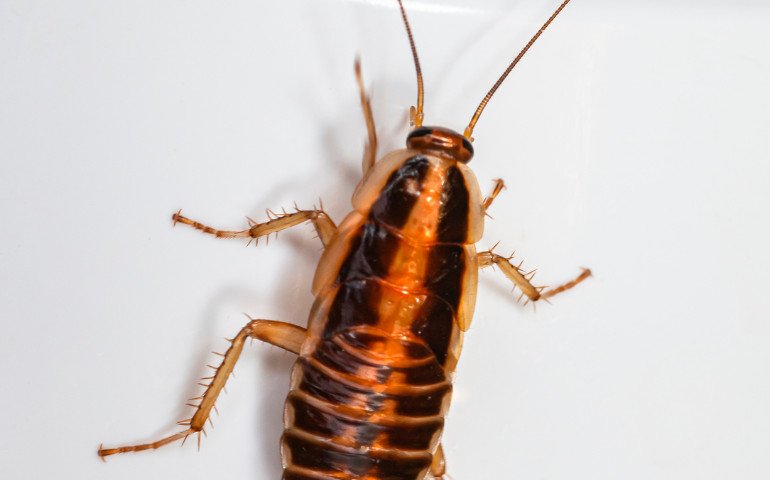
You flipped on the kitchen light at midnight and watched a dozen small tan roaches scatter under the stove. You want them gone by morning. Nobody searches “how to get rid of German roaches over the next three weeks.” They search “overnight.”
Here is the honest answer. You cannot eliminate a German cockroach infestation in one night. A single female carries up to 40 eggs in a capsule she drops in a crack you cannot reach. The colony doubles every 28 days. What you can do in 24 hours is crash the visible population, kill hundreds of roaches in their hiding spots, and set the stage for full elimination within two weeks.
This is the fastest protocol that actually works. No foggers, no home remedies that smell nice and do nothing, no waiting for the landlord. Just the three things that kill German roaches the fastest, applied tonight, in order.
Why German Roaches Are the Hardest to Kill Fast
German cockroaches are the small ones, about half an inch long, light brown with two dark stripes behind the head. They are the most common indoor roach in the United States and the most difficult to eliminate quickly.
Three reasons. First, they reproduce faster than any other pest roach. According to the EPA, a single female produces four to eight egg capsules in her lifetime, each holding roughly 40 eggs. That is up to 320 offspring from one roach. Second, they develop resistance to insecticides within a few generations. The spray that worked last year might not work this year. Third, they spend 75 percent of their time hiding in cracks so thin you cannot see them. Spraying baseboards kills the ones that wander out. It does not touch the colony.
This is why the protocol below skips the spray aisle entirely. Sprays scatter roaches and push them deeper into walls. What follows uses methods that roaches carry back to the nest themselves.
Step One: Gel Bait Every Hot Zone, Tonight
Gel bait is the single fastest way to kill a German roach colony. It works by turning the roaches into the delivery mechanism.
A cockroach eats the gel, which contains a slow-acting insecticide mixed with an attractive food base. The roach does not die immediately. It returns to the harborage, dies there, and gets eaten by other roaches. Those roaches then die from secondary poisoning. Their corpses get eaten, and the poison cascades further. One well-placed application can kill hundreds of roaches within 48 hours, with the first wave of dead roaches appearing as early as 6 to 12 hours after application.
Go to any hardware store or order online tonight for pickup. The two brands pest control professionals consistently recommend are Advion Cockroach Gel Bait and Combat Max Roach Killing Gel. Both use indoxacarb, which German roaches have not developed widespread resistance to.
Apply pea-sized dots. Not smears, not lines. Dots. Place them under the lip of your countertops, along the hinges of cabinet doors, behind the refrigerator, behind the stove, under the bathroom sink, and anywhere you have seen roach droppings. Droppings look like ground black pepper clustered in corners and along edges.
Do not spray any insecticide after applying gel bait. Sprays repel roaches away from the bait. Let the gel do the work alone for the first 48 hours.
Step Two: Diatomaceous Earth Along Every Edge, Tonight
While the gel bait works through the digestive system, diatomaceous earth works through the exoskeleton. Use both simultaneously.
Get food-grade diatomaceous earth, not the pool filter grade. The pool version is heat-treated and contains crystalline silica that damages lungs. Food-grade is safe to apply indoors, though you should still wear a mask while dusting because any fine powder irritates airways.
Diatomaceous earth is fossilized algae ground into microscopic sharp-edged particles. When a roach walks through it, the particles cut the waxy coating on its exoskeleton. Without that coating, the roach dehydrates and dies. This is a mechanical kill. Resistance is impossible.
Apply it tonight with a bulb duster or a small plastic squeeze bottle. You want a thin, barely visible layer. Roaches avoid visible piles of powder. A dusting they do not notice is the one they walk through. Target baseboards, the gap behind the refrigerator, under the stove, under the bathroom vanity, around plumbing pipes, and the back corners of every cabinet.
Diatomaceous earth stops working when wet. It reactivates when dry. Reapply after mopping or in humid bathrooms every few days. Initial results take 24 to 48 hours as roaches cross treated surfaces and begin dehydrating.
Step Three: Remove Food, Water, and Shelter, Tonight
The bait and the dust kill roaches. This step starves the survivors and drives them across your treated surfaces.
Roaches can survive a month without food but only a week without water. Water is the priority tonight. Wipe every sink, countertop, and shower wall completely dry before bed. Fix any dripping faucet, even if it means tightening the handle with a wrench at 11 p.m. A single drip provides enough water for an entire colony. Do not leave dishes soaking in the sink. That water is a roach watering hole.
Food comes second. Roaches eat grease film on the stove, soap residue in the dish sponge, and glue on cardboard boxes. Tonight, wipe down the stove, microwave, and backsplash. Take out the garbage. Store all dry goods in sealed containers or the refrigerator. Do not leave pet food in bowls. Move the fruit bowl into the fridge. German roaches love the yeast on overripe bananas.
Harborage comes third. Roaches hide in cardboard and paper. Tonight, bag up any cardboard boxes and take them to the recycling bin outside. If you store things in boxes under the bed or in closets, those are roach condos. Replace with plastic bins tomorrow. Tonight, at least get the boxes out of the kitchen and bathroom.
What to Expect Over the Next 24 Hours
Hours 1 to 6. Roaches begin encountering the gel bait. Some feed immediately. The slow-acting insecticide starts working in their digestive system.
Hours 6 to 12. You will likely see more roaches, not fewer. This is normal and actually good. Roaches that are dying behave erratically. They wander out of hiding spots during daylight. You may find them on their backs, twitching. Do not spray them. Let them die near the harborage so other roaches eat the poisoned corpse.
Hours 12 to 24. Secondary poisoning begins. Roaches that ate the dead ones start dying. The diatomaceous earth is cutting into exoskeletons. You should start finding dead roaches along baseboards and behind appliances. Sweep them up with a damp paper towel and dispose outside. Wear gloves.
Days 3 to 7. Activity drops sharply. Reapply gel bait dots in the same locations. Refresh diatomaceous earth if you mopped.
Day 14. If you have been consistent with bait and dust and have eliminated all food and water sources, the colony should be near collapse. Continue monitoring with sticky traps placed in corners and behind appliances.
What Does Not Work Overnight, and What Makes It Worse
Foggers and bug bombs. These are the most common mistake people make when they want fast results. Foggers release insecticide into the air, which settles on exposed horizontal surfaces. German roaches do not live on exposed horizontal surfaces. They live in cracks, crevices, and wall voids the fog does not reach. Worse, the fog irritates roaches and drives them deeper into walls and into neighboring rooms or units. You turn a kitchen problem into a whole-house problem.
Ultrasonic repellents. Multiple university studies, including research from Kansas State University, have found zero evidence that ultrasonic devices repel or kill cockroaches. Save your money.
Essential oils and natural sprays. Peppermint oil smells nice. It does not kill roaches. At best, it briefly repels them to another room, which spreads the infestation. At worst, it does nothing and you lose 24 hours you could have spent applying gel bait.
Bleach and ammonia. Pouring bleach down drains does nothing for German roaches. They do not live in drains. That is a different species.
How to Make Sure They Do Not Come Back
The overnight protocol kills the roaches inside. Keeping them out requires sealing the building. This part takes a weekend, not a night, but it is what separates a one-time problem from a recurring one.
Get silicone caulk and a caulking gun. Seal every gap around plumbing pipes under sinks, around the toilet base, along baseboards, and where cabinets meet walls. A German roach fits through a gap of 1.6 millimeters, roughly the thickness of a nickel. The gap under your front door needs a door sweep. Larger plumbing penetrations need copper mesh stuffed in before caulking. Roaches will not chew through copper.
Pull the refrigerator and stove away from the wall if possible. The space behind these appliances is often the epicenter of the infestation. Clean it thoroughly, seal every opening, and place gel bait dots before pushing them back.
If you live in an apartment, infected neighboring units will keep sending roaches through the walls. The sealing still helps. It limits the routes they can use. But full elimination in a multi-unit building requires the landlord to treat adjacent units. Put your complaint in writing.
Frequently Asked Questions
Can I really get rid of German roaches in one night?
No, and anyone who tells you otherwise is selling something. What you can do in one night is apply the three-part protocol above: gel bait, diatomaceous earth, and complete removal of food and water sources. This will kill a significant portion of the population within 24 hours and set the stage for full elimination. Expect to see dead roaches within 6 to 12 hours and a dramatic reduction in activity within three days.
Maintaining a pest-free home often requires a combination of immediate action and long-term prevention. While these initial steps address the current population, local environmental factors can also influence how quickly an infestation is resolved. For residents dealing with persistent issues, seeking specialized pest control tampa can provide a more comprehensive approach to identifying entry points and implementing professional-grade barriers. These expert services often include detailed structural inspections and customized treatment plans that target the specific habits of local cockroach species, ensuring that the initial reduction in activity leads to a permanent solution for your household. Full elimination of a well-established colony takes two to four weeks of consistent treatment.
Why gel bait instead of spray?
Spray kills on contact. The roaches you see die. The hundreds you do not see scatter deeper into walls and breed. Gel bait kills slowly so the roach carries the poison back to the nest, dies there, and gets eaten by other roaches. One roach eating gel bait can indirectly kill dozens of others through secondary poisoning. Spray is a temporary fix. Gel bait is colony elimination.
Is this protocol safe if I have pets or kids?
Gel bait applied inside cabinets and behind appliances where pets and children cannot reach is generally safe. Advion and Combat Max gels contain a bittering agent that discourages ingestion, but do not rely on that alone. Place dots only in inaccessible locations. Diatomaceous earth, food-grade, is safe around pets and children when applied correctly. The risk is inhalation during application, not contact afterward. Wear a mask while dusting and keep pets out of the room until the dust settles, about 30 minutes.
Why am I seeing more roaches after treatment?
This is called the flushing effect and it is a good sign. As roaches ingest the gel bait and cross the diatomaceous earth, their nervous systems are affected before death. They become disoriented and wander into the open during daylight hours, which is abnormal behavior for a nocturnal insect. Seeing more roaches in the first 12 to 24 hours means the treatment is working. The number should drop sharply after day two. If it does not, reapply gel bait and check that all food and water sources have been eliminated.
I live in an apartment. Will this work if my neighbors have roaches?
Partially. The protocol will kill the roaches currently inside your unit and significantly reduce the population. But if the neighboring unit is heavily infested and untreated, new roaches will migrate through wall voids and shared plumbing. Sealing every gap in your unit slows this migration but cannot stop it entirely. You need the landlord to treat surrounding units. In the meantime, maintain gel bait and diatomaceous earth as ongoing barriers. Think of it as turning your apartment into a place roaches die when they enter, rather than a place they live.