

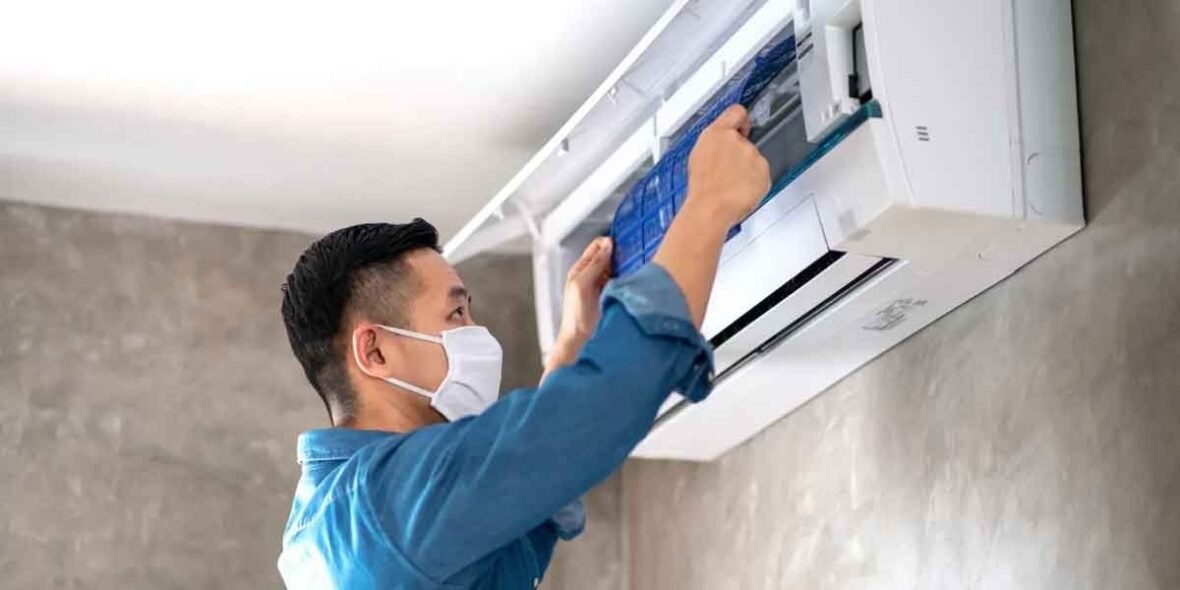
The diy vs professional air conditioning installation decision splits by system type. A single-zone mini split in a small home or one room is genuinely DIY-able for a capable homeowner, and documented installs have come in under $1,000 against professional quotes near $5,700. A whole-home central system is a different job: duct design, a load calculation, a dedicated electrical circuit, and a sealed refrigerant circuit that requires EPA Section 608 certification. The legal line varies by state, and the electrical work falls under the National Electrical Code.
Owners with a real quote in hand get the most from the matrix, because the numbers make the decision concrete.
A mini-split brand comparison and a repair on a running system are separate decisions, covered elsewhere in the library.
DIY vs Professional Air Conditioning Installation: A Decision Matrix
Score both routes across eight dimensions before you decide: skill, tools, time, warranty, code and permits, refrigerant safety, electrical safety, and the cost of a failed install. The table below puts DIY and professional side by side on each line, so the choice follows from your situation.
The two rows that flip most decisions are warranty and failure consequences.
A DIY install that voids the parts warranty saves money on paper until the compressor fails in year two. A professional install carries a labor warranty that makes a failure someone else’s problem. Read those two rows before you read the price difference.
| Dimension | DIY route | Professional route |
|---|---|---|
| Skill | Mechanical comfort, ability to read manuals, patience with line sets | Licensed techs with training and field experience |
| Tools | Drill, vacuum pump, manifold gauges, torque wrench for flare fittings | Supplied by the contractor; specialized for the brand |
| Time | A weekend for a mini split; days if you learn as you go | Half a day to a day for most installs |
| Warranty | Parts warranty may survive, labor warranty is on you; install errors can void it | Parts plus labor warranty, and a single point of responsibility |
| Code and permits | Your responsibility to pull permits and pass inspection | Contractor handles permits and knows local rules |
| Refrigerant safety | EPA Section 608 certification required to open the sealed circuit | Certified techs by default |
| Electrical safety | High-voltage hookup is licensed-electrician territory under the National Electrical Code | Included and inspected |
| Failure consequences | Leaks, short cycling, and a repair bill on top of your parts | Backed by the contractor’s warranty and liability |
The matrix explains why the same question has two honest answers.
For a single-zone mini split, the DIY column is realistic for many owners. For a central system, the professional column wins on every line except the upfront cost.
Choosing the right installation approach often comes down to the complexity of the unit and local safety codes. Working with established contractors such as NexGen Heating & Air Conditioning, LLC ensures that sizing calculations, electrical connections, and refrigerant lines meet current regional standards, reducing the likelihood of early equipment failure or code violations.
Where DIY Installation Works: Mini-Splits and Small Systems
A single-zone mini split on a small home or one room is the realistic DIY case: mounting, line runs, and the drain are within reach of a careful homeowner, and documented installs have landed under $1,000. The boundary is system type, not brand or skill level.
“The HVAC quote we got for one small room was ridiculous. They wanted around $5,700 for a single-zone setup. I decided to give it a try myself. After watching a few YouTube videos and reading the manuals, I spent a weekend drilling, wiring, and vacuuming the lines. The unit started up perfectly on the first try. The total cost was under $1,000.”
– r/Homebuilding, October 2025 (157 upvotes)
Most of the specialized tools, a vacuum pump and manifold gauges, can be rented for the weekend, which is what makes a single-zone install feasible for a first-timer.
The case is real, and so is its limit. The same thread’s top reply draws the line: a mini split on a tiny house is far easier than designing a proper system for a full-sized home. A DIY install also means the maintenance and filter care land on you, and the best filters for indoor air quality guide covers the filter side of that ongoing job.
Where a Licensed Professional Is Required
A licensed professional is required at the points where law and safety meet the job: state contractor licensing, the sealed refrigerant circuit under EPA Section 608, the high-voltage hookup under the National Electrical Code, and any whole-home central installation. These are not negotiable budget items.
“Yeah it’s just a minisplit on a tiny house. Much easier than designing a proper system for a full sized house.”
– r/Homebuilding, October 2025 (110 upvotes)
Legality is the first gate.
Contractor licensing varies by state and municipality, and some jurisdictions require a licensed HVAC contractor for any system that touches refrigerant, while others allow homeowners to work on their own property. The permit office for your city or county is the only reliable answer to whether your install needs a permit and an inspection.
The refrigerant gate is national, not local. Anyone who opens the sealed circuit to vacuum, charge, or recover refrigerant must hold EPA Section 608 certification, and a DIY kit with factory-prefilled lines removes that step only because the circuit stays sealed.
The electrical gate is where the National Electrical Code and local adoption of it come in. A mini split needs a dedicated circuit, and the high-voltage hookup is licensed-electrician territory in most places. A permit inspection is the moment a hand-wired connection gets found.
Before committing to the DIY route, run five questions: does your state allow homeowner refrigerant work, does the unit need a permit and an inspection, does the circuit need an electrician, can you rent a vacuum pump and manifold gauges, and will the manufacturer’s warranty survive a self-install?
A no on any of the first four is a signal to price the professional route before you buy the parts.
Whole-home central systems sit on the professional side of every one of these gates: duct sizing, load calculations, and refrigerant lines that run through the structure. That is why the honest answer is that you can legally install your own HVAC in some states for some systems, and the state and the system decide which ones.
The Cost Math and the Failure Consequences
The cost math cuts both ways: a successful DIY mini-split install can save thousands, while a failed one adds the repair bill on top of the parts you already paid for.
Budget for the failure case before you claim the savings.
On the saving side, the community case above is the extreme: roughly $1,000 of parts against a $5,700 quote, with the owner’s own labor covering the rest. On the failure side, the repair pricing in the ac repair cost calculator is what a botched install can cost you, and it applies the same way whether the mistake was yours or a contractor’s.
Unexpected mechanical issues during extreme weather can quickly change the financial math of trying to fix a complex cooling system on your own. When major components malfunction, reaching out to professional technicians for ac repair in Toronto ensures that underlying refrigerant and electrical issues are evaluated correctly without risking further damage to the unit.
A bad install fails in predictable ways. A sloped-out condensate drain or a poorly sealed line set leaks water and can grow mold inside the wall, and the indoor air quality mold testing guide covers how that gets found. The air that passes through a leaky installation is the same air you breathe, which is why the indoor air quality and health guide ties the install quality to the indoor environment.
The replace-versus-repair math shows up here too. A system that fails after a bad install is exactly the case where the age-times-repair-cost rule points at replacement, and that conversation is a separate project from the install itself.
Once the system is running, the work is not over.
A new install still needs the seasonal checks and filter care that keep a warranty valid, and the hvac maintenance checklist spells out the schedule.
Ongoing care plays a direct role in maintaining indoor comfort and efficiency over time. Working with local specialists like Modern Air of Jackson helps keep systems operating smoothly through routine inspections, ensuring key components are checked before minor wear leads to unexpected performance issues during extreme weather.
DIY vs Professional Air Conditioning Installation FAQ
What is the $5000 rule for HVAC?
The $5,000 rule is an industry rule of thumb: multiply the system’s age in years by the repair cost, and when the product passes $5,000, replacement deserves a serious conversation. It applies to repair-versus-replace decisions, not to the install choice itself.
Can I legally install my own HVAC?
In many states, homeowners may work on their own property, but the refrigerant circuit and the electrical hookup carry their own requirements, and permits may be mandatory. The permit office in your city or county is the authority on what your install needs.
How much does it cost to install central AC in a 2000 sq ft house?
A central AC installation for a 2,000 square foot home typically runs $8,000 to $15,000 or more depending on region, system size, and brand. That range assumes professional installation, which for central systems is the realistic route.
What AC brands to stay away from?
The brand matters less than the installation quality and the local parts support. An unknown name with no local dealer can strand you on warranty service, while a well-known brand installed badly fails just as fast, so vet the installer first and the nameplate second.
Run the eight dimensions against your own system, your skills, and your permit office, and the honest route shows itself. The wider Home Improvement guides keep the related HVAC projects in one place.