

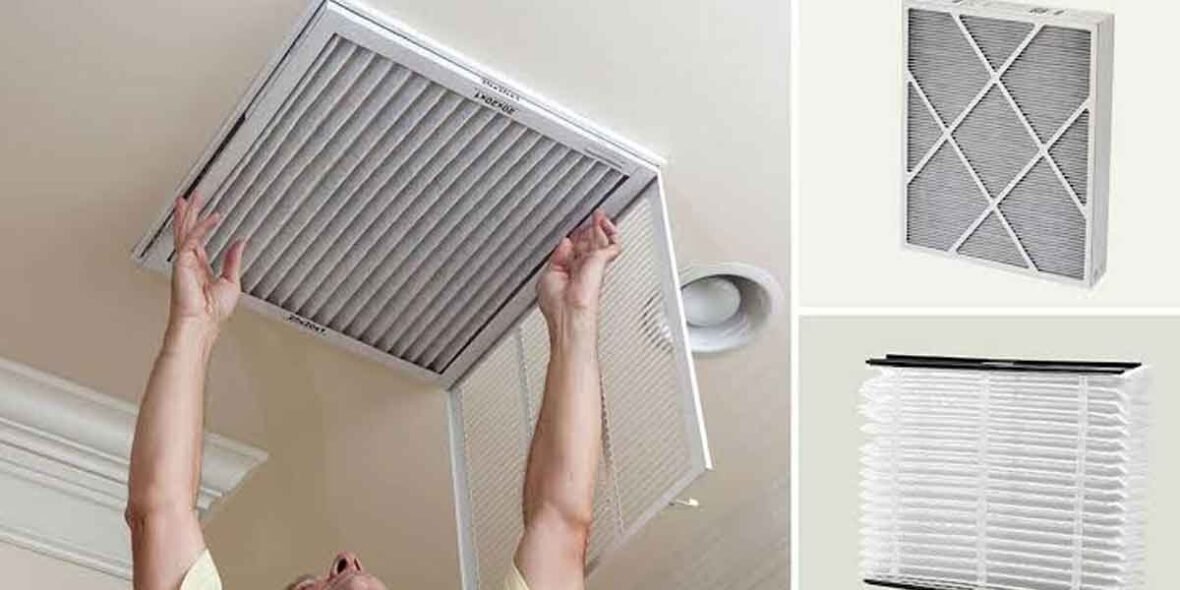
The best filters for indoor air quality split into two paths: a central HVAC filter that cleans the whole house whenever the system runs, and a standalone air purifier that cleans one room continuously. The HVAC path uses MERV-rated filters, with MERV 8 to 13 covering most homes and a 4-inch-thick filter filtering better and lasting longer than a 1-inch one where the system accepts it. The purifier path uses HEPA filters and is rated by CADR, so the room size decides the unit. Most households that need real air-quality improvement end up using both: the HVAC filter for baseline coverage and a purifier in the room that matters most.
The framework below compares the two paths, explains the ratings that matter, and ends with condition-based rules.
The answer follows from your house rather than from a brand.
The Best Filters for Indoor Air Quality: Two Paths
Two paths cover almost every home: a whole-house HVAC filter that works whenever the system runs, and a room-by-room air purifier that works continuously where you place it. The table below compares them on coverage, rating, maintenance, and who each fits.
| Path | Coverage | Core rating | Maintenance | Who it fits |
|---|---|---|---|---|
| HVAC filter | Whole house, whenever the system runs | MERV 8-13 | Change 1-3 months (1-inch), 3-6 months (4-inch) | Baseline coverage for most homes |
| Air purifier | One room, continuously | HEPA + CADR | Replace filter 6-12 months | Bedrooms, allergy rooms, smoke-heavy rooms |
| Both combined | Baseline plus a target room | MERV + CADR | Both schedules | Homes with allergies, pets, or one high-use room |
The HVAC filter is the default because it is already in the system and covers every room at once.
The purifier is the upgrade for the room where the air matters most, and the two are complementary rather than competing.
The two paths answer different questions. The HVAC filter asks nothing of you beyond a scheduled change and covers every room at once; the purifier asks for a second device, a filter schedule, and a power outlet, but it cleans continuously in one room. That difference decides most households.
HVAC Filters: The Whole-House Option
The whole-house path is a MERV-rated filter in the return duct, and the rating is the industry standard across brands: MERV 8 to 13 covers most homes, while a 4-inch-thick filter filters better and needs replacement less often than a 1-inch one.
The limit is compatibility, because not every system accepts a thicker filter.
Consumer Reports tested whole-house filters and found the 4-inch advantage real: thicker filters remove particles better and last longer between changes. Their tested picks include the Aprilaire Healthy Home 313 at MERV 13 and the Filtrete MPR 1550, and the caveat is the same in every case: the filter slot in your system decides what you can install, so a 1-inch slot stays with 1-inch filters.
The blower is the hidden variable. A higher MERV rating filters finer but adds airflow resistance, and the community line is exact: the higher the number, the more your blower has to work. The tradeoff matters most in older systems with 1-inch slots, where a MERV 11 or 13 filter can starve the blower even when it filters beautifully.
“Brand is irrelevant. The filter’s rating is an industry standard across brands. The higher the number, the smaller the particulate matter it takes out. The higher the number, the more your blower has to work.”
– r/homeowners, March 2026 (95 upvotes)
The health rationale for running this path at all lives in the indoor air quality and health guide, which covers what the pollutants actually do before you spend money on filters.
The replacement cost difference between 1-inch and 4-inch filters is real but smaller than the lifespan difference. A 1-inch filter at MERV 8 runs a few dollars and changes every month or two; a 4-inch filter at MERV 11 costs more per change but lasts three to six months, so the yearly cost lands close while the filtration is better.
Air Purifiers: The Room-by-Room Option
The room-by-room path is a standalone purifier rated by CADR, the clean air delivery rate, and the unit must match the room size to be effective.
HEPA filtration removes particles mechanically, and a carbon stage adds odor and VOC control where the household needs it.
The EPA’s guide to air cleaners in the home explains the CADR match: a unit’s CADR is measured for a given room size, and buying a unit for a larger room than the space you clean wastes money, while undersizing fails to clean the room. The purifier’s own filter is HEPA or a close equivalent, and the carbon pre-filter handles odors and gases the HEPA stage cannot.
Purifiers earn their place in specific rooms, not everywhere.
A bedroom with allergy symptoms, a nursery, a room with a wood stove, or a home office near a busy road are the rooms where continuous cleaning matters more than whole-house baseline.
Noise is the purifier tradeoff nobody mentions on the spec sheet. The CADR number assumes a given fan speed, and the same unit at its highest setting is often too loud for a bedroom, so the practical test is whether you can sleep with it running at the speed that actually cleans the room.
The Decision Framework: What Your Home Needs
The decision runs on four conditions: allergies, pets, smoke, and room layout. No allergies or pets means a MERV 8 HVAC filter is enough; allergies or pets move the HVAC filter up to MERV 11 to 13 and add a purifier in the bedroom; smoke or odors add a carbon stage somewhere in the path; and a single problem room makes the purifier the lead purchase.
The community default for the 1-inch filter slot is MERV 8 changed every two to three months, which balances value, filtration, and airflow. The same thread makes the combined recommendation: get separate air filters to truly filter your air, meaning the HVAC filter for baseline and a purifier for the room that needs more.
“My go to for the 1″ filters is the MERV 8 equivalent 3 packs at Lowes or HD. Then i change every 2 or 3 months depending on hvac usage. They strike a good balance of value and level of filtration without restriction. Get separate air filters to truly filter your air.”
– r/homeowners, March 2026 (30 upvotes)
Smoke changes the math for both paths. During wildfire or smoke events, a MERV 13 HVAC filter or a purifier with a high CADR becomes the practical defense, and the EPA guidance on air cleaners covers which units handle smoke particles best. Check the CADR for smoke specifically, not just for dust, because some units rate well on one and poorly on the other.
Budget follows the same order.
The HVAC filter is a few dollars per change and covers the house; the purifier is a larger upfront cost that covers one room well. For most households, upgrading the HVAC filter first and adding a purifier only where symptoms or smoke demand it is the honest sequence.
Replacements matter as much as the purchase. A purifier with a $20 filter every six months and one with a $60 filter every four months look similar at the register and very different over three years, so the filter cost belongs in the comparison.
Start with the upgrade that touches the most air: the HVAC filter, because it cleans every room whenever the system runs. Only after that is on a schedule does a purifier earn its place in the room where it matters most.
Best Filters For Indoor Air Quality FAQ
What type of air filter is most effective for indoor allergies?
A MERV 11 to 13 HVAC filter or a HEPA air purifier in the bedroom is the effective combination for allergies. The HVAC filter handles baseline dust and pollen, and the purifier runs continuously in the room where symptoms are worst.
What type of air filter is best for a house?
For most homes, a MERV 8 to 11 HVAC filter in the size the system accepts is the best baseline, with a 4-inch filter preferred where the slot allows it. Add a HEPA purifier for a specific room that needs more than baseline.
Do indoor air filters really work?
Yes, when sized and maintained correctly. The EPA confirms that air cleaners with a CADR matched to the room size remove particles effectively, and HVAC filters work whenever the system runs, provided they are changed on schedule.
Which filter is better, HEPA or MERV?
HEPA is a filter standard that captures 99.97 percent of 0.3-micron particles and is used in standalone purifiers, while MERV is the rating scale for HVAC filters up to 16. They are not competitors; each is the right tool for its path.
Read the rating, not the brand, and let your conditions pick the path: MERV for the house, CADR for the room. The best filters for indoor air quality are the combination that covers your baseline and your worst room.