

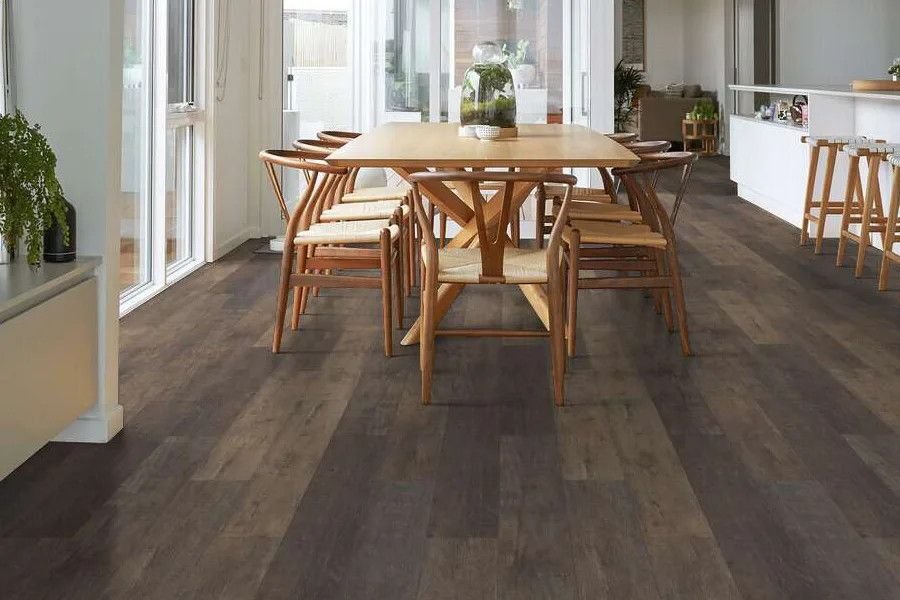
Flooring selection affects durability and usability in areas with frequent foot traffic. These spaces require materials that can withstand ongoing wear from daily household activities. Luxury vinyl plank (LVP) flooring is designed for this purpose, using layered construction and a wood-look surface that works in a range of settings. The benefits of vinyl plank flooring in high-traffic areas include:
Withstands Heavy Daily Use
Simplifies Daily Maintenance
High-traffic areas accumulate dust, dirt, and debris from frequent movement, which requires regular cleaning. LVP has a hard, smooth surface that keeps particles on top, where sweeping or vacuuming removes them easily. This flooring also maintains its appearance over time without requiring treatments or professional maintenance. It does not require special products, refinishing, or intensive upkeep, only routine cleaning. Regular short cleaning sessions integrated into daily activity keep high-traffic areas manageable and easy to maintain.
Resists Moisture and Spills
Vinyl plank floors use non-porous materials that do not absorb water. This structure provides resistance to moisture in high-traffic areas, including kitchens and entryways where spills and wet shoes are common. Water remains on the surface, and homeowners are able to wipe it away without worrying about it penetrating the plank. This limits warping, swelling, and staining that often occur in more porous flooring materials.
Water resistance also affects long-term floor performance. Flooring that absorbs moisture experiences more than surface damage, since trapped moisture supports mold and mildew growth beneath the surface and can affect the subfloor. These conditions also contribute to indoor air quality problems over time. Vinyl plank flooring reduces these risks by preventing moisture penetration, which makes it a practical and hygienic option for areas exposed to frequent spills or regular humidity.