

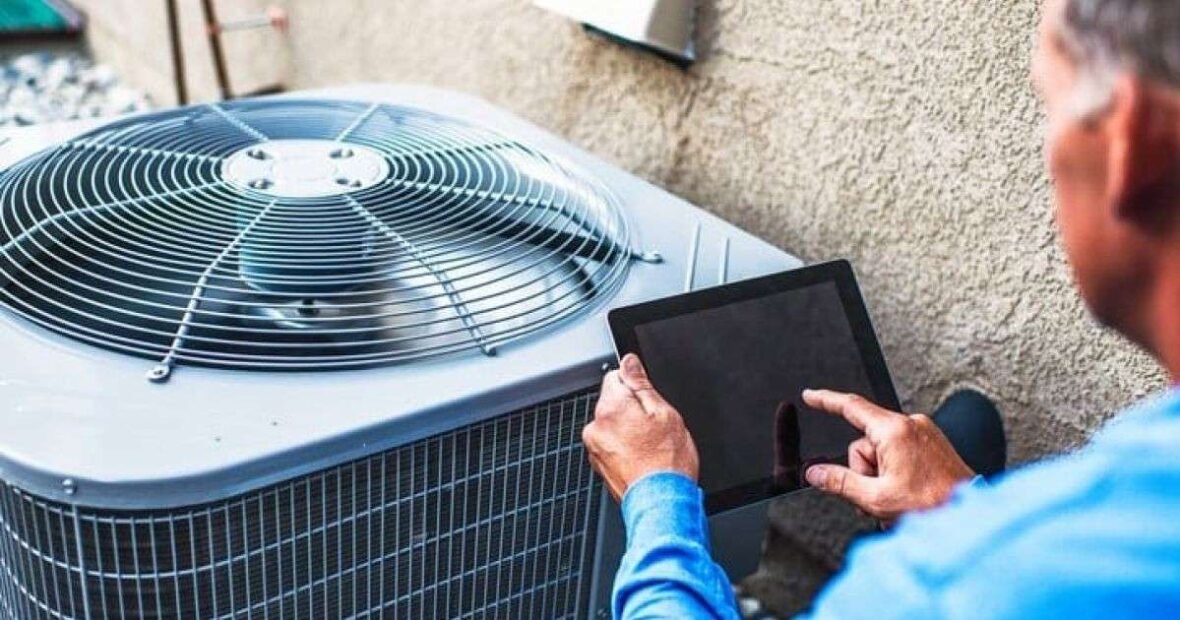
An air conditioner that makes noise is telling you which component is failing. A banging sound from the outdoor unit is the compressor or the fan blade hitting something. A squealing sound from the indoor unit is a failing blower motor bearing. A hissing sound is a refrigerant leak. A buzzing sound from the outdoor unit that does not start is a failed capacitor. Every noise maps to a specific mechanical problem, and identifying the sound — and where it is coming from — tells you whether the fix is a 10-minute DIY job or an emergency service call.
The first diagnostic step is to identify which unit is making the noise. Window and portable ACs have all their components in one box, so the noise source is obvious. Central ACs and mini-splits have two units: an indoor air handler and an outdoor condenser. A noise from the outdoor unit is a compressor, condenser fan, or capacitor problem. A noise from the indoor unit is a blower motor, blower wheel, or refrigerant metering device problem. Walk outside and stand next to the condenser. Walk inside and stand under the air handler. The location of the noise eliminates half the possible causes immediately.
AC Noise Quick Diagnosis Table
| Sound | Where | Most Likely Cause | Urgency |
| Loud buzzing or humming | Outdoor unit, not starting | Failed capacitor | ًںں، Medium — replace ASAP before compressor damage |
| Banging or clanking | Outdoor unit | Loose fan blade, debris in fan, failing compressor | ًں”´ High — stop using if compressor-related |
| Squealing or screeching | Indoor unit | Blower motor bearings | ًںں، Medium — fix before motor seizes |
| Hissing or bubbling | Indoor or outdoor unit | Refrigerant leak | ًں”´ High — stop using, call technician |
| Rattling or vibrating | Either unit | Loose panel, loose screw, debris | ًںں¢ Low — DIY fix |
| Clicking repeatedly | Outdoor unit, trying to start | Contactor or capacitor failure | ًںں، Medium — call technician |
| Gurgling or water noise | Indoor unit | Condensate drain partial clog | ًںں¢ Low — clean drain |
| Screaming or very loud whine | Outdoor unit | Compressor internal failure | ًں”´ High — stop immediately |
1. Loud Buzz or Hum: Failed Capacitor (Outdoor Unit Won’t Start)
A loud buzzing or humming sound from the outdoor condenser unit, accompanied by the fan not spinning and the compressor not running, is a failed start capacitor. The capacitor provides the electrical phase shift needed to start the compressor and the condenser fan motor. When the capacitor fails, the compressor motor hums at 60 Hz — the sound of the motor trying and failing to overcome its own inertia — while drawing locked-rotor current that is three to five times its normal running amperage.
Turn the AC off at the thermostat immediately. A compressor that is buzzing and not starting is overheating rapidly. The capacitor costs $15 to $40 for the part and takes a technician 20 minutes to replace. The total cost including labor is $150 to $300. Do not attempt to replace a capacitor yourself: capacitors store a lethal electrical charge even with the power disconnected, and the terminals must be discharged with an insulated screwdriver before handling. A capacitor shock can stop a heart.
Dual capacitor vs. single capacitor: Most residential AC condensers use a dual-run capacitor — a single cylindrical component with three terminals that serves both the compressor and the condenser fan. If the fan spins but the compressor does not start, the compressor side of the dual capacitor has failed. If neither the fan nor the compressor starts, the entire capacitor has failed. Either way, the fix is the same: replace the capacitor.
2. Banging or Clanking: Loose Fan Blade, Debris, or Failing Compressor
A banging or clanking noise from the outdoor condenser unit has three possible causes, and the severity ranges from trivial to catastrophic. Turn off power at the disconnect box near the unit before investigating.
The most benign cause is a loose condenser fan blade. The fan blade is mounted on the motor shaft with a set screw. If the screw loosens, the blade wobbles on the shaft and strikes the fan grille or the fan shroud.
Tighten the set screw with an Allen wrench. If the blade has been striking the grille for a while, the blade may be bent. A bent blade creates an imbalance that will loosen the set screw again. A replacement fan blade costs $30 to $60.
The second cause is debris inside the condenser unit — a stick, a piece of mulch, or a plastic bag that has been sucked into the fan area and is being repeatedly struck by the spinning blades. Remove the debris. The sound stops immediately.
The third cause is a failing compressor. A compressor that makes a knocking, banging, or rattling sound from inside its sealed metal housing has internal mechanical damage: a broken connecting rod, a loose piston, or a failed bearing.
A compressor making these sounds is not repairable. The entire outdoor unit or the compressor itself must be replaced. A compressor replacement costs $1,200 to $2,500.
If the unit is more than 10 years old, replacing the entire condenser (or the entire system) is usually the better financial decision.
3. Squealing or Screeching: Indoor Blower Motor Bearings
A high-pitched squeal or screech from the indoor air handler or furnace that starts when the blower fan begins spinning is failing blower motor bearings. The sound may be continuous or it may come and go — sometimes present at startup, then fading as the motor warms up and the remaining lubricant spreads across the bearing surfaces.
On older belt-drive blowers (common in furnaces installed before 2000), the squeal may come from a worn or loose blower belt. A belt that is cracked or glazed must be replaced ($15 to $30). A belt that is loose can be tightened by adjusting the motor mount. Belt-drive blower motors have oil ports — small flip caps on the motor housing — that accept SAE 20 non-detergent electric motor oil. A few drops in each port can quiet a dry bearing temporarily. On modern direct-drive ECM blower motors, there are no oil ports and no belts. A squealing ECM motor has failing sealed bearings and must be replaced ($400 to $800 for the motor, $600 to $1,200 installed).
4. Hissing or Bubbling: Refrigerant Leak
A continuous hissing sound from the indoor evaporator coil, the outdoor condenser, or the refrigerant lines connecting them is a refrigerant leak. The hiss is the sound of pressurized refrigerant gas escaping through a pinhole in a coil, a brazed joint, or a service valve. A bubbling or gurgling sound from the indoor unit after the system shuts off is refrigerant flowing through the metering device as the system equalizes pressure — this is a normal sound in many systems, especially on hot days when the pressure differential between the high and low sides is large. The distinction: a hiss that continues while the system is running is a leak. A gurgle that lasts 10 to 30 seconds after the system shuts off is normal equalization.
If the hissing is accompanied by a gradual loss of cooling capacity over weeks or months, oily residue on the refrigerant lines at the outdoor unit connections, or ice forming on the evaporator coil or the refrigerant line at the outdoor unit, the leak is confirmed. Turn the system off and call an EPA-certified technician. A refrigerant leak cannot be sealed with tape, epoxy, or a can of stop-leak from the auto parts store. The leak must be located with an electronic detector or UV dye, the leaking component brazed or replaced, the system evacuated with a vacuum pump, and recharged to the precise weight specified on the nameplate. Leak repair and recharge costs $400 to $1,500.
5. Rattling or Vibrating: Loose Panels and Debris
A rattling noise that pulses with the fan speed is almost always a loose metal panel, a screw that has backed out, or debris that has been sucked into the outdoor unit or fallen into a supply register. The fix starts with pressing on surfaces to find the source.
For a central AC outdoor unit, press your hand firmly against the top grille, each side panel, and the disconnect box while the unit is running. The component that stops rattling when you press on it is the source. Tighten the screws securing that panel. If a screw hole has stripped out in the sheet metal, replace the screw with the next larger diameter, or drill a new hole آ½ inch away and install the original screw there. For a window AC, the front plastic grille is the most common rattle source. Snap the grille back into its retaining clips or add a piece of weatherstripping foam between the grille and the chassis where it vibrates.
A rattle from a specific supply register inside the house is debris — a child’s toy, a pen, or a piece of a broken register damper — that has fallen into the duct. Remove the register grille (two screws), reach into the duct with a vacuum hose or a grabber tool, and remove the debris. A rattle that you can hear but cannot locate by pressing on surfaces may be inside the blower wheel: a small object that was sucked into the return duct has lodged between the blower fins. Turn off power and remove the blower compartment panel to inspect the blower wheel.
6. Gurgling or Water Noise: Condensate Drain Partial Clog
A gurgling, trickling, or intermittent splashing sound from the indoor air handler or furnace during cooling operation is water struggling to drain through a partially clogged condensate line. The evaporator coil produces condensate continuously while the system runs. A partially obstructed drain creates an air-lock effect: water builds up in the drain pan, then a bubble of air breaks through the clog, the water rushes past, and the cycle repeats. The gurgling is the sound of that air-water slug moving through the drainpipe.
Clear the condensate drain line with a wet-dry vacuum from the outside end of the drain pipe. Pour a cup of warm water mixed with a few drops of bleach into the drain pan inside the air handler (accessible by removing the front panel) to kill algae. If the air handler has a condensate pump, verify the pump is receiving power and the float moves freely. A pump that hums but does not pump water has a failed impeller or a clogged discharge tube and needs replacement ($60 to $150).
7. Screaming or Very Loud Whine: Compressor Internal Failure
A screaming, shrieking, or extremely loud mechanical whine from the outdoor condenser unit that starts suddenly and does not stop is a compressor experiencing catastrophic internal failure. The sound is the compressor’s internal valves, pistons, or bearings disintegrating at 3,500 RPM inside the sealed metal housing. This is not a repair situation. This is a replacement situation.
Turn the AC off at the thermostat and at the disconnect box immediately. Do not run the compressor for even a few seconds to “see if it goes away.” A compressor in the process of destroying itself is generating metal debris that is circulating through the refrigerant system. The longer it runs, the more debris is pumped into the condenser coil, the refrigerant lines, and the metering device. A compressor that is shut down at the first sign of internal failure may allow a compressor-only replacement. A compressor that is allowed to run until it seizes sends debris throughout the entire system, requiring a complete system replacement.
FAQ: Common Questions About AC Noises
What AC noises are normal?
The low hum of the compressor running, the whoosh of air from the condenser fan, the click of the contactor engaging when the system starts, and the gurgle of refrigerant equalizing for 10 to 30 seconds after shutdown are all normal operating sounds. A soft sloshing or trickling sound from the indoor coil during operation is normal condensate drainage. A brief metallic ping or pop from the ductwork after the blower starts or stops is normal thermal expansion. If the sound is new, louder than it used to be, or has a harsh mechanical quality — buzzing, banging, squealing, screaming — it is not normal.
Why is my window AC making a loud vibrating noise?
A window AC that vibrates loudly has a loose front grille (snap it back into its clips), an unbalanced blower wheel (clean the blades with a brush), worn compressor isolation grommets (the rubber mounts under the compressor have hardened, transmitting vibration to the chassis), or the unit is not seated firmly in the window frame (tighten the mounting brackets and add foam weatherstripping between the unit and the window sash). Window AC vibration is almost always a mounting or panel issue, not a compressor failure.
An AC Noise Is a Diagnosis, Not an Annoyance
Every sound an air conditioner makes — the buzz of a failed capacitor, the squeal of dry blower bearings, the hiss of escaping refrigerant, the bang of a loose fan blade, the scream of a dying compressor — is a specific mechanical event. Identifying the sound and the unit it comes from tells you what failed and whether the fix is a $15 capacitor, a $400 blower motor, or a $2,000 compressor replacement.
If the sound is a buzz from the outdoor unit that won’t start, a hissing refrigerant leak, or a screaming compressor, shut the system off immediately. If the sound is a rattle, a squeal, or a gurgle, you have time to diagnose and repair before the problem escalates. The rule is simple: if the sound is electrical (buzz, hum) or involves the refrigerant (hiss), shut it down. If the sound is mechanical (rattle, squeal, gurgle), you can finish the cooling cycle and call a technician during business hours.