

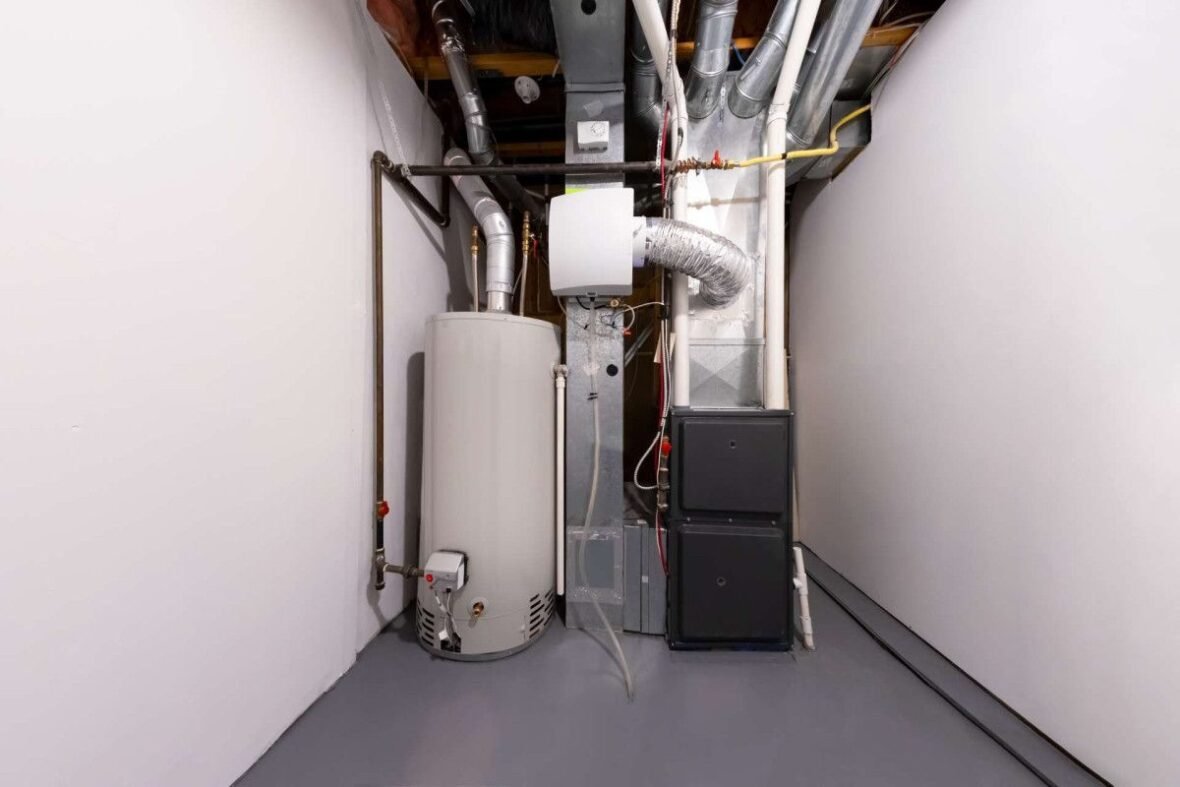
A two-stage furnace is roughly half as loud as a single-stage furnace during normal operation — not because the furnace itself is quieter at full output, but because it runs at low-stage (60% to 70% of full output) for 70% to 80% of the heating season. At low stage, the burner produces less combustion noise, and the blower spins at a lower speed, moving less air through the ducts at lower velocity. The combination of a quieter burner and a slower blower reduces the overall sound level by roughly 3 to 6 decibels at the furnace and by 5 to 10 decibels at the registers, where the whoosh of air is the dominant noise source.
When evaluating these heating options, homeowners often gain a clearer picture of system choices by consulting local heating experts. Experienced ventilation specialists can assist in assessing your property’s specific configuration to ensure optimal climate settings. Those interested in learning about system reliability and service requirements can learn this here now to understand how proper equipment selection impacts long-term operational efficiency.
The important distinction is that a two-stage furnace at full output — high stage — is exactly as loud as a single-stage furnace of the same BTU capacity. Both are running at 100% output, both are moving the same volume of air at the same velocity, and both produce the same noise. The noise reduction comes from the fact that the two-stage furnace spends most of its time at low stage. On a 40°F day, a single-stage furnace cycles on at 100% output, runs for 5 to 8 minutes, and cycles off. A two-stage furnace runs at low stage — 60% to 70% output — for 10 to 15 minutes. The sound you hear during those cycles is quieter, and the starts and stops are half as frequent because the cycles are twice as long.
Furnace Noise: Single-Stage vs. Two-Stage vs. Modulating
| Noise Factor | Single-Stage | Two-Stage | Modulating |
| Startup sound | Full-speed blast — loud whoosh | Low-stage ramp-up — softer whoosh | Near-silent ramp-up |
| Running sound (40°F day) | 100% output — loud, 5-8 min | 60-70% output — moderate, 10-15 min | 35-50% output — barely audible, 20-60 min |
| Running sound (coldest day) | 100% output — loud | 100% output — same as single-stage | 80-100% output — same as others at full |
| Cycles per hour | 4-6 | 2-3 | 1-2 (essentially continuous) |
| Register air noise | High-velocity whoosh | Reduced on low stage, full on high | Minimal on low, full only on coldest days |
Where the Noise Comes From: Burner, Blower, and Ducts
A furnace produces noise from three sources, and the two-stage design affects each one differently. The burner produces combustion noise — the roar of the gas flame inside the heat exchanger tubes. At low stage, the burner runs at 60% to 70% of its maximum fuel flow, and the flame is smaller, less turbulent, and quieter — roughly 2 to 4 decibels quieter than at full output. The blower produces mechanical noise — the sound of the motor and the air moving through the fan housing. An ECM blower motor in a two-stage furnace typically runs at 60% to 70% of its maximum RPM on low stage, producing roughly 3 to 5 decibels less noise than at full speed. The ductwork produces the register whoosh — the sound of air exiting the supply registers at velocity. Air velocity is directly proportional to blower speed, and reducing the blower speed by 30% to 40% reduces the register noise by roughly 5 to 10 decibels — a substantial, easily noticeable reduction.
Decibels are logarithmic, not linear. A 3-decibel reduction is a barely perceptible change in volume. A 6-decibel reduction is a clearly noticeable reduction — roughly half as loud to the human ear. A 10-decibel reduction sounds like the volume was cut in half. The two-stage furnace at low stage produces roughly a 5- to 10-decibel reduction at the registers compared to full output, which is the difference between hearing the furnace run from the next room and not hearing it at all from the same distance.
The Startup Whoosh: The Noise That Disappears
The most noticeable noise reduction from a two-stage furnace is not during operation — it is at startup. A single-stage furnace starts at full blower speed immediately. The sudden rush of air through the ducts produces a distinct whoosh — the sound of 1,000 to 1,500 CFM of air accelerating from zero to full velocity in less than 5 seconds. This startup whoosh is the most commonly cited noise complaint about single-stage furnaces.
While choosing the right equipment mitigates these startup sounds, ongoing maintenance is vital to keeping systems quiet over time. Accumulated dust on the fan components or minor electrical misalignments can gradually increase operational sound levels during a cold season. Booking a regular furnace repair service helps ensure minor wear is resolved early, allowing your heating system to maintain its quiet performance and long-term reliability.
A two-stage furnace, when paired with an ECM blower motor, starts at low speed and ramps up to the target speed over 30 to 90 seconds. The ramp is gradual enough that the ear does not perceive a sudden change in sound — the air simply begins moving without an audible starting event. If the thermostat calls for low-stage heat, the blower never reaches full speed. The startup whoosh is eliminated for 70% to 80% of the heating cycles. Only on cold days when the thermostat calls for high-stage heat does the blower eventually reach full speed, and even then, the ramp is gradual rather than instant.
Two-Stage vs. Modulating: The Noise Difference
A modulating furnace is quieter than a two-stage furnace at the lowest output levels because a modulating furnace can run at 35% to 40% of full output, while a two-stage furnace at low stage runs at 60% to 70%. The additional 20% to 35% reduction in burner and blower output produces another 3 to 5 decibels of noise reduction — noticeable if you are standing next to the furnace, but less noticeable at the registers where the air velocity is already low at both settings.
The more important noise difference between two-stage and modulating is the number of starts per hour. A two-stage furnace starts 2 to 3 times per hour. A modulating furnace starts 1 to 2 times per hour and may run continuously for hours at a time at low output. Each start — even the soft start of an ECM blower — produces more noise than continuous low-output operation. The modulating furnace eliminates starts entirely for long stretches, which is the final increment of noise reduction that the two-stage furnace does not achieve.
FAQ: Common Questions About Furnace Noise
Is the noise reduction from the two-stage burner or the ECM blower?
Mostly the blower. The burner itself is only 2 to 4 decibels quieter at low stage. The blower at reduced speed — moving 30% to 40% less air — is responsible for 70% to 80% of the total noise reduction. A two-stage furnace with a PSC blower motor that runs at the same speed on both stages would be only marginally quieter than a single-stage furnace. The two-stage gas valve and the ECM blower are typically sold together on two-stage furnaces because the gas valve benefit alone — without the blower speed reduction — is minimal for noise.
Can I make my existing single-stage furnace quieter without replacing it?
Yes — three options, in order of cost. First, increase the return air capacity by adding a return duct or enlarging the return grille. A restricted return is the most common cause of loud register whoosh because the blower is fighting against high static pressure and the air accelerates through an undersized return. Second, replace the supply registers with high-flow grilles that reduce air velocity at the register face. Third, have a technician lower the blower speed tap — the blower motor has multiple speed taps, and the cooling speed may be set higher than necessary, producing more airflow and more noise than the system needs. This is a 10-minute adjustment that costs a service call fee ($100 to $200). Do not lower the blower speed below the manufacturer’s specified minimum CFM per ton for the air conditioner — too little airflow across the AC coil causes it to freeze.
The Low-Stage Cycles Are the Noise Reduction You Pay For
A two-stage furnace is roughly half as loud as a single-stage furnace for 70% to 80% of the heating season because it runs at low stage — 60% to 70% output — with a slower blower and a quieter burner. The startup whoosh is eliminated by the gradual ECM blower ramp. The register noise is reduced by 5 to 10 decibels — the difference between hearing the furnace run and not noticing it.
On the coldest days of the year, when the furnace runs at high stage, a two-stage furnace is as loud as a single-stage furnace. The noise reduction is not from a quieter high-output mode — it is from spending most of the season at low output. That is the value proposition: quieter operation for the majority of heating hours, in exchange for a $500 to $1,000 price premium over a single-stage furnace.