

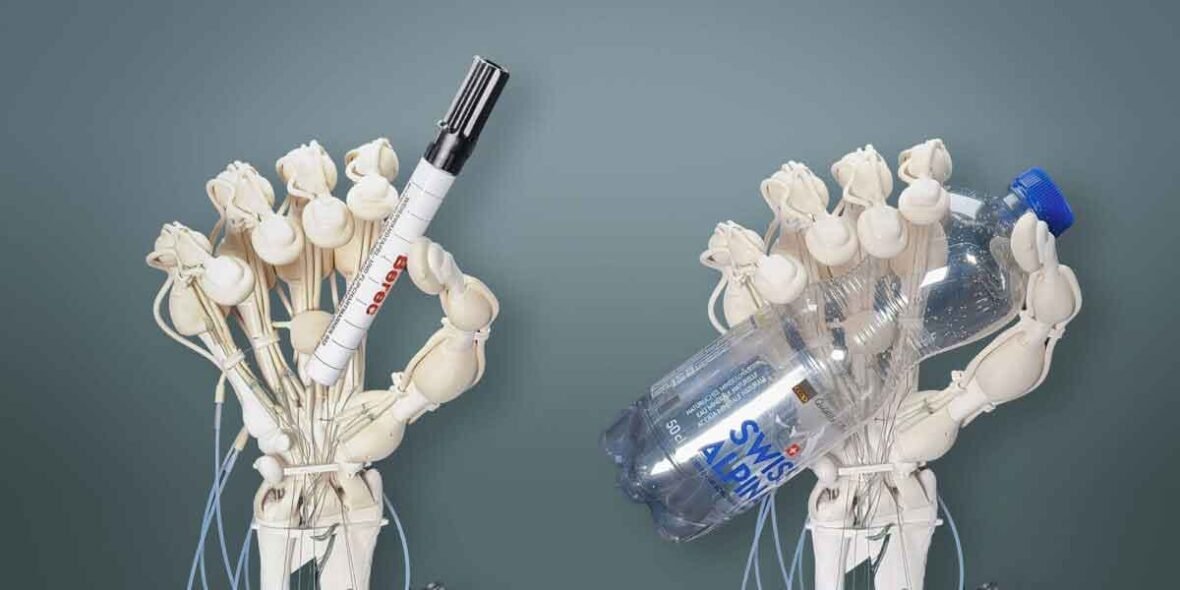
3D printing has moved far beyond simple prototypes and hobby projects. Today, it plays a major role in industries like healthcare, aerospace, automotive manufacturing, and consumer goods. As the technology becomes more advanced, the materials used in the process have become just as important as the printers themselves. This is where specialty polymers are making a major impact.
Unlike standard plastics, specialty polymers are engineered for specific performance needs. They offer greater strength, flexibility, heat resistance, and chemical durability, making them ideal for high-performance 3D printing applications. As businesses look for smarter, faster, and more efficient production methods, these materials are helping shape the future of manufacturing.
Better Performance for Demanding Industries
Traditional 3D printing materials such as PLA and ABS are useful for basic models and early-stage designs, but they often fall short in demanding environments. Industries like aerospace and medical manufacturing need materials that can handle pressure, heat, and repeated use without failing.
Specialty polymers such as PEEK, PEKK, and PPSU provide these advanced capabilities. They are lightweight yet extremely strong, resistant to harsh chemicals, and able to perform in high-temperature environments. This makes them ideal for aircraft parts, surgical tools, and automotive components where safety and durability matter most.
Companies looking for reliable specialty polymer solutions often work with trusted polymer producers, especially when they need materials that can meet strict performance, safety, and regulatory standards. Businesses like polychemistry.com make and supply these polymers and play a major role in supporting industries like aerospace, healthcare, and automotive manufacturing, where precision and durability are essential.
Greater Design Freedom
One of the biggest advantages of 3D printing is the ability to create complex designs that would be difficult or impossible with traditional manufacturing methods. Specialty polymers support this even further by allowing engineers to design parts that are both intricate and highly functional.
For example, lightweight lattice structures can be printed for aerospace applications, reducing fuel costs without sacrificing strength. In healthcare, patient-specific implants and dental devices can be created with high precision using biocompatible polymers.
These materials help designers move beyond simple shapes and into highly customized, performance-driven solutions.
Supporting Faster Production Cycles
Speed is one of the main reasons companies invest in 3D printing. Faster prototyping, shorter production timelines, and reduced waste all improve efficiency. Specialty polymers make this even more valuable because they allow printed parts to move beyond prototypes and into final-use products.
Instead of creating a test version and then switching to traditional manufacturing, businesses can produce end-use parts directly. This reduces delays, lowers tooling costs, and improves flexibility when design changes are needed.
For industries with fast product development cycles, this can create a major competitive advantage.
Sustainability and Material Innovation
Sustainability is becoming a larger priority across manufacturing. Specialty polymers are helping here, too. Many advanced materials are being developed with recyclability, lower waste output, and longer product life in mind.
Because 3D printing itself reduces excess material compared to subtractive manufacturing, combining it with longer-lasting polymers creates a more efficient system overall. Fewer replacements, less waste, and more precise production all contribute to stronger environmental outcomes.
As research continues, bio-based and recyclable specialty polymers are expected to become an even bigger part of the conversation.
The Future Is Material-Driven
The future of 3D printing is not only about better machines but also better materials. Specialty polymers are unlocking new possibilities by making printed parts stronger, smarter, and ready for real-world use.
As industries demand more from additive manufacturing, these advanced materials will continue to lead innovation. From medical breakthroughs to aerospace efficiency, specialty polymers are proving that the future of 3D printing starts with what you print with.