

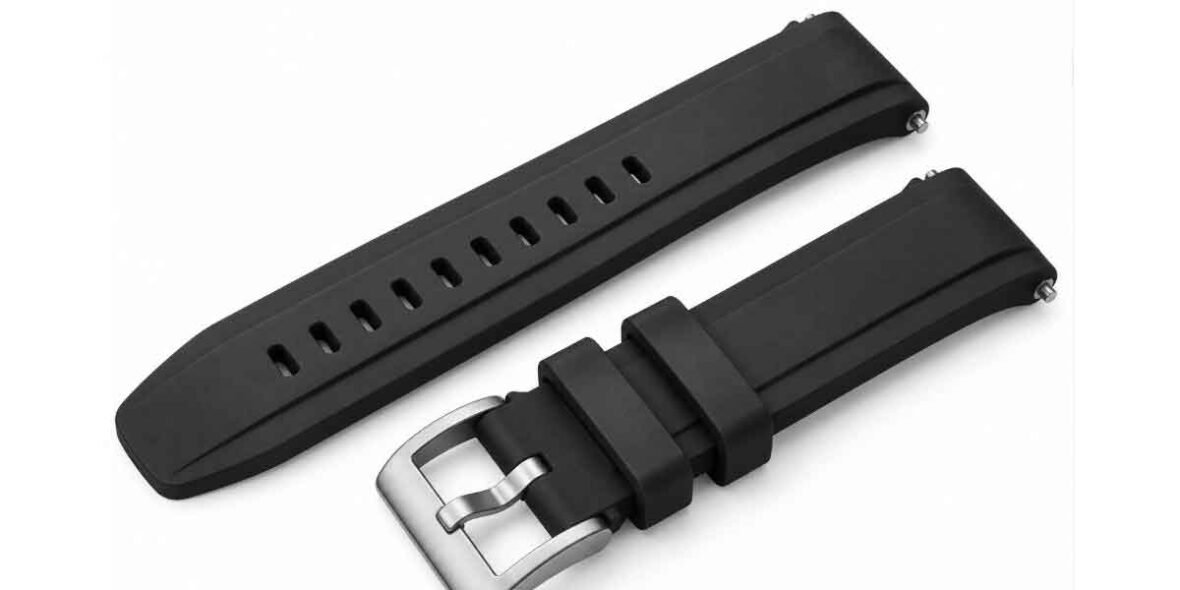
Autumn can be hard on a watch strap. A dry morning can turn into an afternoon of steady rain, while a crowded train or brisk walk adds heat and perspiration. Leather remains a fine choice for many watches, but it needs more thought when damp conditions become part of the daily routine. Rubber offers a practical alternative that can keep a familiar watch in regular use when the forecast is unsettled.
The point is not to make every watch look like diving equipment. Modern rubber straps cover a wide range of shapes, textures and colours, including restrained designs that work with field watches, chronographs and simple three hand models. Choosing well depends on fit, proportion and the way the watch will actually be worn.
British weather changes the demands on a strap
Rain is only one part of the problem. Moisture can collect between a strap and the wrist during a commute, a long walk or an afternoon spent moving between warm rooms and cold streets. A strap that can be wiped clean is useful in these conditions. It also makes sense for people who cycle to work, walk the dog in all seasons or spend weekends outdoors.
Rubber does not absorb moisture in the same way as many natural materials, although the exact level of water resistance depends on the individual product and its hardware. This distinction matters. A strap suitable for daily rain is not automatically intended for diving, and the watch itself must have an appropriate water resistance rating before it goes near a pool or open water.
Comfort depends on the right construction
Some rubber straps are smooth and flexible, while others use raised channels, perforations or textured undersides to create space against the skin. Ventilation can make a noticeable difference during a warm commute or a fast walk. A soft strap that bends close to the case also tends to settle more easily around smaller wrists.
A well chosen Rubber watch band strap should match the watch at the lugs and remain comfortable throughout the day. Watch Obsession carries options from names such as Hirsch, ISOfrane, Tropic and Bonetto Cinturini, so buyers can compare smooth, vented, retro and model-specific designs rather than treating rubber as a single style.
Thickness deserves attention. A substantial dive watch can carry a broad, heavily moulded strap, but the same design may overpower a slim case. A lighter strap with a gentle taper often suits a smaller watch better. The buckle should also sit in proportion to the case and feel comfortable when the wrist rests on a desk.
Colour can make rubber look more considered
Black is the easy option because it works with most dials and cases. Navy can soften the appearance of a blue or black dial, while dark green pairs well with brushed steel and watches with military influences. Grey is useful when a black strap feels too severe. These colours retain the practical appeal of rubber without making the watch look overtly sporty.
Brighter colours have their place. Orange has a long association with dive watches and can pick up a small accent on a seconds hand or bezel. Yellow, red and brighter blue work best when the watch already has a clear sporting character. Matching a minor dial detail usually looks more deliberate than choosing a bright colour with no connection to the watch.
Texture also changes the effect. A basket weave pattern can give a vintage diver a period feel. Fine graining can make rubber look calmer beside a dressier case. Alligator embossed rubber offers the visual order of a traditional strap with easier day to day care, though it will still look more formal than a vented dive design.
Measure the watch before ordering
The lug width is the distance between the inside faces of the lugs. It should be measured in millimetres with a ruler or calliper, and the new strap should match it exactly. Trying to squeeze a wider strap into the gap can damage the strap or make fitting difficult. A strap that is too narrow may move from side to side and leave an untidy gap.
Length is equally important. The usual two figures describe the longer section with the holes and the shorter buckle section. Wrist circumference helps, but the watch case also occupies space. A large case makes the effective strap length feel different from the same strap fitted to a compact watch. Checking the length of a comfortable existing strap is often the simplest reference.
Buyers should also check the width at the buckle end, the finish of the buckle and whether the strap includes quick release spring bars. Quick release fittings are convenient for regular changes, but ordinary spring bars remain common and work well when fitted with the correct tool.
Simple care keeps the strap fresh
After a wet day, remove surface moisture with a soft cloth and allow the strap to dry in moving air. If the manufacturer permits washing, mild soap and lukewarm water are usually more sensible than strong household cleaners. Sunscreen, insect repellent and solvents can affect some materials, so product care instructions should take priority over general advice.
The underside deserves as much attention as the visible surface. Salt, soap and perspiration can collect around keepers, holes and textured sections. Cleaning these areas gently helps prevent odours and keeps the strap comfortable. The spring bars should also be checked from time to time, particularly after frequent exposure to water.
A seasonal strap change can be modest, but it can make a watch easier to wear. For a British autumn, rubber offers a useful balance of comfort, simple maintenance and visual variety. The best result comes from treating it as part of the watch rather than a purely practical add-on.