

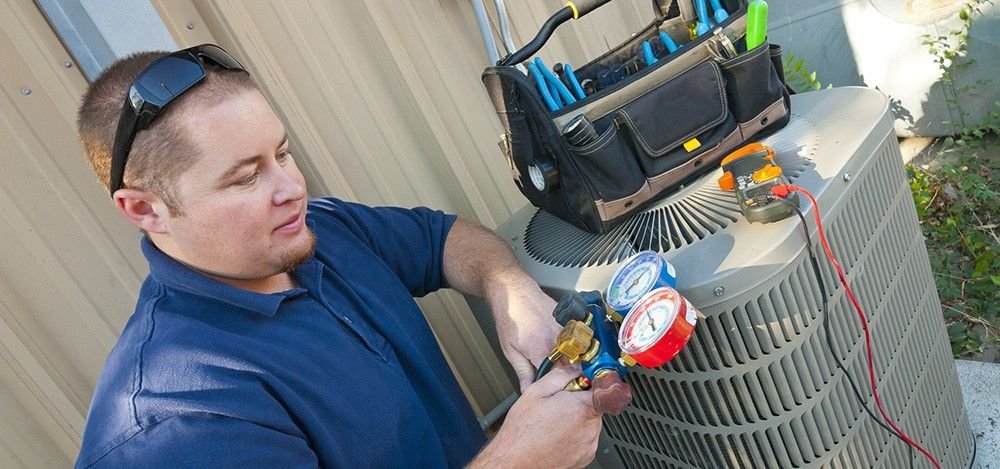
An HVAC tune-up is a preventive maintenance service in which a technician inspects, cleans, tests, and adjusts a furnace, air conditioner, or heat pump to ensure it is operating safely, efficiently, and at its rated capacity. The technician does not repair anything that is broken — a tune-up is maintenance, not repair — but the inspection identifies components that are worn, dirty, or failing so they can be repaired or replaced before they cause a breakdown. A furnace tune-up focuses on the combustion system, the heat exchanger, and the safety controls. An AC tune-up focuses on the refrigeration circuit, the condenser and evaporator coils, and the electrical components. A heat pump tune-up covers both.
The value of a tune-up is not in the cleaning and adjusting — although those improve efficiency by 5% to 15%. The value is in catching a cracked heat exchanger before it leaks carbon monoxide, a failing capacitor before it dies on the hottest day of the year, a clogged condensate drain before it floods the basement, or a refrigerant leak before it destroys the compressor. A $150 tune-up that catches a $1,500 compressor failure is not an expense. It is the cheapest insurance policy in homeownership.
Routine inspection and calibration keep your heating and cooling equipment running optimally while preventing unexpected failures. Working with experienced professionals like KLM Heating & Cooling of Louisville ensures that minor issues are identified early, helping homeowners preserve indoor comfort and maintain energy efficiency throughout the year. Taking these proactive steps supports overall system reliability and longevity.
Scheduling regular upkeep can keep your system functioning smoothly during extreme weather changes. Partnering with a professional Air conditioning contractor ensures that minor performance drops or dirty components are addressed before they compromise your comfort. These routine checks support overall energy efficiency and protect the primary parts of your cooling unit from unexpected breakdowns when you need it most.
What Is Included in a Furnace Tune-Up
A legitimate furnace tune-up takes 60 to 90 minutes and includes every item on this list. A “tune-up” that takes 20 minutes and consists of changing the filter and looking at the furnace from the outside is not a tune-up. It is a filter change with a sales pitch.
- Air filter replacement or cleaning. The technician replaces the disposable filter or cleans the washable filter. This is the simplest task in the tune-up and the one that the homeowner should already be doing every 30 to 90 days.
- Blower motor and blower wheel inspection and cleaning. The technician opens the blower compartment, removes the blower wheel if accessible, and cleans the blades with a brush and vacuum. A dirty blower wheel reduces airflow by up to 30% and is the single most overlooked maintenance item on a furnace.
- Burner inspection and cleaning. The technician removes the burner assembly, cleans the burner orifices and the burner tubes, and inspects the flame pattern after reassembly. A dirty burner produces a yellow, lazy flame instead of a sharp blue cone, reducing efficiency and producing soot.
- Heat exchanger visual inspection. The technician visually inspects the heat exchanger for cracks, rust, and corrosion using a mirror and a flashlight or a borescope camera. A cracked heat exchanger is a carbon monoxide hazard and must be replaced.
- Flame sensor cleaning. The technician removes the flame sensor, cleans it with a soft abrasive, and reinstalls it. A dirty flame sensor is the most common cause of a furnace that lights and immediately goes out.
- Igniter or pilot assembly inspection. The technician inspects the hot surface igniter for cracks or the pilot assembly for a clean, stable flame. A failing igniter is a wear item that should be replaced before it fails mid-winter.
- Gas pressure check and adjustment. The technician measures the manifold gas pressure with a manometer and adjusts it to the manufacturer’s specification (typically 3.5 inches of water column for natural gas). Incorrect gas pressure reduces efficiency and can damage the heat exchanger.
- Safety control testing. The technician tests the limit switch, the pressure switch, and the flame rollout switch to verify they trip at the correct temperature or pressure and shut off the gas valve.
- Flue and venting inspection. The technician inspects the flue pipe or PVC venting for blockages, corrosion, disconnections, and proper slope. A blocked flue is a carbon monoxide hazard.
- Temperature rise measurement. The technician measures the temperature of the return air entering the furnace and the supply air leaving it. The difference must be within the range printed on the furnace’s rating plate — typically 40°F to 70°F. A temperature rise outside this range indicates an airflow problem or an over-fired burner.
- Combustion analysis (oil furnaces only). For oil furnaces, the technician performs a combustion analysis with an electronic analyzer that measures smoke, draft, CO2, oxygen, and stack temperature. The burner is adjusted to achieve the correct combustion efficiency. This step is mandatory for oil furnaces — it is the reason an oil tune-up costs more than a gas tune-up.
What Is Included in an AC Tune-Up
A legitimate AC tune-up takes 60 to 90 minutes and includes every item on this list.
- Air filter replacement or cleaning. Same as the furnace — the filter is replaced or cleaned.
- Evaporator coil inspection and cleaning (if accessible). The technician opens the air handler or furnace access panel and visually inspects the evaporator coil. If the coil is dirty and accessible, it is cleaned with a spray cleaner and a soft brush. A dirty evaporator coil reduces cooling capacity by 15% to 30%.
- Condenser coil cleaning. The technician cleans the outdoor condenser coil with a garden hose or a pump sprayer and coil cleaning solution, spraying from the inside outward to push debris out of the fins. The technician straightens bent fins with a fin comb.
- Refrigerant charge check (by measuring superheat and subcooling). The technician connects pressure gauges and temperature probes to measure the system’s refrigerant pressures and calculate the superheat and subcooling values. The values are compared to the manufacturer’s specifications. A system with incorrect superheat or subcooling has a refrigerant charge problem — either a leak or an improper charge from a previous service.
- Capacitor testing. The technician tests the compressor capacitor and the condenser fan capacitor with a multimeter that measures capacitance (microfarads). A capacitor that is below its rated capacitance by more than 10% should be replaced before it fails. Capacitors are wear items with a 5- to 10-year service life.
- Contactor inspection. The technician inspects the contactor for pitted or burned contacts and for ant infestation. Ants are attracted to the electromagnetic field of the contactor coil and frequently nest between the contacts.
- Condensate drain inspection and cleaning. The technician flushes the condensate drain line, verifies the condensate pump is working, and cleans the drain pan. A clogged drain is the most common cause of water damage from an AC system.
- Temperature drop measurement. The technician measures the temperature of the return air entering the air handler and the supply air leaving it. The difference should be 15°F to 20°F. A temperature drop outside this range indicates an airflow problem or a refrigerant charge problem.
How Much Does an HVAC Tune-Up Cost?
| Tune-Up Type | Typical Cost | Time Required | Frequency |
| Gas furnace tune-up | $100-$200 | 60-90 minutes | Annually (fall) |
| Oil furnace tune-up | $150-$250 | 90-120 minutes | Annually (fall) |
| AC or heat pump tune-up | $100-$200 | 60-90 minutes | Annually (spring) |
| Combined furnace + AC package | $150-$300 | 2-3 hours | Annually (both visits or single) |
| Maintenance plan (annual contract) | $150-$350/year | Two visits per year | Includes both tune-ups + discounts |
Many HVAC companies offer annual maintenance plans that bundle two tune-ups per year (one for heating, one for cooling) with additional benefits, Enrolling in these programs can help property owners maintain consistent indoor comfort while managing unpredictable weather changes throughout the year. Reviewing seasonal plans allows you to find a strategy that covers routine diagnostics, detailed component adjustments, and prioritized assistance during peak demand seasons. If you want to compare different maintenance features or see how customized care fits your current budget, it is beneficial to explore service options with a local technician who understands the specific mechanical requirements of your layout. Maintaining a steady service timeline supports system efficiency and limits the risk of sudden equipment strain: priority scheduling for emergency calls, a 10% to 15% discount on repairs, and no after-hours or weekend surcharges. A maintenance plan that costs $250 per year saves $50 to $100 compared to purchasing the two tune-ups separately, and the priority scheduling alone is worth the premium for homeowners whose furnace has ever failed on a Saturday night in January.
The $29 tune-up trap: A tune-up advertised for $29, $39, or $49 is a sales call, not a maintenance service. The technician arrives, changes the filter, and spends the remaining time performing a “safety inspection” that generates a list of recommended repairs — often totaling $500 to $2,000 — that may or may not be necessary. The $29 tune-up is the price of getting a salesperson into your house. A legitimate tune-up costs $100 to $200 and includes every item on the checklists above.
DIY vs. Professional Tune-Up: What Homeowners Can Do Themselves
A homeowner can perform several tune-up tasks safely without specialized tools or training. The remaining tasks require instruments — a manometer, a multimeter with capacitance measurement, refrigeration gauges, and a combustion analyzer — that a homeowner does not own and should not buy for once-a-year use.
DIY tasks (do these every season): Replace the air filter. Clean the outdoor condenser coil with a garden hose. Clear vegetation and debris within 2 feet of the outdoor unit. Vacuum the supply registers and return grilles. Pour a cup of warm water with a few drops of bleach into the AC condensate drain pan. Inspect the furnace burner flames through the sight glass — the flame should be blue and steady, not yellow and flickering. Test the thermostat by switching between heat and cool modes and verifying the equipment responds. Test the carbon monoxide detectors.
Professional-only tasks (the reason you pay for a tune-up): Gas pressure measurement and adjustment. Heat exchanger inspection with a borescope. Combustion analysis on oil furnaces. Refrigerant pressure and superheat/subcooling measurement. Capacitor testing under load. Safety control functional testing. Blower wheel removal and cleaning. Burner removal and orifice cleaning. These tasks require instruments that cost $500 to $2,000, training that takes years, and the ability to interpret the measurements correctly. The $150 tune-up buys access to instruments and expertise, not just labor.
Regular checkups minimize unexpected breakdowns when weather demands peak. Homeowners seeking reliable climate control can coordinate with specialists in hvac in Chicago to ensure localized mechanical adjustments keep their setups working optimally. Consistent upkeep supports energy efficiency and extends component lifespan across changing seasons.
What a Tune-Up Actually Does for Your System
| Benefit | How It Works | Measurable Impact |
| Improved efficiency | Clean coils, clean blower, correct refrigerant charge | 5-15% reduction in energy consumption |
| Extended equipment life | Components replaced before failure, reduced wear | 2-5 additional years of service life |
| Fewer breakdowns | Worn parts identified and replaced preemptively | 80% reduction in emergency service calls |
| Lower repair costs | Minor issues fixed before they cascade into major failures | Average repair cost reduced by 30-50% |
| Validated warranty | Manufacturers require annual maintenance for warranty coverage | Warranty claims denied without maintenance records |
FAQ: Common Questions About HVAC Tune-Ups
Is an HVAC tune-up really necessary every year?
For a gas furnace: yes. The heat exchanger, the burners, and the safety controls should be inspected annually because a failure in any of these components can produce carbon monoxide. For an oil furnace: absolutely yes, and skip it at your peril. An oil furnace must have its nozzle replaced, its electrodes adjusted, and its combustion efficiency tested annually. Skipping an oil tune-up guarantees a clogged nozzle and a no-heat call within 18 to 24 months. For an air conditioner or heat pump: every 1 to 2 years is sufficient for most systems, but the filter must be changed every 30 to 90 days by the homeowner. The AC components that fail most often — capacitors and contactors — have a service life of 5 to 10 years and may not show signs of failure at every annual inspection.
Does a new HVAC system need a tune-up in its first year?
No, but it should have an inspection. A new system should not need cleaning, adjustment, or component replacement in its first year. However, the installation itself should be inspected — refrigerant charge verification, duct leakage check, and proper operation of all safety controls — to confirm the system was installed correctly. Many HVAC contractors include a free first-year inspection as part of the installation package. Take it. An installation error caught in the first year is corrected under warranty. The same error caught in year three is a repair bill.
A $150 Tune-Up Is Cheaper Than the Repair It Prevents
An HVAC tune-up is a 60- to 90-minute preventive maintenance service that inspects, cleans, tests, and adjusts every major component of a furnace, air conditioner, or heat pump. It costs $100 to $200 and should be performed annually for heating equipment and at least every two years for cooling equipment. The $150 spent on a tune-up catches a $15 capacitor before it fails on a 95°F Sunday, a cracked heat exchanger before it leaks carbon monoxide, and a clogged condensate drain before it floods the basement.
When you schedule a tune-up, ask the company what is included. A legitimate tune-up includes the items on the checklists in this article. If the answer is vague — “we check everything” — ask for specifics. If the price is under $75, expect a sales pitch disguised as a tune-up. The $150 tune-up from a company that hands you a written checklist of what they inspected and measured is the one that actually maintains your equipment.