

For Texas families, kindergarten readiness is less about completing worksheets and more about helping children feel comfortable learning, communicating, moving, and participating with others. Families comparing pre k programs near me can look for environments that build those abilities through warm relationships, hands-on activities, predictable routines, and plenty of meaningful play.
A child does not need to enter kindergarten reading independently, writing perfectly, or counting to a certain number. Readiness develops gradually, often during ordinary moments at home, in the car, at the park, and in preschool. In Texas, where hot afternoons can shift outdoor play to mornings or indoor movement games, consistency matters more than a rigid schedule.
What Kindergarten Readiness Really Means
Readiness is a blend of social, emotional, language, thinking, physical, and self-care skills. Children grow at different rates, so a checklist is a guide for noticing strengths and choosing next steps, not a pass-or-fail test. The developmental milestones many children reach by age four include skills related to play, conversation, problem-solving, movement, and everyday independence.
Families who want a classroom-based setting can also consider a pre k near me as one part of a broader readiness plan. A quality program can reinforce routines and friendships, while home remains the ideal place to practice small responsibilities and celebrate effort.
The Kindergarten Readiness Checklist
Observe these skills during meals, errands, family games, and playtime:
- Follows one- or two-step directions.
- Uses words to explain needs and ask for help.
- Takes turns or joins a simple group activity.
- Manages basic self-care tasks with age-appropriate support.
- Listens to a short story and talks about part of it.
- Notices some letters, numbers, shapes, patterns, or colors.
- Stays with a short task before moving on.
- Recovers from a small disappointment with adult guidance.
Social And Emotional Skills
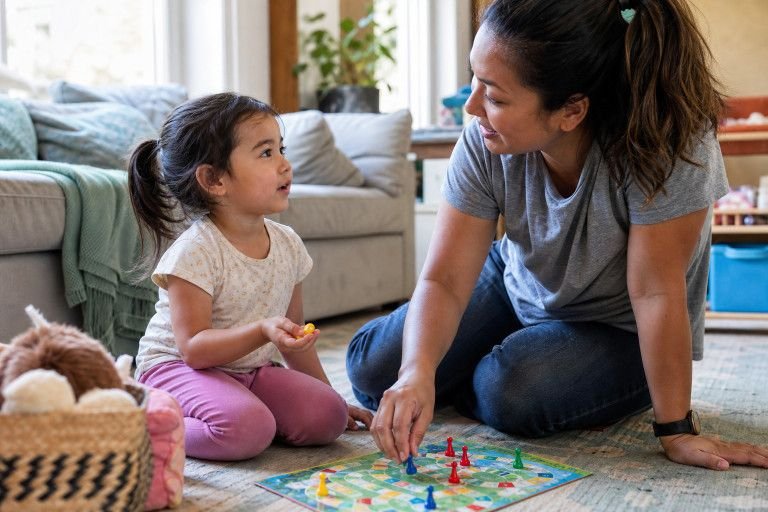
Kindergarten brings shared materials, group directions, unfamiliar adults, and new friendships. Children benefit from practicing separation from caregivers, waiting, sharing, naming feelings, and using words during conflicts. For example, during a board game, help a child pause after losing a turn, say “I feel disappointed,” and ask, “Can I have the next turn?” That small script builds self-regulation and confidence.
Communication And Language Skills
Language helps children learn from teachers and connect with classmates. Encourage your child to listen when someone else speaks, answer simple questions, describe an event, retell a familiar story, and ask questions. Picture books, songs, neighborhood drives, and conversations about a block tower all create natural opportunities. Instead of asking only “What did you make?” try “How did you decide where that block should go?”
Early Literacy And Math Skills
Early Literacy
Early literacy grows through enjoyment and repeated exposure. Children can notice letters in their name, recognize rhymes, understand that print carries meaning, turn book pages, draw pictures, and make early writing marks. Reading together each day matters more than drilling flashcards.
Early Math
Math begins with real objects. Count crackers at snack time, compare which cup holds more water, sort socks by color, and make patterns with toy cars. Use location and comparison words such as under, beside, bigger, shorter, first, and last. These experiences help children connect numbers and problem-solving to everyday life.
Independence And Self-Help Skills
Texas kindergarten days can be busy, so self-help skills make transitions easier. Practice putting on a jacket, washing hands, using the restroom or asking for help, opening a lunch container, carrying a backpack, and cleaning up. Let children contribute at home by clearing the plate, putting away shoes, or packing a small item for an outing. These jobs strengthen memory, planning, and follow-through.
Fine And Gross Motor Skills
Fine motor control supports drawing, cutting, opening containers, and beginning writing. Offer crayons, play-dough, puzzles, child-safe scissors, beads, and small building toys. Gross motor skills develop through running, climbing, balancing, throwing, catching, and dancing. On very warm Texas days, indoor obstacle courses, hallway balloon games, or music-and-movement breaks can keep active play part of the routine.
How Play Builds School Readiness
Play is serious learning. Pretend restaurants strengthen conversation and cooperation. Blocks develop planning, balance, and spatial vocabulary. Puzzles invite patience, while simple board games teach rule-following and turn-taking. Research-based early childhood guidance recognizes that play can build language, thinking, self-regulation, and social skills when adults stay nearby to ask useful questions and extend a child’s ideas.
Daily Routines That Support Learning
Mealtime: Count, compare, and practice conversation.
Clean-up: Sort materials and follow a sequence of steps.
Getting dressed: Build independence and body awareness.
Grocery trips: Find colors, shapes, letters, and quantities.
Bedtime: Read together and recall the day’s events.
Outdoor time: Notice insects, leaves, weather, and movement.
Helping Children Prepare For The School Transition
During the weeks before school starts, establish a steady bedtime and wake-up time. Practice leaving home with a backpack, opening familiar food containers, greeting an adult, and asking for help. If possible, visit the school area, talk through the morning plan, and read stories about starting kindergarten. Keep the tone calm and positive, while making room for extra rest during the first few weeks.
When Families May Need Extra Support
One difficult day or one developing skill does not define a child. Watch for patterns over time, avoid comparisons with siblings or classmates, and start with what your child already does well. If concerns persist or if a child loses a previously acquired skill, speak with a pediatrician, teacher, or qualified early childhood professional and ask whether developmental screening would be helpful.
A Calm Start To Kindergarten
Kindergarten readiness grows through daily practice, caring relationships, curiosity, and chances to try again. Children do not need to be perfect before their first day. They need support building confidence, communication, independence, and the ability to learn alongside others.