

A deck acts as an extension of a home’s living space, providing additional room for relaxing and entertaining outdoors. Due to gradual wear from exposure to the elements, homeowners may need to perform regular deck repairs and maintenance. Here are some warning signs to help keep your deck functional and safe for everyday use:
Loose or Damaged Boards
When completing periodic inspections, homeowners should walk across the deck to identify uneven or unstable surfaces. Repairs may be needed when boards move underfoot or have noticeable cracks. Completing prompt repairs helps keep the boards in place; this safeguards the surrounding materials and the deck’s overall stability.
If the frame is solid, technicians can perform selective board replacement on affected pieces without disturbing the structural system beneath. Full deck replacement is sometimes necessary when a significant portion of the decking boards are split, cupped, or deeply weathered. Regular inspections help homeowners identify whether they need to perform repairs or replacement.
During deck repair, technicians also inspect fasteners. Decking boards may shift due to loosened nails or screws, and repeated movement places additional stress on neighboring deck sections. Tightening these fasteners can help maintain the deck’s structural integrity while preventing additional deterioration.
Wobbly Railing Posts
Railings should remain secure because they provide fall protection, which enhances the overall safety of using the deck. Further evaluation may be needed if the deck shifts slightly when pressure is applied. A professional inspection should cover support posts, beams, and framing; this applies even when the deck surface appears to be in good condition.
Technicians may perform post-reanchoring and hardware replacement to address safety concerns when dealing with loose railing posts with solid framing. A full structural rebuild is sometimes needed when multiple posts are rotted at the base due to prolonged ground contact. Widespread post deterioration signifies systematic decay that should be addressed promptly.
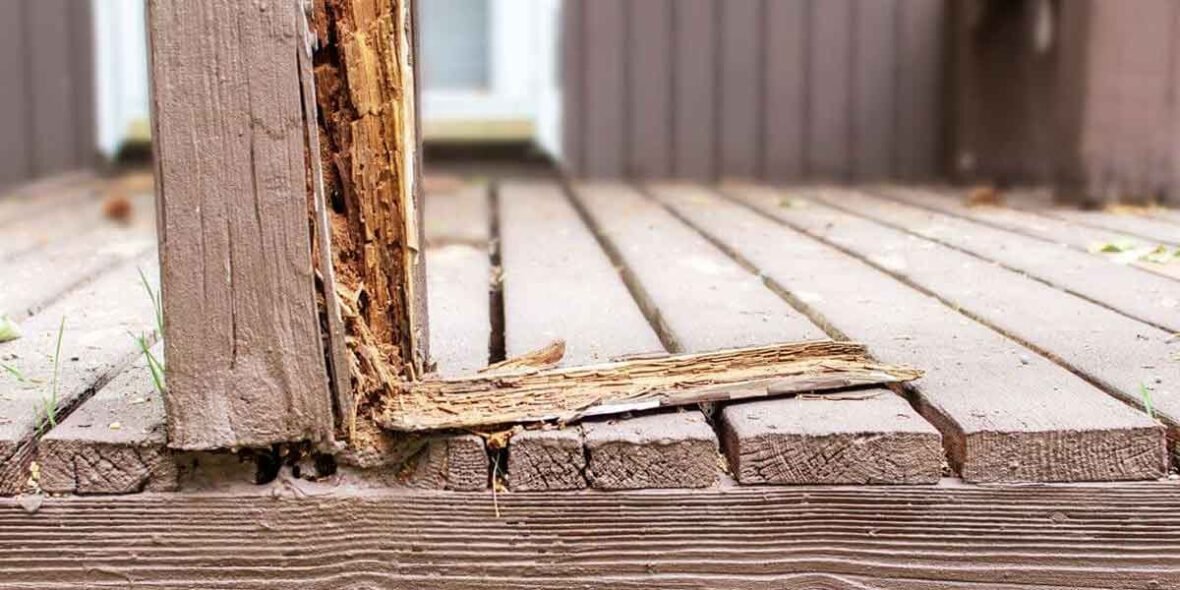
Soft, Spongy Wood
Decks are exposed to rain, humidity, and temperature changes year-round. These structures often experience wood deterioration when moisture stays trapped within decking materials. Some of the signs of moisture damage include the following:
- Rotting sections, including rim boards
- Discoloration
- Stair stringer decay
- Warping and cupping boards
- Areas that stay damp long after rainfall
- Mold or mildew growth
Moisture damage affects both the appearance and durability of a deck. Cold-water expansion cycles may shift footings slightly, necessitating re-leveling or re-anchoring. When a deck’s ledger connection has significant damage, replacement work sometimes reveals related issues around the home’s exterior, including areas that require additional repair.
Plan Regular Deck Repairs
Routine deck inspections help identify developing concerns before they require extensive repairs. They offer a more complete understanding of the deck’s overall condition, and they guide homeowners on when to schedule repair or maintenance services. Deck repair services help address damaged components while maintaining the structure’s functionality. Certified technicians replace deteriorating materials, and they repair loose components to keep your deck structurally sound throughout the year. If you suspect your deck needs repairs or a full replacement, contact a professional handyman service to discuss their offerings.