

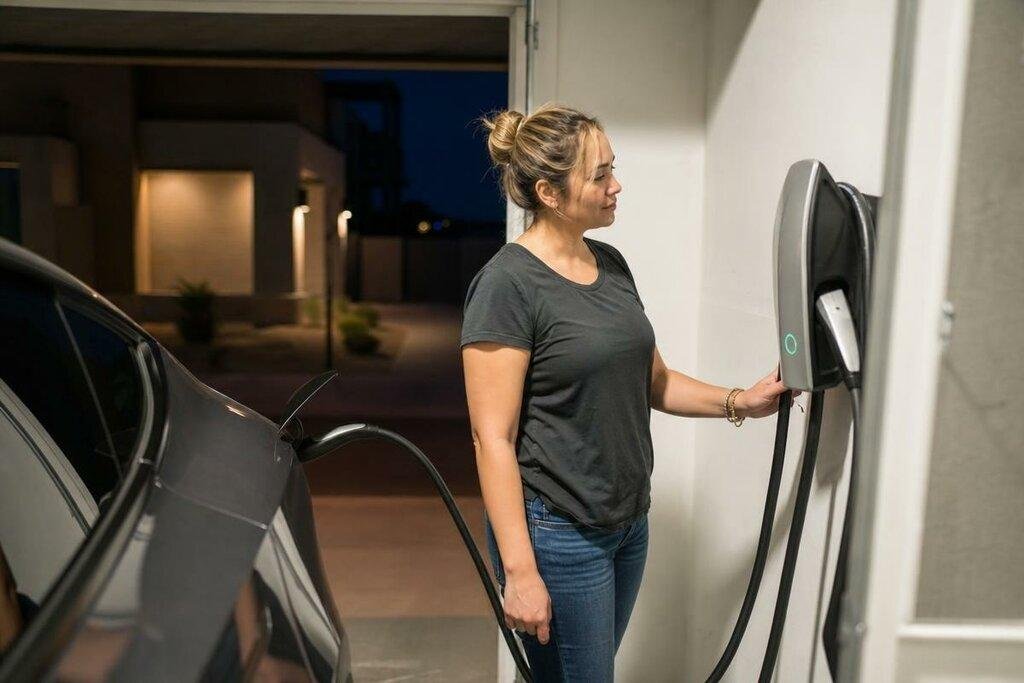
Phoenix Valley homeowners are buying electric vehicles at a record pace, and where to charge them matters more than most people expect. Public charging works in a pinch, but it is no substitute for a reliable Level 2 charger in your own garage. Penguin Air, Plumbing & Electrical, a Phoenix-based electrical, HVAC, and plumbing company founded in 2011, has helped homeowners across the Greater Phoenix area make that upgrade safely and correctly.
Why Are Phoenix Homeowners Installing EV Chargers Right Now?
Lower fuel costs and a wider range of vehicle models are pushing more Greater Phoenix homeowners toward EVs every month. Installing a home EV charger is no longer a niche upgrade, it is becoming a practical necessity.
Phoenix summers regularly exceed 110°F, throttling public charging speeds and making outdoor stations miserable. A Level 2 charger at home lets you charge overnight in a cool garage, skipping the heat and the wait. Monsoon haboobs and blowing grit are hard on outdoor public equipment, while a garage-mounted unit stays protected year round. You plug in once a day the same way you charge a phone, and the vehicle is ready every morning.
What Is a Level 2 Home EV Charger and How Does It Work?
Level 1 vs. Level 2: What Is the Real Difference?
Level 1 charging uses a standard 120V outlet and adds roughly 4 to 5 miles of range per hour, adequate for short daily drives but far short for commuters covering 30-plus miles from outer corridors like Laveen or Buckeye.
Level 2 charging runs on a dedicated 240V circuit and delivers 20 to 30 miles of range per hour, enough to wake up to a full charge after an overnight session. Both APS and SRP offer time-of-use rate plans that reward overnight charging with their lowest off-peak rates, so a Level 2 setup paired with a smart charge schedule can cut cost per mile well below the price of gasoline.
What Does a Home EV Charger Installation Actually Involve?
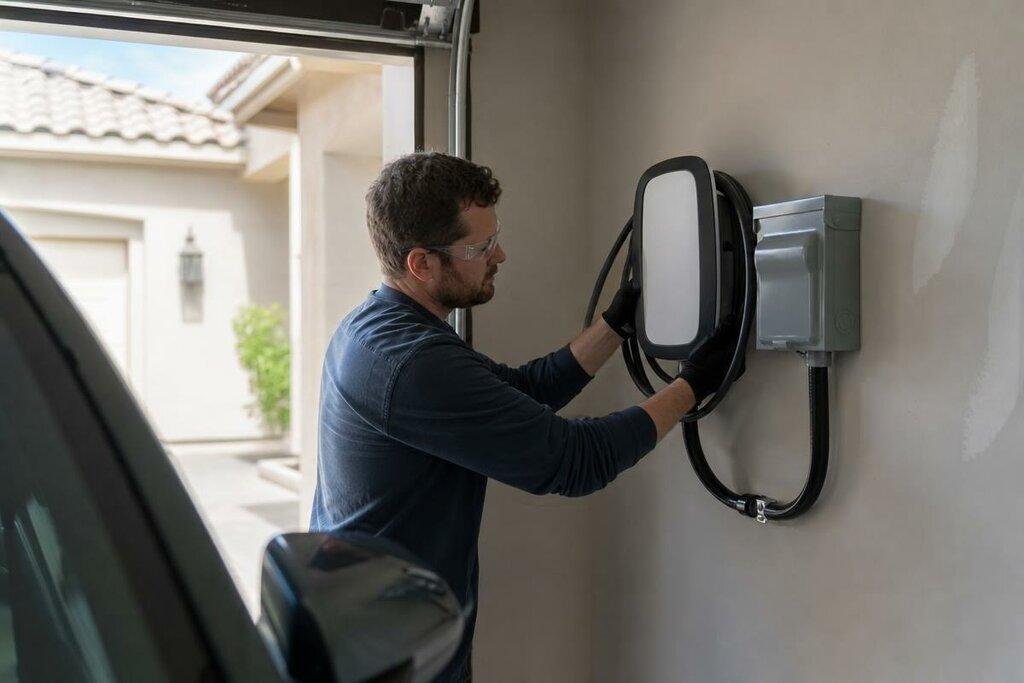
EV charger installation from Penguin Air, Plumbing & Electrical follows a clear sequence. A licensed electrician first assesses the electrical panel to confirm available capacity, then:
- Installs a dedicated 240V branch circuit with 6 AWG copper wire on a 50-amp breaker.
- Mounts the EVSE unit in the garage or carport.
- Pulls the required permit through the City of Phoenix Development Services Department.
- Performs a final inspection confirming compliance with Arizona electrical code and NEC Article 625.
Older homes in areas like Maryvale and South Mountain often have 100-amp panels with no spare capacity for a 240V circuit. In those cases, a panel upgrade comes first. A licensed electrician catches this during the initial assessment, before any hardware goes on the wall.
Frequently Asked Questions
Do I Need a Permit to Install an EV Charger in Phoenix?
Yes. The City of Phoenix requires an electrical permit for every home EV charger installation, processed through the Phoenix Development Services Department at 200 W. Washington St. A licensed electrician pulls the permit on the homeowner’s behalf. Skipping the permit creates problems at resale, since title companies and home inspectors flag unpermitted electrical work, and homeowner’s insurance can deny claims tied to unpermitted installations.
How Long Does a Home EV Charger Installation Take?
A straightforward Level 2 install typically takes 2 to 4 hours, assuming adequate panel capacity and a garage with a nearby panel. Most homeowners in Scottsdale, Gilbert, and newer Chandler subdivisions fall into this category. Panel upgrade work extends the timeline. Same-day scheduling availability is offered for qualifying homes.
Does Penguin Air Handle the Permit Process for Me?
Yes. The electrical permit is pulled by the licensed electrician, who coordinates the final inspection and confirms the install meets NEC Article 625 and Arizona electrical code. Homeowners never file paperwork or wait at a counter. Pairing the EV circuit with a related electrical panel upgrade in one visit is a common request that saves a return trip, and the documented permit history makes future projects, such as solar, a sub-panel, or a second charger, far smoother.
Can a Home EV Charger Work With Solar Panels?
Yes. Scheduling charging during peak solar production hours, typically late morning to mid-afternoon, maximizes self-consumption. If a home is on an SRP or APS export arrangement, charging with midday solar production is often more valuable than exporting that energy at the utility’s lower buyback rate. The electrician verifies that the new charger circuit is compatible with the existing solar inverter and interconnection setup.
What Happens If My Electrical Panel Is Too Small?
Many homes built before 1990 still run on 100-amp panels. A 240V, 40 to 50 amp charging circuit requires more capacity than most of those panels can spare, so an upgrade to a 200-amp panel is recommended first. The panel upgrade and charger installation can be handled as a single project, saving time and avoiding two separate visits.
About Penguin Air, Plumbing & Electrical
Penguin Air, Plumbing & Electrical is a Phoenix Metro Area home services company founded in 2011, serving homeowners across the Greater Phoenix area with HVAC, plumbing, and electrical work. The company holds a BBB A+ Rating and has maintained BBB Accreditation since 2011, along with a Business Ethics Award. The office is located at 3710 East University Dr Suite 1, Phoenix, AZ 85034.
Business Name: Penguin Air, Plumbing & Electrical
Address: 3710 E University Dr # 1, Phoenix, AZ 85034
Phone Number: (480) 525-5400