


Understanding Professional Legal Representation
Navigating the legal landscape often requires the guidance of seasoned professionals. Whether facing a complex civil dispute or seeking to protect fundamental rights, understanding the avenues for securing Premier professional legal representation is crucial. This encompasses a spectrum of services, from publicly funded initiatives to private practice, all dedicated to upholding justice and advocating for clients.
At its core, professional legal representation ensures individuals and entities have access to the legal system, regardless of their financial standing. For those with limited income, several vital resources exist. Legal aid organizations, for instance, are non-profit entities established to provide civil legal assistance to low-income Americans. These organizations receive significant funding from sources like the Legal Services Corporation (LSC), an independent non-profit established by Congress in 1974. As of May 2026, LSC supports 130 independent non-profit legal aid organizations across every state, the District of Columbia, and U.S. Territories, making civil legal aid accessible to millions.
Another critical component of free or low-cost legal help is pro bono service. While legal aid offices are staffed by attorneys compensated through government grants or donations, pro bono attorneys volunteer their time and expertise without charge. These lawyers typically work in private practice but dedicate a portion of their efforts to helping those who cannot afford legal fees. Often, pro bono services are coordinated through bar associations or directly with legal aid organizations. For example, individuals in Florida can consult resources provided by The Florida Bar to find pro bono opportunities or learn about legal aid services in their area. Similarly, organizations like Trinity Legal Clinic of Oklahoma, Inc. – Pro Bono Net connect volunteer lawyers with individuals in need.
The distinction between legal aid and pro bono is important: legal aid is typically provided by dedicated non-profit staff, while pro bono is voluntary service from private attorneys. Both aim to bridge the justice gap for eligible clients, ensuring that legal complexities do not become insurmountable barriers.
The Role of Professional Legal Representation in Civil Litigation
In civil litigation, the role of professional legal representation extends far beyond simply appearing in court. It encompasses a comprehensive approach to case management, strategic planning, and diligent advocacy. When an individual faces a civil dispute, such as a personal injury claim, having an attorney means benefiting from expertise in navigating complex legal procedures, understanding intricate legal precedents, and effectively presenting a case.
A skilled attorney develops a robust case strategy, which involves identifying key legal issues, gathering crucial evidence, and anticipating potential challenges. They are adept at managing the discovery process, which includes obtaining documents, taking depositions, and exchanging information with opposing parties. This meticulous approach ensures that all relevant facts are brought to light and properly utilized. For instance, in personal injury cases, understanding Why You Need a Personal Injury Lawyer becomes evident when considering the complexities of proving negligence, calculating damages, and negotiating with insurance companies.
Furthermore, professional legal representation is vital for understanding courtroom procedure and managing litigation risk. Attorneys guide clients through every step, from filing initial complaints to representing them during trials or settlement negotiations. Their experience allows them to assess the likelihood of success, advise on potential outcomes, and manage expectations. This comprehensive support is indispensable for anyone seeking to protect their rights and achieve a favorable resolution in civil litigation.
Navigating the Spectrum of Legal Services and Costs
Understanding the various types of legal assistance and their associated costs is fundamental to making informed decisions about professional legal representation. Legal services are not one-size-fits-all; they range from basic information to comprehensive full representation, each with different implications for cost and attorney involvement.
At the most basic level, legal information involves explaining what the law says, what it means, and how the legal system generally works. This is often available through self-help websites, court clerks, or public libraries, typically at no cost. Moving a step further, legal advice provides specific guidance on a particular situation, offering predictions about potential outcomes based on certain choices. This usually comes from an attorney and may involve a consultation fee.
Limited scope representation, also known as “unbundling,” allows clients to hire an attorney for specific tasks within a case, rather than for the entire process. For example, a lawyer might prepare court documents or represent a client at a single hearing, while the client handles other aspects. This can be a cost-effective option for those who need expert assistance only in certain areas. Finally, full representation means the attorney handles all aspects of a case, from start to finish, acting as the client’s primary advocate and spokesperson.
The cost of legal help varies significantly.
Free services are primarily offered through legal aid organizations and pro bono programs for eligible low-income individuals.
Reduced-fee programs might be available through bar associations or non-profit groups, offering services at a lower rate based on a sliding scale according to income.
Full-fee services involve paying an attorney’s standard rates, which can be hourly, a flat fee for specific services, or a contingency fee, particularly common in personal injury cases. With a contingency fee, the attorney’s payment is a percentage of the final settlement or award, meaning clients often pay nothing upfront. For a deeper understanding of how this works, you can explore resources like Paying Your Accident Lawyer: The Contingency Fee Explained. Additionally, understanding How Much Does It Cost to Hire a Personal Injury Attorney can help individuals budget and plan for potential legal expenses.
Choosing the right type of service depends on the complexity of the legal issue, the individual’s financial situation, and their comfort level with self-representation.
| Type of Legal Service | Description [TABLE] comparing legal information, limited scope, and full representation
Evaluating Professional Legal Representation for Specialized Claims
For certain complex or high-stakes legal matters, the value of highly specialized professional legal representation cannot be overstated. This is particularly true in areas requiring specific certifications or experience in particular litigation types.
One such specialization is board certification. Attorneys who are board-certified have demonstrated exceptional knowledge, skills, and proficiency in a particular area of law, undergoing rigorous examinations and peer review processes. This distinction signifies a higher level of expertise, offering clients assurance in the attorney’s capabilities. For instance, in severe injury cases, finding a lawyer with specific expertise, such as in Board-Certified amputation injury representation, can be critical for navigating the unique medical and legal complexities involved.
In the realm of high-stakes litigation, firms often distinguish themselves through their track record and specialized approaches. Some firms, like Larson LLP – Elite Litigation and Trial Firm for High-Stakes Cases, focus on complex commercial disputes, white-collar defense, and regulatory matters, emphasizing their trial-ready approach. Similarly, Quinn Emanuel Trial Lawyers – Quinn Emanuel Urquhart & Sullivan, LLP is recognized globally for its exclusive focus on business litigation and arbitration, boasting a history of significant victories for its corporate clients.
The impact of such specialized representation is often reflected in impressive financial recoveries and successful resolutions. For example, leading firms have recovered billions of dollars for clients across a wide range of cases, demonstrating the significant financial impact expert legal teams can have. Other firms specializing in complex class actions and whistleblower cases have secured hundreds of millions, even billions, for their clients and the public. Some litigation-focused practices boast hundreds of millions in settlements and decades of combined experience, emphasizing a commitment to client results. In Florida, firms with over three decades of service have achieved multi-million dollar verdicts and settlements, underscoring the value of long-standing local expertise. These examples highlight that for critical legal challenges, the depth of an attorney’s specialization and their firm’s resources can be a decisive factor in achieving justice.
Specialized Resources for Vulnerable Populations in Florida
Access to justice is a fundamental right, and for many vulnerable populations, specialized legal resources are essential. In Florida, as in other states, various organizations and programs are dedicated to providing tailored professional legal representation and support to groups facing unique challenges, such as immigrants, veterans, seniors, and victims of abuse.
For immigrants, legal assistance often involves navigating complex immigration laws, visa applications, asylum claims, and deportation defense. Non-profit organizations and legal aid services frequently offer specialized immigration clinics and attorneys who are proficient in this intricate area of law. These services are crucial for protecting the rights of individuals seeking to establish themselves in the U.S.
Veterans often require assistance with benefits claims, housing issues, employment discrimination, and family law matters. Many legal aid societies and veteran-specific organizations provide pro bono services or connect veterans with attorneys experienced in military law and veteran affairs. These resources help ensure that those who have served our country receive the legal support they deserve.
Seniors may need help with estate planning, elder abuse protection, healthcare directives, and consumer fraud. Legal aid programs often have divisions dedicated to elder law, offering advice and representation to protect the interests and well-being of older adults.
Victims of domestic abuse or sexual violence require immediate and sensitive legal support, often involving restraining orders, family law matters, and criminal justice advocacy. Specialized victim advocacy programs and legal aid services provide confidential assistance, helping individuals navigate the legal system to ensure their safety and secure justice.
In Florida, specific regional resources are available. For example, individuals in Clearwater can find assistance through Clearwater Legal Aid & Pro Bono Services – Justia, which lists various options for those in need. Similarly, Free Legal Help for Eligible Clients in Largo – Bay Area Legal Services offers direct support to qualifying individuals in the Largo area. Beyond local initiatives, some nationally recognized law firms, such as Sanford Heisler Sharp McKnight, LLP, handle significant cases involving civil rights and systemic injustice, which can indirectly benefit vulnerable groups through precedent-setting litigation. These specialized resources are vital components of ensuring equitable access to professional legal representation for all.

Selecting the Right Advocate in the Tampa Bay Area
Choosing the right legal advocate is a critical step in any legal journey, and in a diverse and populous region like the Tampa Bay Area, the options can seem overwhelming. Fortunately, several established avenues can help individuals find appropriate professional legal representation, whether seeking private counsel or pro bono assistance.
One of the most common starting points is through lawyer referral services. These services, often operated by local or state bar associations, can connect individuals with attorneys who practice in the specific area of law relevant to their needs. They typically screen attorneys for experience and good standing, providing a curated list of potential candidates. State bar associations themselves are also excellent resources, offering directories and information about licensed attorneys, disciplinary actions, and sometimes even pro bono programs.
For those specifically looking for private attorneys in various cities within the Tampa Bay Area, legal directories are invaluable. Platforms like Justia offer lists of Best Lawyers in Saint Petersburg, FL – Justia, Best Lawyers in New Port Richey, FL – Justia, Best Lawyers in Spring Hill, FL – Justia, and Best Lawyers in Wesley Chapel, FL – Justia. These resources often allow users to filter by practice area, client reviews, and other criteria, making the search more targeted.
When selecting an attorney, it’s advisable to consider their experience in the specific type of case you have, their communication style, and their fee structure. Many attorneys offer initial consultations, which provide an opportunity to discuss your case, assess their expertise, and understand their approach. This initial meeting is crucial for determining if an attorney is the right fit. For a comprehensive guide on this process, consider reviewing resources like Your Trusted Advocate: A Guide to Selecting a Personal Injury Lawyer, which offers valuable insights applicable to various legal fields. By utilizing these resources and conducting thorough due diligence, individuals can confidently select an advocate who best meets their needs in the Tampa Bay Area.

Preparing for Success: Working with Your Attorney
Once you’ve identified and retained professional legal representation, the next crucial step is to prepare effectively and establish a productive working relationship with your attorney. Your active participation and preparedness can significantly influence the efficiency and outcome of your case.
The initial consultation is more than just an introductory meeting; it’s an opportunity to lay the groundwork for your case. Before this meeting, gather all relevant documents, including contracts, correspondence, medical records, police reports, and any other evidence pertaining to your legal issue. Organize these materials chronologically and be prepared to provide a concise, factual summary of your situation. This allows your attorney to quickly grasp the details and offer informed advice. During the consultation, don’t hesitate to ask about their experience with similar cases, their proposed strategy, potential timelines, and fee arrangements.
Effective communication is the cornerstone of successful personalized professional legal representation. Be honest and transparent with your attorney, providing all information, even if it seems unfavorable. Withholding details can hinder their ability to properly represent you. Similarly, respond promptly to requests for information or documentation. Your attorney is your advocate, and a strong partnership built on trust and open communication is invaluable. For more detailed guidance on this process, resources like Hiring a Law Firm: What You Need to Know can provide additional insights into what to expect and how to prepare.
Understanding the firm’s operational structure can also be beneficial. Larger firms, such as Business Law & Litigation Firm | Hahn Loeser & Parks Law Firm or Home | Paul, Weiss, often have extensive teams and resources dedicated to complex legal matters. Knowing who your primary contact will be, how often you can expect updates, and the preferred methods of communication will streamline the process. By being proactive, organized, and communicative, you can empower your legal team to represent your interests most effectively.
Frequently Asked Questions about Legal Representation
Securing legal representation can raise many questions, especially for those unfamiliar with the legal system. Here, we address some of the most common inquiries to help clarify the process.
How do I find free legal help if I am low-income?
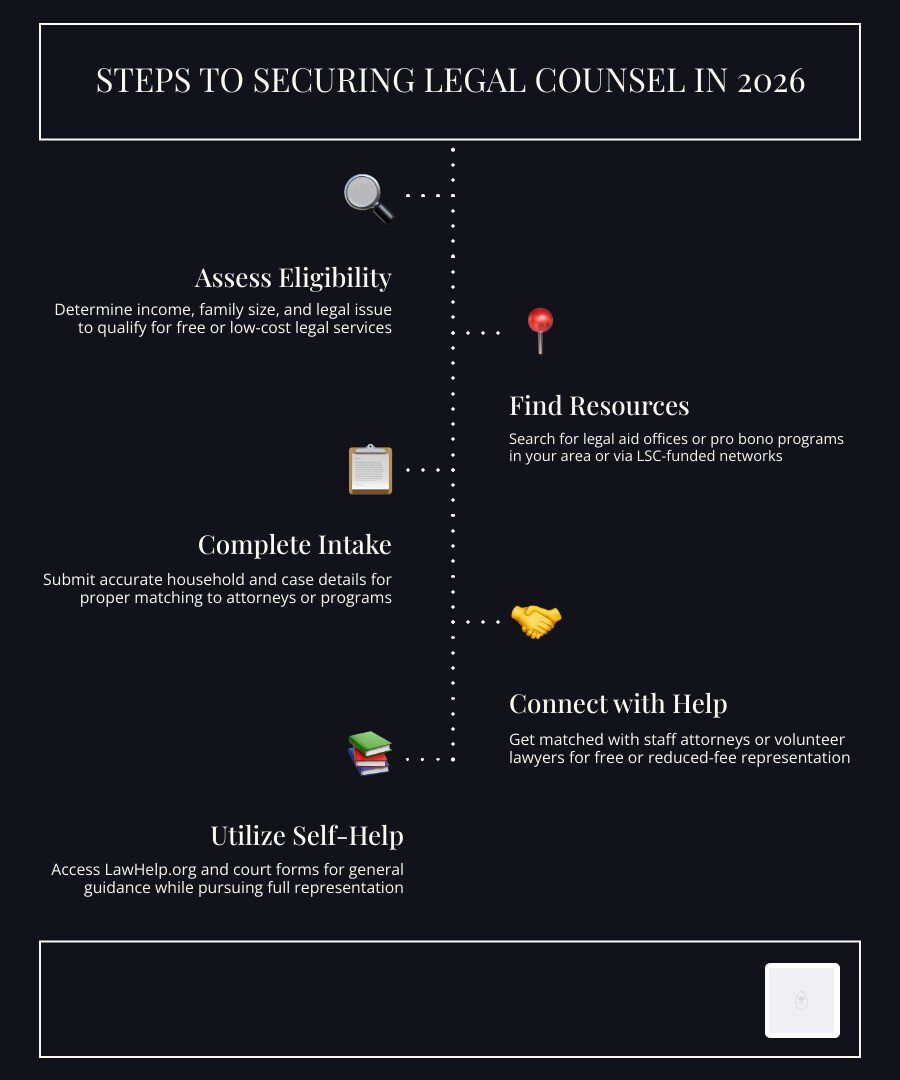
If you are a low-income individual seeking legal assistance, several avenues exist. The primary resource is a legal aid office. These non-profit organizations offer free civil legal services to eligible individuals who meet specific income and asset guidelines. You can often find local legal aid offices by searching online for “legal aid” followed by your city or state. The Legal Services Corporation (LSC) website is also an excellent starting point, as it funds many of these organizations across the U.S.
Another option is pro bono programs. Many state and local bar associations coordinate pro bono initiatives where private attorneys volunteer their time to take on cases for free. These programs often work in conjunction with legal aid offices to match clients with volunteer lawyers.
To determine your eligibility, legal aid offices and pro bono programs will typically conduct an intake process, asking about your household income, family size, and the nature of your legal problem. It’s important to provide accurate information to ensure you are directed to the most appropriate resources.
Here is a list of Florida legal aid resources:
Bay Area Legal Services (serving the Tampa Bay region)
Legal Aid Society of Palm Beach County
Legal Aid Service of Broward County
Legal Services of Greater Miami
Community Legal Services of Mid-Florida
What is the difference between legal aid and pro bono?
While both legal aid and pro bono services offer free legal assistance, their operational structures and funding mechanisms differ.
Legal aid offices are dedicated non-profit organizations with staff attorneys and paralegals whose primary role is to provide legal services to low-income clients. They are often funded by government grants (like those from the LSC), private donations, and sometimes interest on lawyers’ trust accounts. Their attorneys are salaried employees focused exclusively on serving eligible clients.
Pro bono services, on the other hand, are provided by private attorneys who volunteer their time and expertise. These lawyers typically work for fee-paying clients in their regular practice but dedicate a portion of their work to pro bono cases. Pro bono is essentially legal work done “for the public good” without charge. While legal aid attorneys are compensated for their work through their non-profit’s funding, pro bono attorneys are not paid for the time spent on these specific cases. Both are vital for expanding access to justice.
Where can I access self-help tools without a lawyer?
For individuals who choose to navigate certain legal issues without full representation, numerous self-help tools and resources are available.
LawHelp.org is a national online resource that provides legal information, self-help guides, and links to local legal aid and pro bono services. It’s an excellent starting point for understanding common legal problems and finding relevant forms. Many state and local court systems also offer court-provided forms and instructions for various legal procedures, such as divorce, small claims, or landlord-tenant disputes. These forms are designed to be used by individuals representing themselves (pro se litigants).
Additionally, public libraries often have legal resource sections with books and databases that can provide general legal information. However, it’s crucial to remember that self-representation carries inherent risks. The legal system can be complex, and a lack of experience can lead to unintended consequences. While self-help tools provide valuable information, they cannot offer the personalized advice or strategic advocacy that a professional attorney can.
Conclusion
Navigating the complexities of the legal system demands informed decision-making, and understanding your options for professional legal representation is paramount. As of May 2026, a wide array of resources exists to ensure that individuals, regardless of their financial circumstances or specific needs, can access the legal support they require. From the vital services provided by legal aid organizations and pro bono attorneys to the specialized expertise of private law firms, the landscape of legal assistance is designed to protect rights and uphold justice.
Choosing the right advocate, understanding the costs involved, and preparing effectively to work with your legal team are all crucial steps toward a successful resolution. Whether you require full representation for a high-stakes case or seek limited assistance for a specific legal task, the value of expert guidance cannot be overstated. By leveraging available resources and engaging thoughtfully with the legal process, individuals can secure long-term legal protection and confidently navigate their legal journeys.