

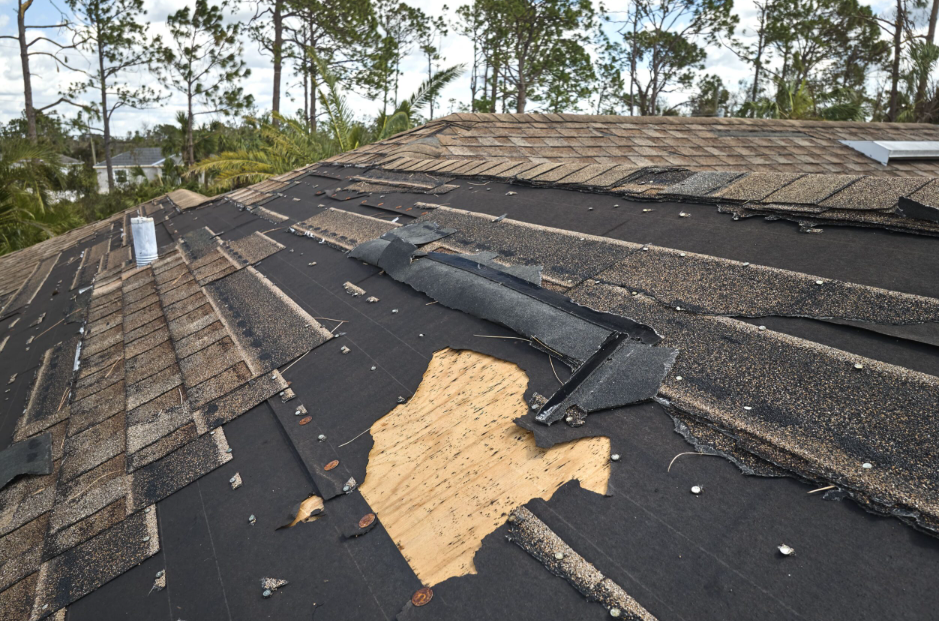
Four cracked shingles after a hailstorm might cost you $400 to fix. The same four shingles on a 22-year-old roof, on a house where the attic already smells faintly like wet cardboard, might be quietly pointing at a $14,000 replacement you keep putting off. Getting this call wrong either direction is expensive. Repair when you should replace, and you’re patching a system that can’t hold a patch. Replace when a solid repair would have done the job and you’ve spent money you didn’t need to spend.
Texas doesn’t give homeowners the luxury of guessing slowly. Hail season doesn’t wait, and the gap between a minor fix and a catastrophic interior leak can close in a single afternoon storm. Here’s how to read the actual signals your roof is sending.
Texas Storm Risk Is Not Average
Before anything else, understand what your roof is up against. Texas doesn’t sit at the edge of severe weather territory. It sits at the center of it. According to NOAA data reported by Insurify in 2024, Texas logged 529 hail events in 2024 alone, a 167% increase over the number of hailstorms the state experienced in all of 2023. That’s not a one-off bad year. That’s a trend.
The practical takeaway for your roof is this: a roof in Texas absorbs more repeated stress than a comparable roof almost anywhere else in the country. Every hit weakens the granule layer on asphalt shingles, compresses the mat underneath, and shortens effective lifespan. A roof that’s technically mid-life by calendar age may be functionally older because of accumulated storm impact. That matters when you’re deciding whether to repair or replace.
Use the RAMP Framework Before You Call Anyone
Before a contractor sets foot on your property, do your own structured walkthrough. The RAMP Framework is a four-point ground-level assessment you can complete in about 20 minutes without climbing anything.
- R: Rate the age. Pull your home records and confirm the installation date. Most asphalt shingle roofs last 20 to 25 years, depending on installation quality and maintenance. If yours is under 15 years old, repair is the likely right call for isolated damage. If it’s past 20 years, every repair decision deserves a harder look.
- A: Assess the spread. Walk the perimeter. From the driveway, look at each slope separately. Are you seeing one patch of lifted or missing shingles, or do you see granule loss and curling across multiple faces? Damage concentrated in one area almost always means repair. Damage covering two or more slopes of a standard four-slope roof suggests the whole system took the hit evenly.
- M: Map repeat leak spots. Go to your attic with a flashlight. Check the decking for water stains, soft spots, and any daylight coming through. Then think back: have you patched that same corner of the ceiling twice? If the same area has been repaired more than once, something is being missed, or the surrounding roof is too worn to hold the repair. That’s replacement territory.
- P: Price the gap. A targeted repair on a younger, sound roof is worth the cost. Roof replacement is a significant investment, so nobody wants to jump to it unnecessarily. At the same time, repeatedly repairing a roof that’s nearing the end of its life can end up costing more in the long run. If your contractor’s repair estimate is approaching 30 percent of what a full replacement would cost, you’re in replacement math, not repair math.
What Inspectors Actually Look For That You Can’t See
Ground-level observation only gets you so far. Hail damage to asphalt shingles is frequently invisible from the driveway. The granule loss looks like a slightly duller patch. The mat fracture underneath doesn’t show through until rain finds it.
On asphalt roofs, inspectors use a specific test: they press their thumb into suspected impact points to feel for mat fractures underneath intact-looking granules. That’s a test you literally cannot perform without being on the roof surface. It’s also why getting a professional inspection after any significant hail event matters, even when the ceiling inside looks dry.
According to NOAA Storm Prediction Center data compiled by Mapscaping, Texas has recorded 52,162 hail events from 1955 to 2024, placing the state first among all 50 states. That volume of cumulative impact is the reason Texas roofing inspectors treat “no visible damage” as an inconclusive result, not a clean bill of health.
A good inspector also checks flashing around chimneys, skylights, and pipe boots separately from the field of the roof. Flashing failures after storms are common and often repair-sized problems even on older roofs, because the field material may be sound while a specific transition point failed. Don’t let a damaged flashing scare you into a full replacement if the rest of the system is solid.
A Scenario With Real Stakes: The May Storm in Jersey Village
Picture a homeowner in Jersey Village, TX, waking up after a May storm to three visible shingles in the yard and a small water stain on the bedroom ceiling. The roof is 17 years old. She calls two contractors. The first quotes a $650 repair and is on the roof for 45 minutes. The second spends two hours, photographs 11 impact zones across three slopes, finds soft decking in the attic corner above the water stain, and recommends replacement.
The first contractor wasn’t lying. He fixed what he could see. But the soft decking is the tell. Water had been sitting there long enough to compromise the structural layer, which means the next storm would have found that same vulnerability even after the shingle repair. That’s the scenario where a repair becomes a down payment on a more expensive problem.
When she found a roofing company in Jersey Village, TX that walked her through the attic findings with photos and explained exactly where the decking had softened, she had the information she needed to make a confident decision instead of a hopeful one.
The Decision Table: Repair or Replace?
| Condition | Likely Call
|
| Roof under 15 years old, damage isolated to one slope | Repair |
| Damage to 1 or 2 shingles, no attic moisture | Repair |
| Roof 15 to 20 years old, widespread granule loss | Get a second opinion; lean toward replace |
| Soft decking or daylight visible in attic | Replace |
| Same leak point repaired more than once | Replace |
| Roof over 20 years old, multiple slopes affected | Replace |
| Flashing failure only, field material sound | Repair |
One Thing to Do Before the Estimate Arrives
Document everything yourself before the contractor visits. Photograph the yard debris, the shingles on the ground, and anything visible on the slopes from a safe ground position. Date-stamp the photos. Get your roof inspected within 72 hours of a hailstorm. The earlier you document the damage, the harder it is for your insurance company to attribute it to age or wear.
Your photos become evidence. A contractor who arrives a week later and photographs the same damage is documenting it as-is, not as-storm. The difference matters when your insurer reviews the claim.
“Hail has moved to the forefront of loss drivers and will continue to impact home and business owners, as it is responsible for an estimated 50% to 80% of annual damages from severe convective storm events.”- Cape Analytics, cited in the IBHS 2024 hail research study
Texas roofs carry a heavier burden than most homeowners account for when they sign the mortgage. The RAMP framework gives you a structured starting point, the decision table gives you a baseline, and a thorough professional inspection fills in the gaps no one can assess from the ground. The question isn’t whether your roof will take a hit. In Texas, it’s when, and whether you’ll be ready to read the damage correctly when it does.