

Most homeowners don’t think about their roof until water appears on the ceiling. By then, the decision has usually already been made. The smarter move is catching the signs early, before a manageable problem turns into an emergency that drives up costs and limits your options.
Roof replacement is one of the bigger home improvement investments you’ll make, but so is ignoring a roof that’s quietly failing. This guide gives you a practical framework to read your roof honestly, compare your real options, and make a confident call.
Why More Homeowners Are Facing This Decision Right Now
America’s housing stock is old, and it’s getting older. According to the 2021 American Housing Survey conducted by the U.S. Census Bureau and the Department of Housing and Urban Development, roofing projects accounted for $19.5 billion in total homeowner expenditures during 2019 to 2021, with a median project cost of $8,000. Roofing ranked among the most common exterior improvements nationwide. That’s not surprising when you consider how many homes still have roofs installed in the 1990s or early 2000s, now sitting at or past their expected service life. If your house is more than two decades old and the original roof is still up there, you’re probably in that category.
The Lifespan Problem Nobody Explains Clearly
Manufacturers print bold numbers on the packaging. “30-year shingle.” “50-year warranty.” What those numbers actually mean is more nuanced, and understanding the gap between advertised and real-world lifespan is the first step toward a clear decision.
According to InterNACHI’s Standard Estimated Life Expectancy Chart for Homes, a standard 3-tab asphalt shingle roof is estimated to last approximately 20 years, while architectural shingles carry a general reference lifespan of around 30 years. InterNACHI, the International Association of Certified Home Inspectors, is the standards body that trains and certifies tens of thousands of professional home inspectors across North America. Those figures are planning benchmarks, not guarantees.
In practice, hot climates shorten that window considerably. Southern California’s heat cycles, UV intensity, and dry Santa Ana wind conditions are hard on roofing materials. A 3-tab shingle roof in the Ventura County area can degrade noticeably in 15 to 18 years, even if the packaging says otherwise. Architectural shingles hold up better, but the same climate factors apply. Your roof’s age matters, but condition matters more.
Signs Your Roof Is Telling You Something
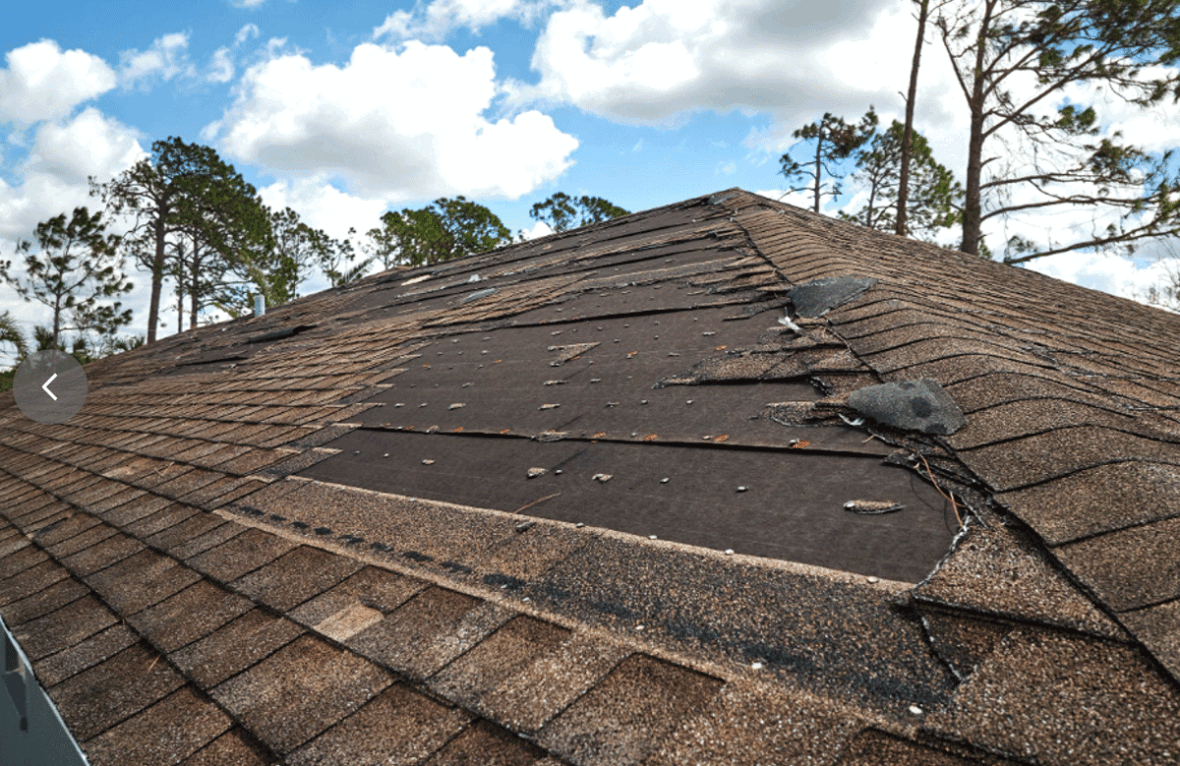
Walk around the house and look up. Then grab a flashlight and check your attic. You’re looking for a cluster of problems, not just one. A single cracked shingle is a repair. Multiple problems appearing together across the whole surface is a replacement conversation.
Here’s what to look for:
- Curling or cupping shingles on multiple sections of the roof, not just one corner
- Granule loss showing up in your gutters as gritty, sand-like buildup after rain
- Daylight visible in the attic through the roof boards
- Sagging areas anywhere on the roof deck
- Recurring interior leaks that keep coming back after repairs
- Flashing failures around chimneys, skylights, or valleys that no longer seal correctly
One of those items in isolation is worth a repair estimate. Four or five of them together means you’re patching a system that’s already past the point of recovery.
The Repair-or-Replace Scorecard
Here’s a decision framework you can actually use. Score your situation against the five factors below. If you land on the replacement side three or more times, a full replacement almost always pencils out better long-term than continuing to repair.
| Factor | Lean Toward Repair | Lean Toward Replacement
|
| Roof age | Under 15 years old | 15+ years (20+ for architectural) |
| Damage scope | Isolated to one area | Spread across multiple sections |
| Repair history | First or second repair ever | Repeated repairs in the last 3 years |
| Underlayment condition | Intact, no moisture damage | Deteriorated, wet, or unknown |
| Plans for the property | Selling within 1 to 2 years | Staying 5+ years OR selling at top dollar |
This scorecard isn’t a substitute for a professional inspection, but it gives you a baseline before you pick up the phone.
What a Full Replacement Actually Involves
A lot of homeowners picture a replacement as shingles going on top of shingles. A proper full replacement doesn’t work that way. The old material comes off, the deck gets inspected for rot or soft spots, damaged sections get repaired or replaced, and then new underlayment goes down before any shingle touches the roof. Flashing around every penetration gets replaced or fully resealed. Ventilation gets evaluated.
That thoroughness is why a well-executed replacement resets the clock on your roof system, not just the surface. It also means you’re not inheriting the hidden failures that were building under the original shingles for years. “The goal is not simply to cover an old roof with new materials. It is to solve the problems that shortened the life of the existing system and give the property a better foundation for the years ahead.”
That framing comes directly from the evaluation philosophy used by experienced roofing contractors who do complete roof replacements in Moorpark and similar Southern California communities, where sun exposure and seasonal wind events put real stress on every component of the roofing system.
Your Pre-Replacement Checklist
Before you commit to a contractor, run through this checklist so you go into the conversation informed.
- Pull any permits or inspection records for the existing roof. Know when it was installed and by whom.
- Check your homeowner’s insurance policy. Some storm-related damage may be covered, which changes your out-of-pocket math.
- Get at least two estimates, and ask each contractor to walk you through what they found during the inspection, not just the price.
- Ask specifically about the underlayment, deck condition, and ventilation plan. A contractor who skips these in the conversation may skip them on the job.
- Confirm the warranty structure: separate warranties typically exist for materials and workmanship, and they’re not the same thing.
Timing Matters More Than Most People Realize
Spring and early summer tend to be the busiest seasons for roofing contractors, which means longer wait times and sometimes tighter scheduling. If your roof is showing signs of wear heading into late summer or fall, you’re actually in a good window to plan the work before winter rains hit. In Southern California, the rainy season runs roughly November through March. A replacement scheduled in September or October gives you protection before the weather turns and lets contractors work in favorable conditions.
Don’t wait for a leak to force the schedule. A proactive replacement done on your timeline costs less and causes far less stress than an emergency call during a storm. Your roof has a finite life. The only question worth asking is whether you’re ahead of it or behind it. Run the scorecard, get a qualified inspection, and make the call before the ceiling makes it for you.