

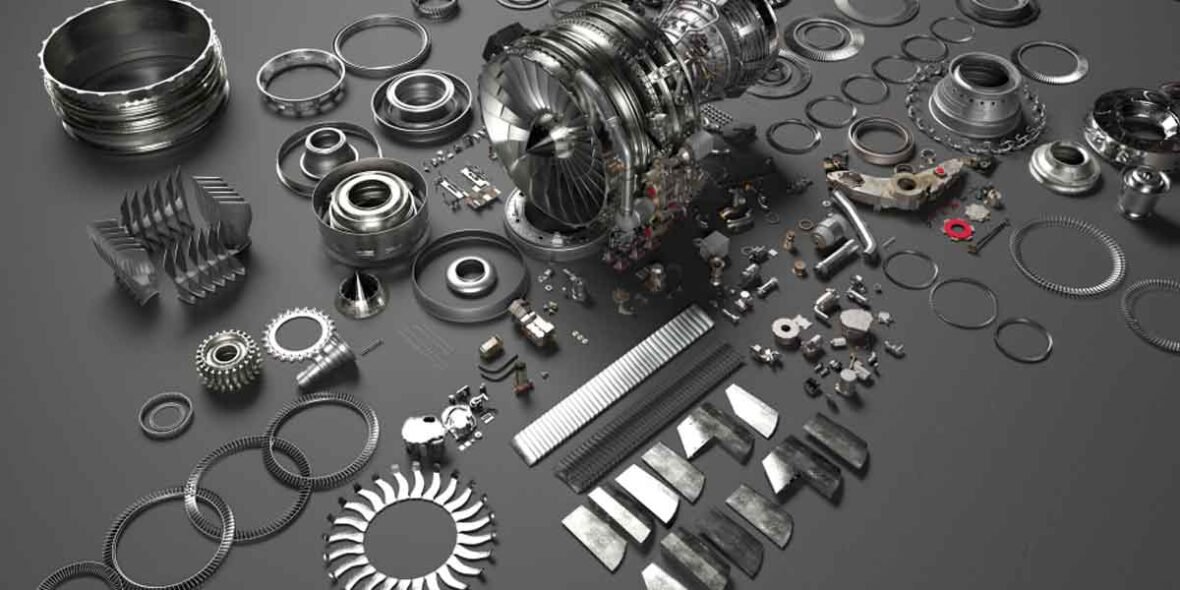
Weight has always been a constraint in manufacturing. Every gram added to a component carries a cost — in fuel, in structural load, in design complexity, and in the time, it takes to iterate when something does not perform as expected. Across industries that depend on performance under pressure, the way parts are designed and produced has shifted considerably. The shift is not just technical. It reflects a broader change in how engineers, procurement teams, and product developers think about what manufacturing should deliver.
The Weight Problem Is a Business Problem
In high-performance sectors, excess weight is rarely just an engineering concern. It translates directly into operating costs, payload limitations, and competitive disadvantages. A component that is five percent heavier than it needs to be may seem trivial in isolation, but at scale — across hundreds of assemblies or thousands of production cycles — it compounds into something that affects the bottom line in measurable ways.
This is why design teams have increasingly moved toward additive manufacturing as a production strategy rather than simply a prototyping tool. Building parts layer by layer from thermoplastic materials allows geometries that subtractive methods cannot achieve. Internal lattice structures, hollow cavities, and organic load-bearing forms can be produced without the tooling overhead that traditional fabrication demands.
Tooling Costs and What They Actually Represent
One of the least discussed costs in conventional manufacturing is tooling. Molds, dies, and fixtures represent significant upfront investment, and they also represent rigidity. Once a mold is cut, the design changes become expensive. The lead time between a design modification and a usable revised part can stretch from days into weeks.
Additive manufacturing removes that constraint. A revised digital file produces a revised part. There is no mold to rework, no fixture to recalibrate. For product teams working in fast-moving development cycles, this flexibility is not just convenient — it changes the economics of iteration entirely. Teams can test five versions of a component at the time it previously took to produce one.
Where Precision Becomes Non-Negotiable
The application of 3D printing for aerospace illustrates how precision requirements have driven material and process development. Aerospace components must meet strict tolerances, resist thermal stress, and perform reliably over long service lives. High-performance thermoplastics like ULTEM have been adopted specifically because they combine low weight with structural integrity suitable for demanding environments.
The broader manufacturing lesson here extends beyond aerospace. Any sector that requires consistent part quality at complex geometries — automotive, defense, marine — stands to benefit from the same logic. The material properties developed for the most demanding applications become accessible to industries that previously could not justify the tooling investment for complex forms.
From Prototype to Production: The Strategic Shift
There is a distinction between using additive manufacturing for concept validation and using it as a production pathway. Early adoption focused heavily on the former. A prototype could be printed, evaluated, and discarded without significant cost. That use case remains valuable, but it understates what the technology now enables.
Short-run production of end-use parts has become viable precisely because the unit economics are different from traditional manufacturing. There is no minimum order quantity driven by tooling amortization. A team that needs 20 custom brackets or 50
specialized housings can produce them without absorbing the cost of a mold that assumes thousands of units.
For procurement and operations teams, this changes sourcing decisions. Components that were previously outsourced to high-volume manufacturers because of tooling requirements can now be produced closer to the point of need, on timelines that align with project schedules rather than supplier lead times.
Sustainability as a Manufacturing KPI
Material waste is a measurable output in any production environment. Traditional subtractive manufacturing — milling, cutting, machining — removes material from a larger stock, generating waste as a byproduct of the process. Additive manufacturing builds only what is needed. The amount of unused material is substantially lower.
For organizations with sustainability commitments or regulatory reporting obligations, this difference is not incidental. Waste reduction, energy consumption per part, and the weight of finished components all factor into lifecycle assessments that increasingly inform procurement decisions and investor reporting.
The Decision Framework Has Changed
Manufacturers evaluating production methods now weigh a different set of variables than they did a decade ago. Lead time, tooling cost, design flexibility, material performance, and waste output are all part of the calculation. Additive manufacturing does not win every
metric in every context, but the contexts in which it offers a clear advantage have expanded considerably.
The companies making informed decisions today are the ones treating manufacturing method selection as a strategic question rather than a default.