

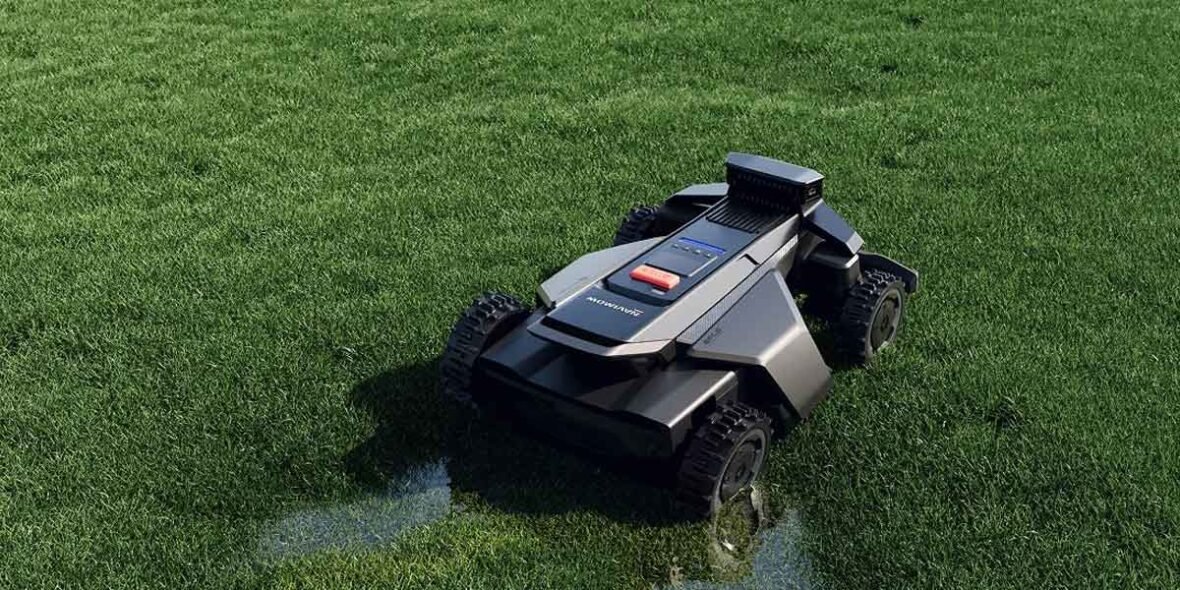
One of the biggest advantages of owning a robot mower is being able to leave lawn maintenance largely to the machine itself. Once installed correctly, it can quietly keep the grass trimmed with very little day-to-day involvement. However, if the mower repeatedly becomes stuck, that convenience quickly disappears. Instead of returning to a neatly maintained lawn, owners may find themselves regularly rescuing the mower from the same location.
The good news is that persistent sticking is rarely caused by a major fault. In most cases, it results from a combination of garden layout, installation, maintenance or settings. Identifying the cause is usually the first step towards solving the problem permanently.
Start by Looking for a Pattern
If the mower becomes stuck in exactly the same place every time, the location itself is often providing the clue.
Perhaps it always stops beside a tree root, struggles on the same slope or catches the edge of a flower bed. Watching where the problem occurs makes it much easier to determine whether the issue lies with the garden or the mower.
If the machine becomes stuck in different places each time, the cause may be more general, such as worn wheels, slippery conditions or incorrect installation.
Keeping a note of where the incidents occur can help narrow down the possibilities surprisingly quickly.
Uneven Ground Can Cause Problems
Robot mowers work best on reasonably even surfaces.
Deep ruts, exposed tree roots, sunken patches or raised edges may leave one wheel suspended, causing the mower to lose traction. In some cases, the underside of the mower may catch on the ground before the wheels can pull it forward.
These problems often develop gradually as gardens settle or after particularly wet weather.
Filling small depressions, levelling uneven areas or removing exposed obstacles can often solve repeated sticking issues.
Slopes Need to Match the Machine
Every robot mower has limits on the gradients it can safely climb.
If a section of the lawn exceeds those limits, the mower may repeatedly lose grip while attempting to travel uphill or downhill.
Even if the slope falls within the manufacturer’s specifications, damp grass can significantly reduce traction.
Where practical, adjusting the boundary so the mower avoids particularly steep areas may improve reliability.
Check for Hidden Obstacles
Some obstacles are obvious, while others are easy to overlook.
Low branches, exposed irrigation pipes, decorative edging, children’s toys or garden ornaments may all interfere with the mower’s movement.
Long grass around obstacles can also conceal small items that repeatedly stop the machine.
Walking the route occasionally and clearing unnecessary obstacles helps create a more predictable mowing environment.
Quick Checks Worth Making
Before assuming something is wrong with the mower itself, it is worth checking a few simple things:
Inspect the wheels for built-up mud or grass.
Replace worn cutting blades if necessary.
Check that no debris is trapped underneath the mower.
Ensure boundary wires remain securely positioned.
Remove any recently introduced obstacles from the lawn.
Confirm that recent garden work has not altered the mower’s route.
Many sticking problems can be resolved with these straightforward checks alone.
Wet Weather Can Reduce Grip
Grass behaves very differently after rain.
Soft ground provides less support beneath the wheels, while wet grass reduces traction. In these conditions, even a mower that normally performs perfectly may occasionally struggle.
If repeated sticking only occurs during particularly wet periods, it may simply be worth delaying mowing until the lawn has dried slightly.
Many modern robotic mowers include weather-related scheduling features that can help reduce unnecessary operation during poor conditions.
Installation Should Not Be Overlooked
Boundary wire placement has a significant influence on how confidently a robot mower navigates.
If the wire is positioned too close to obstacles or steep edges, the mower may attempt manoeuvres that leave it trapped repeatedly.
Similarly, poorly positioned guide wires can encourage inefficient routes through difficult parts of the garden.
Small adjustments during installation often produce surprisingly large improvements in everyday performance.
Maintenance Supports Reliable Navigation
A robot mower that receives regular maintenance is generally less likely to encounter problems.
Dirty wheels may lose grip more easily, while worn tyres reduce traction on slopes and uneven surfaces. Grass clippings collecting underneath the mower can also affect ground clearance, increasing the likelihood of becoming caught on raised areas.
Cleaning the mower regularly and replacing worn components helps maintain its original performance.
Towards the end of the season, a more thorough inspection can also identify issues before they become larger problems.
Complex Gardens Require Careful Planning
Gardens with narrow passages, multiple lawn sections or numerous obstacles naturally demand more from a robot mower than simple open lawns.
In these situations, careful planning during installation becomes particularly important. Guide paths, boundary positioning and mowing schedules all work together to help the machine navigate efficiently.
Homeowners exploring advice from specialists such as Ron Smith often discover that recurring navigation problems are usually resolved by improving the mowing environment rather than replacing the mower itself. A combination of thoughtful installation, sensible maintenance and small adjustments around the garden often transforms reliability.
When Professional Help May Be Needed
If the mower continues becoming stuck despite addressing obvious causes, it may be time to seek expert advice.
A professional inspection can identify issues that are less immediately visible, such as wheel motor problems, sensor calibration, software settings or installation errors that have developed over time.
Fortunately, genuine mechanical faults are often less common than simple environmental causes.
Small Changes Often Deliver Big Improvements
Repeatedly rescuing a stuck robot mower can be frustrating, but the solution is often simpler than it first appears. Most issues stem from the interaction between the mower and the garden rather than a failure of the machine itself.
By identifying patterns, maintaining the mower properly and making gradual improvements to the lawn where necessary, owners can usually restore the dependable performance that robot mowers are designed to provide. Once these issues have been addressed, the mower can return to quietly maintaining the lawn with minimal intervention, allowing homeowners to enjoy the convenience that first attracted them to robotic mowing.