

The power went out on a Tuesday evening in late summer, right in the middle of a heat wave, and it stayed out for three days. My stomach dropped thinking about how hot my home was getting and all the food in my fridge I’d have to throw out.
I’d always thought of myself as someone who had my eco-conscious priorities straight. I compost, and I grow a good chunk of our summer vegetables. Solar was the dream I was slowly saving toward.
Because of that, I thought a generator wouldn’t fit the vision I had for my household. It’s loud, it burns gas, and, in my eyes, it has that doomsday-prepper connotation. But those three days without power
A generator felt loud, gas-burning, and vaguely out of place in the kind of household I was trying to build. I associated one with disaster movies and emergency crews more than with living lightly.
Three days without power rearranged that thinking pretty fast.
The Outage That Changed How I Thought About Going Green
By the second day, the freezer had thawed enough that we were triaging food by smell. My neighbor, who has a medical device that needs power, spent two nights at her daughter’s house because there was no backup plan in place.
I kept thinking about how much time I’d spent researching solar panel efficiency ratings and how little I’d thought about what happens on the ordinary Tuesday when the grid just stops.
After that outage, I started thinking about green living in two parts. How a home gets its energy still counts, but so does whether that home can keep the refrigerator cold, essential equipment running, and the people inside safe when the supply disappears.
What a Generator for Power Outage Situations Really Needs to Handle
Once the power came back, I started researching generators for real instead of just having opinions about them.
A generator for power outage backup has to carry more than a few lamps. It’s the fridge, the well pump if you have one, maybe a window unit during a heat wave, and increasingly, medical equipment that can’t just wait it out.
We ended up with a 10,000-watt unit, more than double what I would have guessed on my own, and even that doesn’t run the central air, just the essentials.
Sizing it right means looking at what the house really draws. Counting the outlets you expect to use doesn’t tell you what the refrigerator compressor, pump, cooling equipment, and other loads will demand when they start running together.
The Panel Question Nobody Warned Me About
Here’s the part I really didn’t expect. A generator needs a transfer switch wired into the electrical panel before it can safely feed household circuits.
The switch keeps generator power and grid power separated. Without it, electricity from the generator can feed back toward the utility lines and put the people repairing those lines at risk.
I ended up having an electrician wire the transfer switch into our panel rather than attempting the extension-cord version of backup power I’d originally pictured, running a cord through a cracked-open window and hoping for the best.
The romantic version in my head involved rolling a generator out of the garage and having the house come back to life. The real version took longer, cost more upfront, and involved someone else looking at wiring I’d never once thought about.
That version also worked, and it meant our next outage would be a lot less stressful than this one.
The Placement Rule I Almost Ignored
The other thing I learned, and this one scared me more than I expected, is how dangerous generators are when people get the basics wrong.
According to the Consumer Product Safety Commission, roughly 80 to 100 people die every year from carbon monoxide poisoning caused by portable generators, much of it involving generators operated too close to a house or inside enclosed spaces. Their guidance is specific: keep a portable generator at least 20 feet from any window, door, or vent, and never operate one in a garage, even with the door open.
Before researching this, I probably would have treated 20 feet as overly cautious. Now the distance makes sense.
A generator is a combustion engine producing exhaust that can become deadly quickly. Placement determines where that exhaust goes, which is why the rule is measured in feet rather than left to somebody’s judgment in the middle of an outage.
Why the Grid Itself Is Becoming Less Reliable
Part of what pushed me from “maybe someday” to “let’s do this now” was learning how common long interruptions have become.
According to a report citing U.S. Energy Information Administration data, the average American home experienced roughly 11 hours of power interruptions in 2024, nearly double the average across the previous decade. Hurricanes and other major weather events accounted for much of that increase.
That moved backup power out of the disaster-prep category for me. I started treating it as ordinary home planning for an interruption that had already happened once and could happen again.
Solar Sounds Greener, But Timing Is Everything
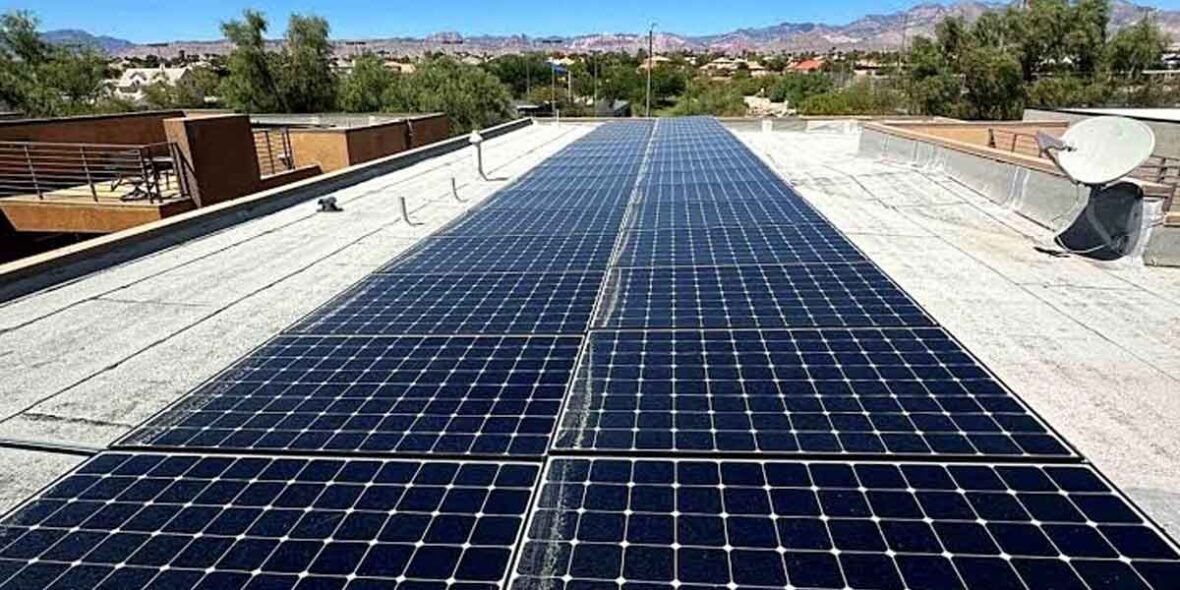
I still want solar, and I still think it’s the right long-term direction for our house.
The complication is what happens during an outage. Most residential solar systems shut down when the grid goes down unless the system has the equipment needed to isolate the house safely. That protects utility workers from the same backfeed problem a generator transfer switch is designed to prevent.
Battery storage can keep power available during an outage, but it adds another major expense. We weren’t ready to make that investment the same month our freezer full of food went bad.
I finally started seeing backup power and solar as decisions on different timelines. I’d been treating them like a single, all-or-nothing purchase, as if buying a generator now meant admitting defeat on the solar plan.
It doesn’t.
The panel and transfer switch we installed this year are also part of the electrical infrastructure a future backup system will have to work with. Taking care of that piece now moved us forward rather than locking us into one energy choice forever.
What I’d Tell Anyone Considering This
If you’re weighing a generator for power outage protection against a vague sense that it’s the less green option, I’d tell you what I wish someone had told me.
A generator that runs during occasional outages has an environmental cost. So does throwing away a freezer’s worth of food. So does moving someone with power-dependent medical equipment out of her home for two nights because there is nowhere safe to plug it in.
For me, going green now includes resilience, waste, and safety alongside emissions. The responsible choice can be pretty unglamorous. Sometimes it involves an electrician, a permit, and figuring out the actual electrical load of the house before buying anything.
Ours turned out to be a properly installed transfer switch and a generator sized for what our house really draws. I would have chosen something smaller on my own, mostly because I had never bothered to calculate the loads that mattered during an outage.
I still don’t know what my neighbor decided to do, and I should probably ask her before the next heat wave gets here.