

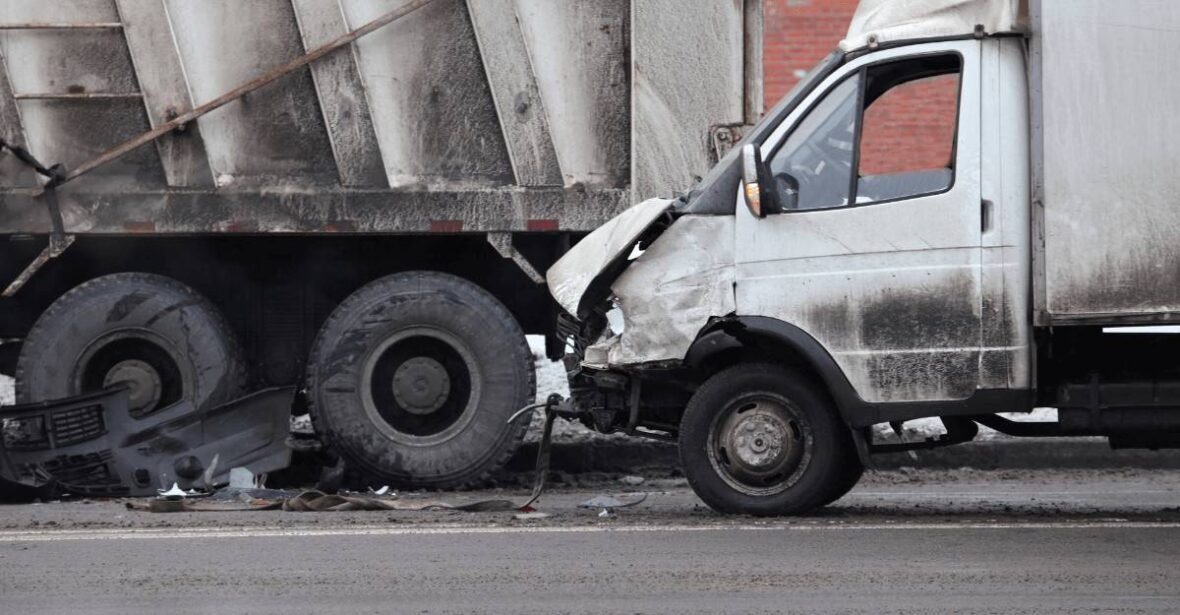
Handling car accidents is different from accidents involving moving and logistics trucks. What can be familiar situations for car accident victims brings up other challenges when it comes to accidents involving moving companies and freight carriers. These challenges require specific handling in court.
Victims of moving truck accidents often find themselves wondering who’s responsible and how federal guidelines play a role in their situation, especially when a household goods shipment or commercial cargo is involved. Understanding this complexity is important, especially for protecting your rights and pursuing the compensation you deserve under truck accident laws. A successful compensation claim relies on the understanding of a person regarding certain issues.
According to the latest NHTSA data, large trucks were involved in 5,218 fatal crashes in 2024. Large trucks have consistently made up roughly one in ten vehicles involved in fatal crashes nationwide recently, according to NHTSA data. Those crashes resulted in 5,340 deaths, with occupants of other vehicles accounting for about 70% of fatalities in large-truck crashes. Moving trucks and logistics carriers make up a meaningful share of this traffic, since interstate movers and freight haulers operate some of the largest vehicles on the road. The size difference between big trucks and smaller passenger cars alone can cause major injuries in collisions.
How Do Moving Truck Accident Laws Differ From Car Accident Laws?
When it comes to legal framework, both car accidents and moving truck accidents have their own sets of challenges and safety considerations. Trucking and logistics laws establish legal guidelines that moving companies and commercial carriers must follow.
Special laws govern all moving companies, and certain federal organizations, such as the Federal Motor Carrier Safety Administration (FMCSA), oversee them. It should be noted that only companies that specialize in transporting household belongings are considered to be carrying HHG and are required to adhere to certain rules that may not apply to regular trucking companies. For instance, these may include, among other things, issuing invoices, protection of customers’ claims, and liability of the companies for any goods lost or documents damaged within the course of shipment. Regulations are important in dealing with problems in the industry, such as the maintenance of the existing driver framework, service delivery, and so forth. Meanwhile, auto crashes fall under state laws, which may not be as strict.
Who Is Responsible for Moving Truck Accident Cases?
Looking for the real culprit in a moving truck accident quickly becomes a burden and a challenging task, as more than one party is likely involved and accountable for the accident. If the driver is hauling household goods or freight under the employment of a moving or logistics company at the time of the occurrence, then that company also becomes subject to liability investigation.
There are other elements too, like bad maintenance, an improperly loaded truck, or cargo that shifted during transit. You can mitigate this liability by collecting evidence and explaining in detail the activities of the particular people or entities.
Moving truck accidents are known to cause fatal injuries and large financial losses to the victims’ families, on top of the potential loss or damage to the belongings being transported. For these reasons, it’s important to know who can be legally liable and what damages can be paid. A personal injury lawyer is helpful for victims who cannot clearly identify the responsible party and how to obtain the appropriate compensation.
Key Regulations to Know
Learning about liability in moving truck accident scenarios inherently guides you to the rules that control the moving and logistics sector. To obtain this information, read the FMCSA rules. These encompass all aspects of driver qualifications, vehicle maintenance, and time control measures. In practice, they are meant to keep drivers from exceeding driving limits, which supports roadway safety.
There are also regulations that facilitate weight limits and load securement requirements, which matter significantly for moving trucks carrying household items that can shift in transit. In terms of liability, moving and logistics companies must have a degree of insurance coverage that meets federal regulations, which set the lowest allowed limit at $750,000 for household goods carriers. Each carrier must also carry additional cargo insurance based on the value of the property they transport.
Handling Insurance Claims After a Moving Truck Accident
An individual involved in a collision while driving a truck that is moving and sustains injuries and damages to property tends to be overpowered with emotions when it comes to insurance claims.
Before the formal insurance claim process, collect all the necessary materials, such as medical documentation, a police report copy, and visual proof that can support your claims regarding how the incident happened. That information tends to become important when you file your claim.
Following that, contact your insurer to report the accident. The law firm website of Pomona truck accident lawyer Christian Amendt says that the insurance company will quickly be in touch with you. Bear in mind that insurance adjusters focus on their company’s interests, not yours. Provide a short and honest account of what happened. Insurance adjusters will explain their claims routine to you. If the moving truck driver is at fault, you may need to contact their company’s insurance directly, which may be separate from any cargo or valuation coverage tied to the shipment itself.
Essential Steps After a Moving Truck Accident
After you’ve informed your insurance company of the incident, your next step is to decide on the appropriate measures to proceed with. Take pictures showing the brake damage, number plates, and personal injuries. Make a note of the witnesses and their phone numbers in case you need them at trial.
Write down the contact information of the driver involved, the name of the moving or logistics company, and their insurance information. If there is law enforcement present, ask for a copy of the police report. Keep a record of medical reports and vehicle damage evaluations, as these are necessary during the submission of the compensation claim.