

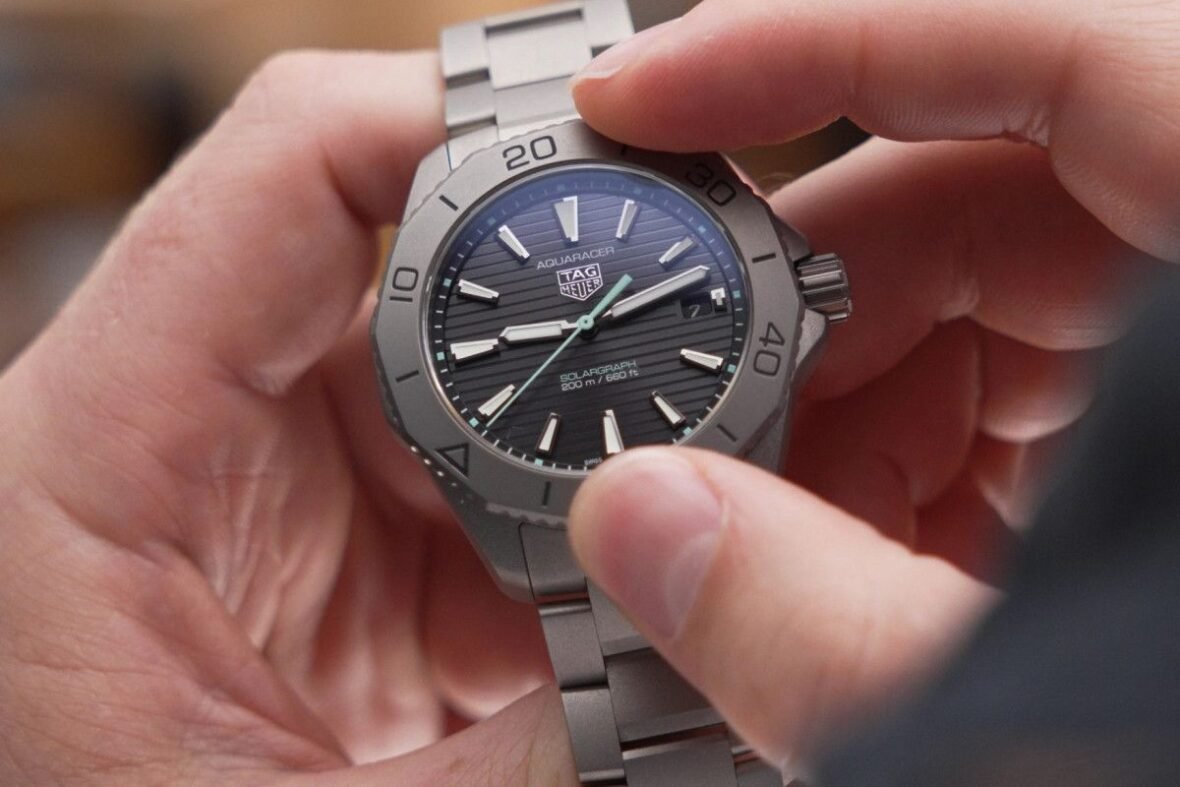
A solar watch does not have a battery in the traditional sense. It has a rechargeable power cell, either a lithium-ion battery or a capacitor, that is charged by light through the watch dial. This cell typically lasts 10 to 20 years before it can no longer hold a useful charge and needs replacement.
The power cell outlasts the disposable battery in a conventional quartz watch by a factor of 5 to 10. A standard watch battery lasts 2 to 3 years. A solar watch power cell lasts a decade or more. Here is how the different types work, how to tell when yours is failing, and what replacement costs.
Battery vs. Capacitor: Two Types of Solar Watch Power Cells
Citizen Eco-Drive watches primarily use a rechargeable lithium-ion cell, specifically a manganese lithium-ion chemistry. This is a small button-style rechargeable battery that stores enough energy to run the watch for 6 to 12 months in complete darkness on a full charge. These cells are rated for 10 to 20 years of service and are the most common type in solar watches.
Seiko Solar and some Casio Tough Solar watches use a capacitor instead of a battery. A capacitor stores energy electrostatically rather than chemically. It charges faster than a battery and can handle more charge cycles, but it holds less total energy. A capacitor-powered solar watch typically runs for 3 to 6 months in darkness on a full charge. Capacitors last 10 to 15 years on average, similar to lithium-ion cells.
Older Citizen Eco-Drive watches manufactured before roughly 2005 used capacitors. If your Eco-Drive is more than 20 years old and still running, it has a capacitor. Most Eco-Drives from the last two decades use lithium-ion cells.
Signs the Power Cell Needs Replacement
The watch stops running after less than a day in darkness. A healthy solar watch power cell should keep the watch running for months without light. When the cell degrades, the reserve time shrinks. A watch that runs for 30 minutes after being removed from light needs a new cell.
The low-charge warning activates constantly, even after a full day in bright light. Eco-Drive watches have a second-hand warning. The second hand jumps in two-second increments instead of moving smoothly. This is a low-charge indicator. If the watch shows this warning after a full day of charging in direct sunlight, the cell is no longer accepting a full charge.
The watch stops completely and will not restart after charging. This is the end state. The cell has failed and can no longer accept or hold any charge. Replacement is the only option.
The watch runs erratically. The second hand stutters, the time resets, or the watch gains or loses significant time. This can indicate a failing power cell that cannot maintain consistent voltage.
How to Charge a Solar Watch Properly
Sunlight is the fastest charging method. Place the watch face-up in direct sunlight. Artificial light works but is far slower. An hour of direct sunlight provides roughly the same charge as 10 to 20 hours under indoor office lighting. If your watch is completely drained, a full day in direct sunlight restores a full charge on most models.
Do not leave the watch on a windowsill behind glass for extended charging. The greenhouse effect can heat the watch to 140 degrees Fahrenheit or higher, which damages the power cell. Place the watch where it receives direct light but stays at room temperature. A sunny tabletop away from windows is ideal.
Store the watch where it receives some light. The power cell degrades faster when left fully discharged for extended periods. A watch stored in a dark drawer for a year may have a permanently damaged cell when retrieved. If you store a solar watch, pull the crown out to the time-setting position, which stops the hands and reduces power consumption to near zero. This preserves the charge longer.
Replacement Cost: What to Expect
Replacing the power cell in a solar watch costs $30 to $60 at a local watch repair shop and $50 to $100 at an authorized service center for the brand. Citizen and Seiko service centers charge toward the higher end but use genuine parts and pressure-test the watch for water resistance after replacement. An independent shop is cheaper but may use a generic cell that does not match the original specifications.
The replacement cell itself costs $10 to $25 for the part. The remaining cost is labor, which involves opening the case, removing the old cell, installing the new one, replacing the case back gasket, and pressure-testing. The process takes 20 to 30 minutes for an experienced watchmaker.
Do not attempt to replace the cell yourself unless you have watch repair experience and the correct tools. Solar watches require opening a press-fit or screw-down case back, handling small components with tweezers, and properly seating the gasket to maintain water resistance. A scratched dial or a pinched gasket costs more to fix than paying a professional for the replacement.
What Determines How Long the Cell Lasts
Charge cycling is the primary wear mechanism. Each time the cell discharges and recharges, a small amount of capacity is lost. A watch worn daily in normal light conditions cycles shallowly, which is less stressful than deep discharges. A watch frequently left in the dark until the low-charge warning appears cycles deeply, which accelerates degradation.
Temperature extremes degrade the cell. A watch left in a hot car in summer or worn in a sauna experiences temperature stress that accelerates chemical degradation. Room temperature is ideal. Extreme cold temporarily reduces capacity but does not permanently damage the cell unless the watch freezes.
Age degrades the cell regardless of use. A lithium-ion cell in a solar watch has a calendar life of approximately 15 to 20 years even under ideal conditions. The electrolyte degrades over time, and internal resistance increases. At some point, the cell cannot deliver enough current to run the watch movement, even if it can hold a partial charge.
Frequently Asked Questions
Can I replace the rechargeable cell with a regular watch battery?
No. A solar watch charging circuit is designed for a rechargeable cell at a specific voltage, typically 1.5 to 3 volts depending on the movement. Installing a non-rechargeable battery will result in the charging circuit attempting to charge it, which can cause the battery to leak or rupture. It will also not provide the correct voltage for the watch movement. Always replace with the rechargeable cell specified for your watch model.
Do Citizen and Seiko solar cells last the same amount of time?
Roughly, yes. Both manufacturers rate their power cells for 10 to 20 years. Citizen’s lithium-ion cells tend toward the higher end of the range, with many Eco-Drive watches from the early 2000s still running on their original cells. Seiko’s capacitor-based systems have a similar 10 to 15 year lifespan. In practice, the difference between a 15-year and 20-year lifespan comes down to how the watch was stored and charged rather than which brand it is.
When coordinating these delicate repairs, using an established luxury timepiece specialist helps preserve the overall value and mechanical accuracy of your collection. Enthusiasts looking for certified maintenance can click here to find experienced professionals who deal with high-end models. Seeking specialized support ensures proper equipment is used to access the movement safely.