

Root surfaces normally stay covered by gum tissue and a thin layer of bone. When that covering pulls back, the softer root becomes exposed to temperature changes and everyday pressure from chewing. Patients in Rolla notice the change first as a sharp twinge from cold drinks or brushing.
For patients with persistent sensitivity, clinics such as Wedgewood Dental rolla mo, can evaluate the affected area and identify what is causing the exposed surface. Gum recession can start early when brushing pressure stays too heavy for years at a stretch. Bonding offers a straightforward way to cover the exposed area and calm the sensitivity that comes with it.
Why Root Surfaces Become Exposed
Gum recession happens gradually, so most patients miss the early stage entirely. Years of firm brushing wear down the gum edge faster than gentle technique ever would. Grinding at night adds steady pressure on the same tissue near the gumline. Genetics also plays a part, since thin gum tissue recedes faster under equal stress.
Signs a Patient in Rolla Should Not Ignore
Several changes around the gumline can signal exposed root surfaces or progressing recession. Patients should pay particular attention to these signs:
- Cold sensitivity: Discomfort from cold drinks may indicate that recession has exposed a sensitive root surface.
- Visible color changes: A darker area near the gumline may appear where the root becomes exposed.
- Lingering discomfort: Pain that continues after cold or sweet foods deserves a professional dental assessment.
- Rough areas near the gums: An uneven surface may become noticeable where previously covered root structure is exposed.
- Pain during brushing: Increasing tenderness during routine cleaning may indicate that sensitive areas need professional evaluation.
- Multiple symptoms: Residents who notice several changes together should arrange a dental examination rather than ignore persistent discomfort.
How Bonding Covers the Root Surface
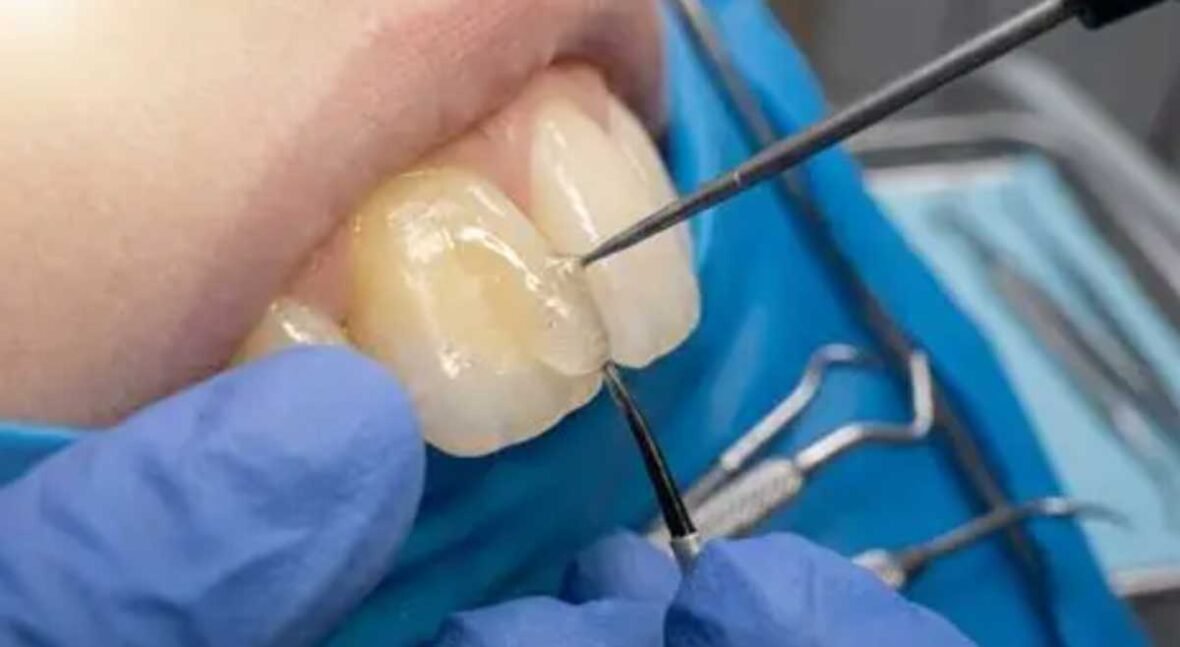
Composite resin, a tooth colored material, gets shaped directly onto the exposed root during the visit. The surface gets cleaned and lightly roughened first so the resin holds securely. Layers of resin build up gradually and get shaped to match the natural root contour.
A curing light hardens each layer within seconds of placement. Polishing smooths the final layer so it blends with the surrounding enamel. The finished bond covers the sensitive area and restores a natural-looking edge along the gumline.
What Happens During the Visit
Dental bonding for an exposed root usually follows a straightforward sequence.
Step 1: Examine the exposed root
The dentist checks the recession pattern and measures how much of the root surface has become exposed.
Step 2: Review sensitivity and habits
The patient discusses sensitivity, brushing pressure, teeth grinding, and other factors that may contribute to recession.
Step 3: Check supporting structures
When necessary, dental X-rays help the dentist evaluate bone levels and structures surrounding the affected tooth.
Step 4: Select the resin shade
The dentist in Rolla chooses a composite resin shade that closely matches the neighboring natural tooth structure.
Step 5: Apply and shape the bonding
Composite resin is placed over the exposed area, shaped carefully, and hardened with a curing light.
Step 6: Polish and review the result
The bonded surface receives a final polish, followed by instructions for cleaning and protecting the treated area.
Exposed tooth roots can make everyday activities such as brushing, eating, and drinking uncomfortable. Dental bonding can cover sensitive areas while helping restore a smoother and more natural-looking tooth surface. Clinics such as Wedgewood Dental in rolla, mo, can assess the cause of root exposure and determine whether bonding suits the affected tooth. Early professional care can help address persistent sensitivity before it begins interfering further with everyday comfort.