

Florida bathroom remodeling is less about chasing a showroom look and more about creating a room that remains comfortable, clean, and dependable in the face of heat, humidity, and daily use. The best plans address moisture protection, ventilation, storage, and safe movement before decorative details take center stage.
For homeowners comparing professional help, bathroom remodel Orlando FL services from Quality Craftsmen provide an example of a company focused on personalized bathroom layouts, shower replacements, bathtub updates, and complete renovations for Orlando homeowners and nearby Central Florida communities. Their experience with practical, easy-care bathroom products and wet-area improvements makes them a relevant resource when evaluating design options for a Florida home.
Why Florida Bathrooms Need A Different Plan
Warm air, high humidity, and regular showers can quickly expose weak points in a bathroom. A cosmetic refresh may improve appearance, but it will not fix loose subflooring, failed shower waterproofing, hidden leaks, or poor exhaust. Before work begins, confirm local permit requirements for plumbing, electrical, structural, or layout changes. Requirements can vary by municipality, and the Florida Building Code underscores the importance of homeowners verifying the rules currently used by their local building department.
Low-Maintenance Materials Worth Considering
Tile, Walls, And Floors
Large-format porcelain tile remains a practical choice because fewer grout lines can mean less routine scrubbing. It does require a very flat, well-prepared surface, so installation quality matters. Matte or lightly textured floor finishes generally provide more reliable footing than highly polished surfaces, while glossy wall tile can brighten a compact bath.
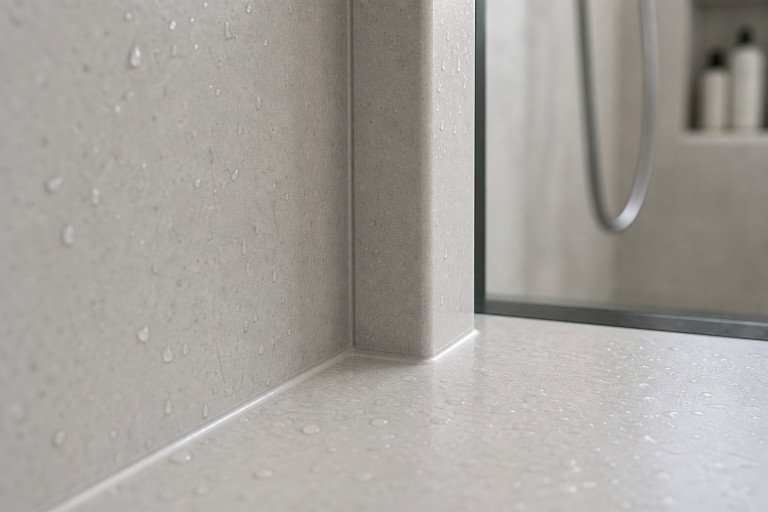
Solid-surface wall panels are another option for shower walls. Their limited seams can simplify cleaning, but every transition, corner, valve opening, and edge still needs correct waterproofing. Do not assume a low-maintenance finish eliminates the need for skilled preparation behind it.
Vanities And Countertops
Quartz, porcelain, laminate, and properly sealed natural stone can all work well when selected for the household’s cleaning habits. Prioritize moisture-resistant cabinet boxes, durable hinges, and drawers that fully extend. Open shelving may look airy, but it also leaves towels, toiletries, and dust in view, increasing day-to-day upkeep.
Water-Saving Fixtures For Everyday Use
Efficient fixtures can reduce water use without making the bathroom feel less comfortable. The EPA notes that WaterSense-labeled toilets use 1.28 gallons per flush or less while meeting independent performance criteria. Pairing one with an efficient faucet and a quality showerhead can make a practical difference over time.
Best for water savings: WaterSense-labeled toilets, faucets, and showerheads.
Best for comfort: Adjustable showerheads with multiple spray settings.
Best for hygiene: Touchless or easy-clean faucet handles.
Best for convenience: Fixtures with readily available cartridges and replacement parts.
Before purchasing, compare flow rate, warranty coverage, valve compatibility, and the ease of finding local replacement parts.
Ventilation And Moisture Control
Ventilation deserves the same attention as tile selection. An exhaust fan should move moist air outdoors, not into an attic or wall cavity. If the existing fan is noisy, weak, or rarely used, consider a quieter model with a humidity sensor or timer. Leave appropriate clearance around doors and fixtures so air can circulate.
Most importantly, ask how the shower or tub area will be waterproofed before approving finishes. Paint, caulk, and routine cleaning can improve a surface, but they cannot correct a failed waterproofing system behind the wall or floor.
Safer Bathroom Layouts For All Ages
Accessibility features are useful for nearly every household. A curbless or low-threshold shower, a handheld showerhead on a slide bar, a built-in bench, a wider shower entry, and a slip-resistant floor can support children, guests, older adults, and anyone recovering from an injury. Adding solid blocking behind walls during renovation creates a ready location for future grab bars, even if they are not installed immediately. Brighter vanity lighting and subtle night lighting also make early mornings and nighttime trips easier.
Lighting, Storage, And Budgeting
Build A More Functional Routine
Layered lighting makes a bathroom easier to use. Combine general overhead light with side-mounted mirror lighting to reduce facial shadows, then add dimmers for quieter nighttime use. Select fixtures rated for damp locations where needed.
For storage, start with the items used every day. Vanity drawers, recessed niches, narrow pullouts, and linen cabinets can keep essentials close without cluttering the counter. Check that drawers will not interfere with the toilet, entry door, or shower access.
Set A Practical Budget
Specify whether the project is cosmetic, wet-area-focused, or a full layout change.
Separate must-haves, such as waterproofing and ventilation, from decorative extras.
Price fixtures, tile, cabinetry, lighting, permits, disposal, and labor early.
Reserve a contingency for leaks, damaged framing, uneven floors, or outdated wiring.
Request an itemized proposal with clear allowances and change-order terms.
What To Ask Before Hiring A Remodeler
A clear conversation before demolition can prevent expensive misunderstandings. Ask whether licenses and insurance are current, who handles permits and inspections, how wet areas will be waterproofed, and who manages plumbing and electrical work. Also, ask what happens if hidden damage is discovered, which products carry manufacturer warranties, and how long the project should take from demolition through final inspection.
Avoid vague scopes of work. The most common planning mistakes include selecting finishes before confirming the layout, underestimating storage, moving plumbing without pricing the added labor, ordering materials too late, and overlooking long-term accessibility.
Frequently Asked Questions
What materials are easiest to maintain in a Florida bathroom?
Porcelain tile, solid-surface wall panels, quartz counters, and moisture-resistant cabinetry are popular, easy-care choices. Maintenance also depends on grout width, surface texture, sealing needs, and installation quality.
Does every Florida bathroom remodel need a permit?
No. Permit needs depend on the scope. Electrical, plumbing, structural, and layout changes often require permits, while simple finish updates may not. Confirm the requirements with the local building department before work starts.
Is a walk-in shower a good long-term choice?
It can be, provided the shower has proper slope, drainage, waterproofing, and slip resistance. A low threshold can improve access, but performance behind the finished surface remains essential.
Conclusion
The strongest Florida bathroom remodels balance style with long-term performance. When moisture control, efficient fixtures, safer access, practical lighting, and honest budgeting guide the design, the finished bathroom can stay comfortable and easier to care for well beyond 2026.