

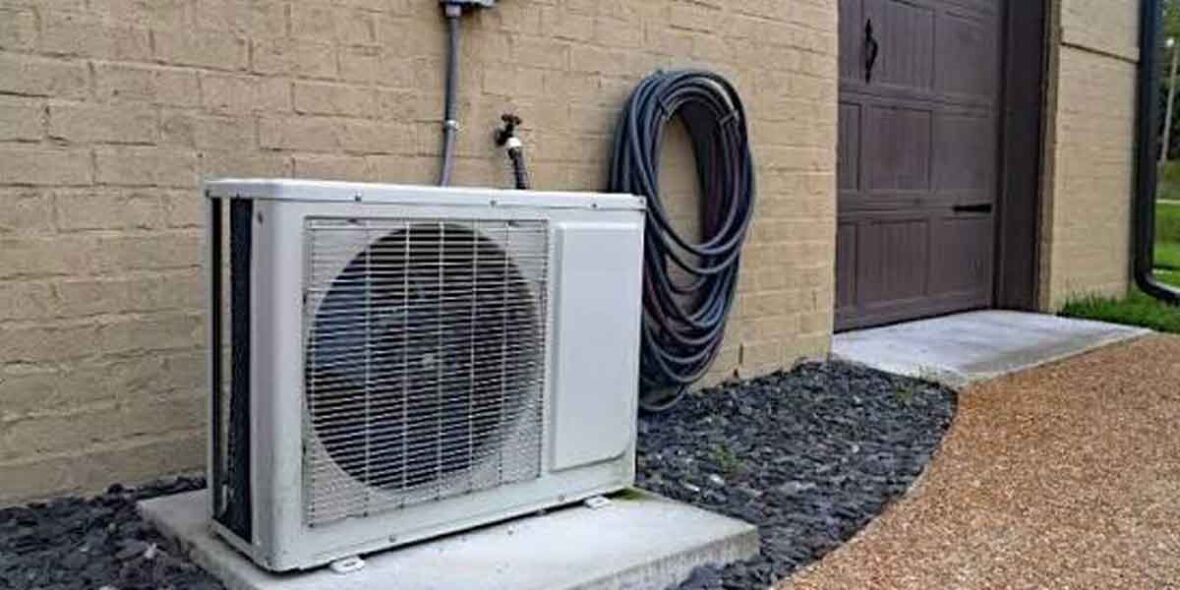
Most common mini split systems problems fall into four groups: airflow and filter issues, drainage and moisture issues, refrigerant issues, and electrical or startup issues.
The airflow group, a dirty filter or a blocked coil, causes most weak-cooling complaints and is safe to check yourself. Drainage problems cause drips and water damage and are also owner-checkable.
Refrigerant leaks and electrical faults are the professional group: they need EPA Section 608 certified handling and licensed electrical work, and attempting them at home turns a repair into a hazard.
The symptom table below maps each problem to its likely cause, urgency, safe homeowner check, and the exact stop point where a licensed HVAC professional takes over.
Nothing here encourages opening the sealed refrigerant circuit or touching live electrical connections.
Common Mini Split Systems Problems at a Glance
Seven symptoms cover most mini split failures, and the table below scores each on cause, urgency, what you can safely check, and where the professional line starts.
The pattern: airflow and drainage problems are owner territory, refrigerant and electrical problems are not.
| Symptom | Likely cause | Urgency | Safe homeowner check | Professional stop point |
|---|---|---|---|---|
| Weak or no cooling | Dirty filter or blocked coil | Low to medium | Check and clean the filter; clear the outdoor unit | Still weak after clean filter = pro diagnosis |
| No cooling or heating | Frozen coil, fan issue, or low refrigerant | Medium to high | Check filter and outdoor clearance | Refrigerant leak = EPA 608 certified tech |
| Dripping water | Clogged condensate drain | Medium (water damage risk) | Clear the drain line; check the drain pan | Interior leak or mold = pro |
| Musty smell | Drain pan biofilm or coil grime | Medium | Clean the drain; check the filter | Mold inside the unit = pro |
| Noise | Loose panel, fan debris, or compressor | Low to medium | Check panel screws; clear debris | Compressor or motor noise = pro |
| No power | Tripped breaker, remote batteries, wiring | High if persistent | Reset the breaker once; replace batteries | Wiring fault = licensed electrician |
| Ice on the coil | Airflow restriction or low charge | Medium to high | Check filter and clearance | Low charge = pro |
The urgency column is the part most troubleshooting lists skip.
A weak-cooling complaint can wait for the filter to be cleaned; a persistent no-power condition or ice on the coil is the one that compounds into a bigger repair if left alone.
Airflow and Filter Problems
Most weak-cooling complaints trace to airflow, not to the compressor: a filter that has not been cleaned in months starves the blower and freezes the coil. The owner check is simple, pull the filter, hold it to the light, and clean or replace it, then confirm the outdoor unit has clear space to breathe.
Ice on the coil is the symptom that splits by cause.
If the filter is dirty or the outdoor unit is blocked, fixing the airflow resolves the frost. If the airflow is clean and the coil still freezes, the cause is likely a low refrigerant charge, and that is a professional diagnosis because the sealed circuit stays with EPA Section 608 certified technicians.
Seasonal loads matter too. A filter that survives spring easily can freeze the coil by August, because the blower pulls more air in peak heat, and the airflow check deserves a second pass in the hottest weeks. The habit costs two minutes and prevents the most common service call of the season.
The safe habit is a monthly filter check, and it prevents more of the repair list than any other single step. Trane’s ductless troubleshooting guidance puts the filter and outdoor-unit clearance at the top of its owner checklist for the same reason.
Drainage and Moisture Problems
Dripping water means the condensate drain is not clearing, and the fix starts with the drain line: flush it from the outside end with water or a shop vacuum, then confirm the condensate pump runs and the pan stays dry.
A blocked drain backs water into the house, and the damage shows up as a stain long before it reads as a drain issue.
Condensation is normal; standing water is not. A mini split removes humidity continuously, so some moisture in the drain is the system working, and the line that matters is the one that stays dry when it should flow, or stays flowing when it should stop.
A musty smell from the indoor unit is the moisture story one step later: biofilm grows in a drain pan that never fully dries, and the odor is the first signal. Cleaning the drain and checking the filter resolves most cases, and mold that has taken hold inside the unit is the point where a professional handles the disassembly and the remediation.
Moisture problems are also the ones that connect to indoor air quality, because a chronically damp unit feeds mold that the air handler then circulates. The prevention is the same drain and filter schedule, and the earlier a leak is caught, the smaller the remediation.
Refrigerant, Electrical, and Startup Problems
Refrigerant and electrical faults are the professional group, and the stop point is explicit: opening the sealed refrigerant circuit requires EPA Section 608 certification, and high-voltage wiring is licensed-electrician territory.
The owner checks end at the breaker, the batteries, and the filter; everything past those lines is a service call.
Beyond basic owner maintenance, understanding how specialized heating and cooling technicians evaluate system efficiency can help keep multi-zone equipment running smoothly year-round. Taking time to learn more about professional system evaluations ensures potential component issues are identified early before major repairs become necessary.
Warranty coverage changes the math. A system inside its parts warranty makes the professional call a warranty event, while a system past it makes the same call a paid repair, so checking the install date before calling saves a surprise.
Refrigerant problems announce themselves as weak cooling, ice that returns after a clean filter, or a hissing leak at a flare fitting. Leak repair commonly runs a few hundred dollars depending on location and extent, per industry sources, and the longer a low charge runs, the more the compressor works against it, so the damage-prevention action is to call early rather than run the season out.
Electrical and startup problems start with the cheap checks: the breaker, the remote batteries, and whether the unit shows an error code.
Unexpected mechanical failures or sudden cooling loss during severe heat waves can quickly turn minor system issues into urgent home comfort challenges. When standard troubleshooting like checking breakers or replacing remote batteries fails to restore airflow, contacting a specialist for emergency ac repair in Hayes helps address complex electrical faults and restores safe operating conditions promptly.
A breaker that trips repeatedly is not a battery problem, it is a wiring or component fault, and the licensed electrician or HVAC pro takes over from there.
The error codes most mini splits display are the fastest diagnostic shortcut, and the manual maps each code to a fault class. Reading the code is owner work; repairing what it names often is not.
Common Mini Split Systems Problems FAQ
What is the average lifespan of a mini split system?
Most mini splits last 10 to 15 years with regular maintenance, and a system approaching that age with a major repair often makes replacement the better value. Filter and drain habits decide whether a system reaches the high end of that range.
Why is my electric bill so high with mini splits?
A high bill usually means the unit is running more than expected: it is undersized, set very low, or working against a dirty filter or poor airflow. Operating cost per zone is low, but a unit that never cycles is a sizing or airflow problem.
What brand mini split to avoid?
No brand is universally bad, but unknown budget names are often rebranded units with thin support and warranty service. The practical filter is the same as for any major appliance: check who makes the unit, look for an AHRI record, and buy where parts are reachable.
What’s the most reliable mini split system?
Mitsubishi and Daikin lead the professional consensus, with install quality mattering more than the nameplate. A well-installed mid-range unit outlasts a premium unit installed badly, so the installer and the setup decide reliability as much as the brand.
Run the safe checks first, filters, drains, and clearance, and let the symptom table tell you when the professional line starts. The common mini split systems problems that get caught early are the ones that never become major repairs, and the ownership picture sits in the mini split systems pros and cons guide.