

Key Takeaways
- Marble slabs offer an ideal combination of elegance and structural resilience, making them ideally suited for both residential and commercial interiors.
- Innovations such as thin and flexible marble veneers enable fresh, creative approaches to stone applications in modern spaces.
- Trending use of colorful and boldly patterned marbles injects personality and visual drama into otherwise neutral rooms.
- Blending marble with materials like wood and concrete achieves a striking contrast and enhances the natural ambiance.
Marble slabs have long held a special place in the world of interior design, renowned for their intrinsic elegance, unique patterns, and exceptional durability. Today, as design sensibilities evolve, marble remains an unparalleled option for those looking to curate interiors that are both striking and sophisticated. Whether gracing kitchen countertops or transforming feature walls, the enduring qualities of marble continue to inspire innovation and creativity. For those seeking to buy marble slab products, modern options offer a stunning variety of colors and finishes to enhance any setting.
From palatial estates to sleek, minimalist apartments, marble’s timeless sophistication and practical strength make it a leading material in contemporary spaces. Thanks to advancements in stone fabrication and installation, designers now enjoy greater flexibility in incorporating marble than ever before. As a result, this natural stone remains a go-to for statement surfaces and refined architectural details.
Marble’s Timeless Appeal
Throughout history, marble has been a symbol of luxury, its presence evident in Greek temples, Roman baths, and Renaissance palaces. Its luminous surface, natural veining, and spectrum of hues—from pristine whites to rich greens and deep reds—ensure no two slabs are ever the same. For modern interiors, marble’s unique appearance lends itself to both classic and contemporary design schemes, providing subtle sophistication or bold contrast as required. Its inherent strength contributes to its popularity in high-traffic zones where long-lasting beauty matters most.
Innovations in Marble Applications
Advancements in quarrying and stone processing have opened up a world of creative opportunities for marble in interior design. One of the most exciting innovations is the development of ultra-thin natural stone veneers, typically 3 to 6mm thick, which drastically reduce material weight without compromising aesthetic appeal. This makes marble practical for larger vertical surfaces and ceilings, as well as furniture cladding, unlocking bold new spatial concepts. Additionally, the advent of flexible stone veneers means that marble can now elegantly curve around columns, reception desks, or custom architectural features—tailoring the timeless look of stone to the imaginative requirements of today’s projects.
Embracing Bold and Colorful Marbles
While classic whites and subtle greys remain perennially popular, recent years have seen a surge in bolder, more colorful marble selections. Interior designers are gravitating toward varieties such as Viola Calacatta, with its dramatic purple veining, and Rosso Levanto, prized for its deep, rich red. These exotic stones are frequently utilized as accent pieces—enlivening kitchen islands, bathroom vanities, or statement walls—with their vivid hues and intricate patterns serving as a focal point for an entire room’s decor. This trend is a natural fit for those seeking to personalize their space and add a sense of artistry to their interior environments.
Textured Finishes and Surface Treatments
The beauty of marble extends far beyond its color or pattern; tactile surface treatments are increasingly used to enhance the sensory experience and elevate interior ambiance. Traditional polished marble shines with high reflectivity, but contemporary finishes, such as matte, leathered, and brushed versions, are gaining popularity. These soft-touch surfaces diminish glare and offer a warmer, more relaxed feel, making marble suitable for expanded use in living spaces, bedrooms, and even wellness retreats. Each finish interacts with ambient light differently, allowing designers to achieve tailored visual and physical effects within each room.
Combining Marble with Other Natural Materials
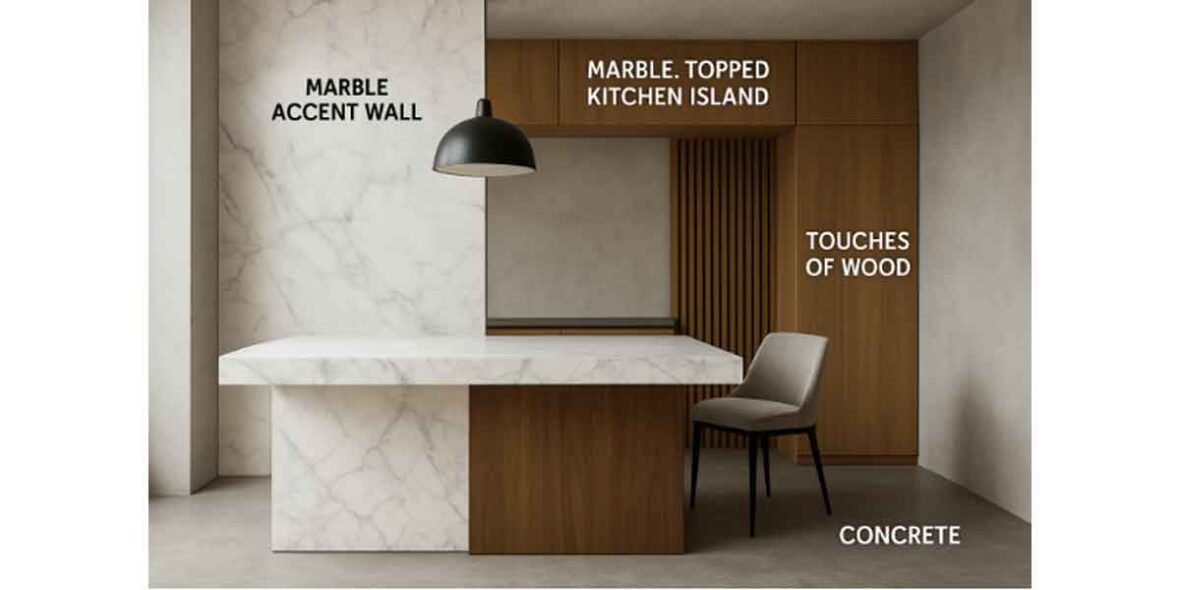
Interplay between marble and other natural elements is a key strategy for achieving harmony in modern interiors. The cold smoothness of marble paired with warm, textured woods introduces layers of interest and tactile contrast. Likewise, combining marble with raw concrete brings an urban edge and emphasizes a room’s architectural character. This emphasis on mixed materials supports the biophilic philosophy—designing spaces that foster a closer relationship to nature—by balancing organic elements, textures, and tones. Such combinations are particularly valuable for open-plan layouts, where visual continuity and variety are both desired.
Practical Considerations for Using Marble
Despite its numerous benefits, utilizing marble effectively in interiors requires careful planning and diligent maintenance. Regular sealing is crucial in protecting marble surfaces from stains, etching, and moisture damage, thereby preserving their luxurious appearance. Gentle cleaners and attentive caretaking help preserve the stone’s natural sheen, preventing common issues like dullness caused by acidic spills. Choosing the correct marble variety—whether for a countertop, wall, or flooring—means considering both the location’s function and the anticipated wear. This thoughtful approach ensures that the unparalleled elegance and utility of marble endure for years to come.
Conclusion
Marble slabs remain a foundational material in luxury and contemporary interior design, thanks to their amalgamation of timeless allure and enduring performance. With innovative technologies enabling lighter, thinner, and more versatile applications, and with trends shifting towards bolder colors and intricate finishes, marble continues to inspire new design stories in homes and public spaces alike. Paired with other natural elements and approached with an understanding of its care, marble maintains its status as an invaluable asset for those seeking to craft stunning, durable interiors that speak to both history and modernity.