

Introduction
The concept of sustainability is more urgent and vital than ever. We face a future where the choices we make today will shape the world for generations to come. Understanding and embracing sustainable practices is not just a trend; it’s a fundamental necessity for the long-term health of our planet and societies.
At its core, sustainability means meeting our present needs without compromising the ability of future generations to meet theirs. This powerful idea, first popularized by the UN Brundtland Commission, calls us to consider the far-reaching impacts of our actions. It’s a holistic approach that recognizes the finite nature of our resources and the deep interconnections between all living systems.
This extensive guide will dive into the multifaceted world of sustainability. We will explore its foundational definitions, from global organizations to academic institutions, and examine how environmental health, social equity, and economic vitality are interwoven. We’ll also look at the significant challenges we face, from climate change to resource scarcity, and highlight cutting-edge research and technological innovations that are paving the way forward.
From industrial advancements like circular economy principles to everyday choices, such as opting for sustainable natural window cleaning, we will uncover actionable strategies. Join us as we journey through the principles, applications, and potential of sustainable practices for modern living and business.
The United Nations has been a pivotal voice in championing this integrated approach, particularly through its Sustainable Development Goals (SDGs). These 17 goals, adopted by all UN Member States in 2015, provide a shared blueprint for peace and prosperity for people and the planet, now and into the future. They acknowledge that ending poverty and other deprivations must go hand-in-hand with strategies that improve health and education, reduce inequality, and spur economic growth – all while tackling climate change and working to preserve our oceans and forests. This comprehensive framework underscores the systems approach required, recognizing that all resources are finite and interconnected.
For more insights into the UN’s perspective on sustainability and its global initiatives, you can visit the Sustainability | United Nations page.
Defining the Core Pillars of Sustainability
Sustainability is frequently understood through three interconnected pillars: environmental health, social equity, and economic vitality. These components are not isolated but rather form a dynamic and interdependent system, often visualized as a Venn diagram or a triple bottom line. Achieving true sustainability requires a delicate balance among these elements, ensuring that progress in one area does not come at the expense of another.
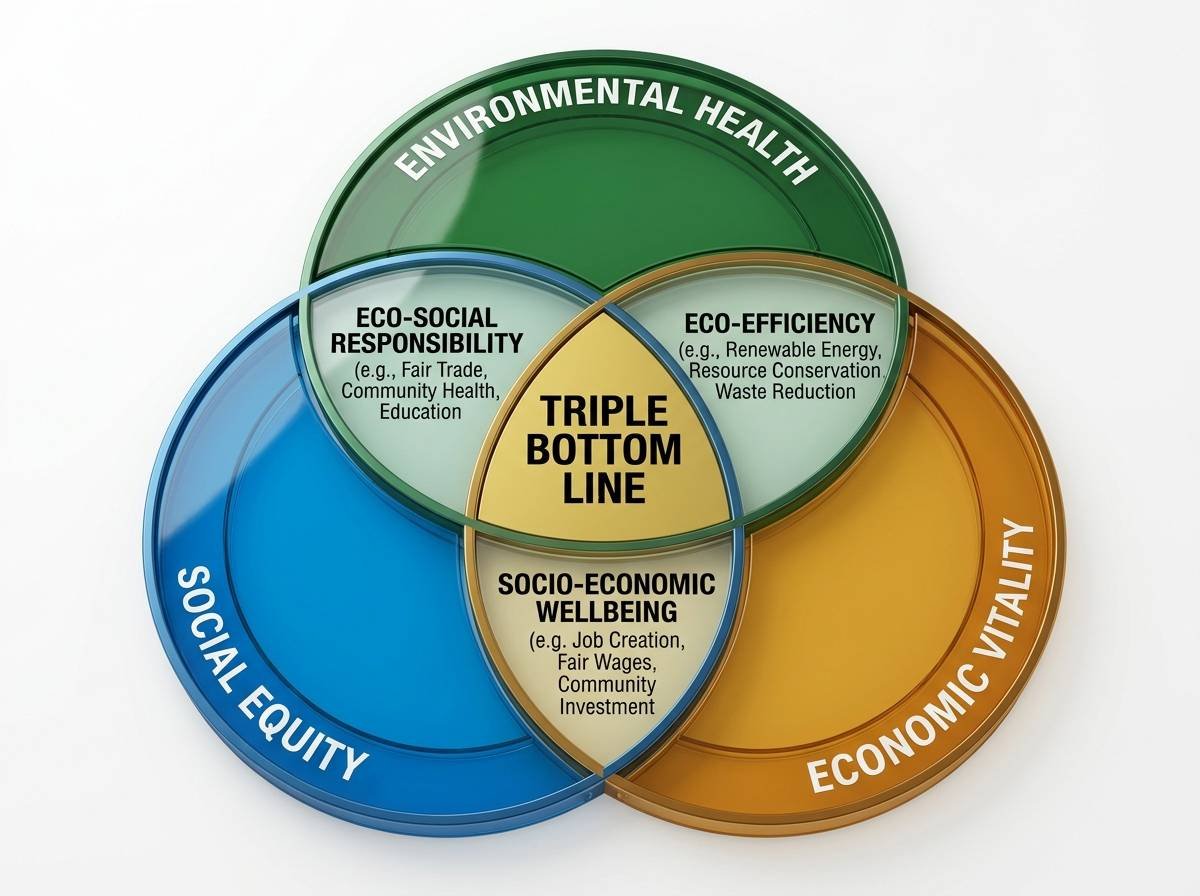
Environmental health refers to maintaining the integrity of natural systems and resources. This includes protecting biodiversity, conserving natural habitats, reducing pollution, managing waste responsibly, and mitigating climate change. It acknowledges that human well-being is fundamentally dependent on a healthy planet.
Social equity, on the other hand, focuses on fairness and justice within and between generations. It encompasses human rights, access to resources and opportunities, community well-being, cultural preservation, and intergenerational equity – ensuring that future generations have the same opportunities as the present.
Economic vitality pertains to fostering resilient and inclusive economies that can provide a high quality of life without depleting natural capital. This involves promoting sustainable consumption and production patterns, fostering green industries, and ensuring long-term financial stability. It moves beyond short-term profit maximization to consider the broader societal and environmental costs and benefits of economic activities.
The concept of planetary boundaries, as explored by the Sustainability | Saving Earth | Encyclopedia Britannica, further emphasizes that environmental health is the foundational pillar, setting the limits within which social and economic development must occur. This perspective highlights the critical importance of intergenerational ethics, ensuring that our actions today do not irreversibly harm the planet for those who come after us. For a deeper academic dive into the concept, the Sustainability Wikipedia article offers a comprehensive overview.
The Evolution of Sustainability Definitions
While the Brundtland Commission’s 1987 definition remains the most widely cited, various organizations have tailored their interpretations to emphasize specific aspects relevant to their missions. These differing perspectives highlight the multifaceted nature of sustainability and its adaptability across sectors.
The United Nations (UN), through the Brundtland Report, defines sustainable development as “meeting the needs of the present without compromising the ability of future generations to meet their own needs.” This definition strongly emphasizes intergenerational equity and the integration of environmental and economic concerns.
The U.S. Environmental Protection Agency (EPA) frames sustainability based on a fundamental principle: “Everything that we need for our survival and well-being depends, either directly or indirectly, on our natural environment.” For the EPA, sustainability is a guiding principle for all its work, underscoring the direct link between a healthy environment and human survival.
UCLA, from an academic and institutional perspective, defines sustainability as integrating environmental health, social equity, and economic vitality to create resilient communities. Their approach often focuses on education, research, and practical applications within a university setting, linking the concept to community resilience and long-term viability.
Organization Primary Emphasis Key Tenet United Nations (Brundtland Commission) Intergenerational Equity, Integrated Approach Meeting present needs without compromising future generations. U.S. Environmental Protection Agency (EPA) Environmental Dependence Survival and well-being directly depend on the natural environment. UCLA Community Resilience, Integrated Pillars Balancing environmental health, social equity, and economic vitality. Other institutional charters, such as the Association for the Advancement of Sustainability in Higher Education (AASHE), define sustainability within educational contexts, focusing on curriculum development and operational practices. Similarly, the U.S. Department of Agriculture (USDA) outlines sustainable agriculture as practices that meet society’s food and fiber needs in the present without compromising the ability of future generations to meet their own. Each definition, while sharing a common core, highlights a unique facet or application of the broader sustainability concept. For a business-oriented perspective on how sustainability works, Investopedia offers a detailed guide: Sustainability: What It Is, How It Works, Benefits, and Example.
Social Equity and Economic Vitality in Sustainability
Beyond environmental concerns, the pillars of social equity and economic vitality are crucial for a truly sustainable future. Often encapsulated in the “people, planet, and profits” framework (the triple bottom line), these dimensions ensure that development is inclusive and beneficial for all, not just a select few.
Social equity ensures that all individuals and communities have access to the resources and opportunities necessary for a healthy and fulfilling life. This means addressing disparities in health outcomes, education, housing, and environmental quality. The World Health Organization (WHO) emphasizes that sustainable development must provide benefits today “without sacrificing environmental, social and personal health in the future,” directly linking it to public health and well-being. For more on this, explore the Sustainable development page from WHO. It involves promoting fair labor practices, safeguarding human rights, fostering diverse and inclusive communities, and establishing robust social safety nets to protect vulnerable populations. Intergenerational equity, a cornerstone of sustainability, ensures that the burdens and benefits of development are distributed fairly across generations.
Economic vitality focuses on creating long-term financial viability that supports societal well-being and environmental protection. This goes beyond mere profit accumulation to encompass economic systems that are resilient, regenerative, and equitable. It involves promoting sustainable consumption and production, investing in green technologies, and ensuring that economic growth contributes to societal progress rather than environmental degradation. The principles of economic sustainability also encourage the efficient use of resources, waste reduction, and the development of local, circular economies. This approach contrasts sharply with traditional models that often externalize environmental and social costs, leading to unsustainable practices. The concept of Sustainability also deeply intertwines with economic models that seek to preserve natural capital as a basis for enduring prosperity.
Together, social equity and economic vitality create a framework where human needs are met, communities thrive, and economies are robust enough to support these endeavors indefinitely, all within the ecological limits of our planet.
Technological Innovation and Energy Management
The journey towards a sustainable future is inextricably linked with technological innovation, particularly in the realm of energy. Breakthroughs in renewable energy, energy efficiency, and smart grid technologies are transforming how we produce, consume, and manage power, paving the way for a low-carbon economy.
Artificial intelligence (AI) and advanced modeling are playing a pivotal role in optimizing energy systems. For instance, sophisticated models like the VMD-WPD-TCN-BiGRU are being developed for photovoltaic (PV) power forecasting. These models significantly improve the accuracy of predicting solar energy output, achieving impressive MSE reductions ranging from 11.11–96.21% compared to baselines. Such precision is critical for integrating intermittent renewable sources into the grid efficiently and reliably.
Solar-thermal systems, which harness the sun’s energy to generate heat, are another key technology. These systems are versatile, providing sustainable solutions for hot water, space heating, and even industrial processes, reducing reliance on fossil fuels.
Beyond electricity generation, innovations are driving electrification across various sectors. The development of hydrogen production technologies, particularly for marine applications, offers a promising pathway for decarbonizing shipping, a major contributor to global emissions. This shift towards cleaner fuels and electric propulsion is a significant step in reducing our carbon footprint.
Decarbonization efforts are also fueled by green technology, which encompasses a wide array of innovations designed to reduce environmental impact. This includes everything from energy-efficient appliances and smart home systems to advanced battery storage and carbon capture technologies. For businesses and institutions looking to transition to cleaner energy, securing Sustainable energy contracts is a practical step towards achieving environmental goals and ensuring long-term energy security. These contracts often involve sourcing power from renewable generators, providing a clear path to reducing operational emissions.
These technological advancements, coupled with strategic energy management, are not just about reducing emissions; they are about creating more resilient, efficient, and economically viable energy systems that can support sustainable development globally.
The Role of Circular Economy in Resource Management
The linear economic model of “take, make, dispose” is inherently unsustainable, leading to resource depletion and excessive waste. In contrast, the circular economy offers a transformative approach to resource management, aiming to keep materials in use for as long as possible, extract maximum value from them, and then recover and regenerate products and materials at the end of their service life.
A prime example of this valorization is the innovative use of municipal solid waste incineration (MSWI) fly ash. Traditionally considered hazardous waste, MSWI fly ash can now be processed and incorporated into Portland composite cement production. This not only mitigates the environmental risks associated with its disposal but also reduces the demand for virgin raw materials in cement manufacturing, embodying the principles of industrial symbiosis and resource decoupling.
This approach extends to other industries as well. In mining, for instance, implementing blending-mining coordination strategies has yielded significant benefits. One case demonstrated direct economic benefits of RMB 65.31 million, an increase in commercial blended coal output by 104.5 thousand tons, and a reduction in gangue (waste rock) emissions by 258.5 thousand tons. These figures highlight how circular economy principles can simultaneously enhance economic performance and reduce environmental impact.
Another innovative application is the use of sustainable materials in infrastructure. For example, a SCG deicing asphalt mixture, using 100% replacement materials, was shown to reduce ice-pavement bond strength by 57.8% at -5°C (0.35 kN vs. control). Such advancements contribute to safer infrastructure while utilizing waste or recycled components.
The circular economy is not merely about recycling; it’s a fundamental shift in design, production, and consumption, fostering a system where waste is minimized, resources are optimized, and environmental impact is dramatically reduced. It represents a powerful strategy for achieving resource security and environmental sustainability.
Socioeconomic Resilience and Urban Planning
As our world becomes increasingly urbanized and faces the growing impacts of climate change, the intersection of socioeconomic vulnerability and physical risks, particularly from events like floods, becomes a critical concern for sustainable urban planning. Building resilient communities means understanding and addressing these complex dynamics.
Research into communities, such as those in West Virginia, has utilized vulnerability indices to assess how socioeconomic factors exacerbate flood risks. This understanding is vital for integrated resilience planning, which aims to protect both people and infrastructure. Such planning considers not only physical defenses but also social support systems, economic diversification, and equitable access to resources during and after environmental disasters.
Urban planning for sustainability also extends to rural areas, especially in complex topographical regions. The Qinba Mountains, for instance, offer insights into the spatiotemporal dynamics and driving mechanisms of rural revitalization. Understanding how these regions develop and adapt is crucial for crafting policies that support sustainable livelihoods and preserve natural ecosystems. Digital tools, including GIS and remote sensing, are increasingly used to analyze these dynamics, informing land-use planning and resource management.
Effective urban regeneration strategies often involve a combination of policy tools designed to enhance both environmental sustainability and social equity. These can include:
Smart Growth Principles: Directing development towards existing infrastructure to reduce sprawl and preserve natural areas.
Green Infrastructure: Incorporating natural systems like parks, wetlands, and permeable surfaces to manage stormwater and improve air quality.
Public Transit Investment: Reducing reliance on private vehicles, cutting emissions and improving accessibility.
Zoning Reforms: Encouraging mixed-use development and affordable housing.
Incentive Programs: Rewarding businesses and residents for adopting sustainable practices.
Beyond planning, effective management and enforcement are also key. For example, increasing enforcement to a 70% probability with a USD 250 fine can dramatically reduce illegal parking demand by 93%, demonstrating how policy can influence behavior for urban order and efficiency. In terms of infrastructure, optimizing design for resilience is paramount. The replacement of the Hasanlar Dam with a new 78m structure, guaranteeing 55.5 million m³ reservoir capacity, is an example of long-term planning for water security. Furthermore, advanced optimization algorithms like PSO (Particle Swarm Optimization) and CAO (Cuckoo Search Algorithm Optimization) have achieved significant efficiencies, such as a 29.36% reduction in the cross-sectional area for new dam designs, showcasing the role of technology in sustainable engineering.
Actionable Strategies for Modern Living and Business
Translating the broad principles of sustainability into tangible actions is essential for both individuals and organizations. From the way we produce goods to our daily consumption habits, every choice contributes to our collective sustainable future.
For businesses, adopting sustainable manufacturing practices is a cornerstone. This involves implementing lean toolkits to reduce waste, optimize resource use, and minimize environmental impact throughout the production process. Companies are increasingly focused on creating products that are durable, repairable, and recyclable, moving away from planned obsolescence.
Individuals also have a powerful role to play. Simple changes in lifestyle can collectively make a significant difference. For instance, adopting more plant-based diets can drastically reduce our carbon footprint, as livestock farming is a major contributor to greenhouse gas emissions. Similarly, actively working to reduce food waste at home and in businesses can conserve resources, save money, and lessen the burden on landfills. When planning personal or professional journeys, considering Sustainable travel tips can help minimize the environmental impact of transportation, from choosing eco-friendly accommodations to opting for public transport.
Even in our homes, there are numerous opportunities for sustainable living. Choosing eco-friendly cleaning products, for example, helps protect both indoor air quality and aquatic ecosystems. A great starting point is exploring options for sustainable natural window cleaning to reduce chemical exposure. For those interested in making their own, our site offers a fantastic Mother Earth’s Secret: Eco-Friendly Laundry Detergent Recipe. We also provide comprehensive guides on Home Hacks for Reducing Chemical Cleaners and How to Reduce Toxic Chemicals at Home. Furthermore, addressing plastic consumption in household products is crucial; discover practical Tips for Reducing Plastic in Cleaning Products. For those seeking ready-made solutions, we review various Eco-Friendly Laundry Detergents and highlight the benefits of Biodegradable Laundry Powder: The Best Way to Clean Your Clothes. You can find more DIY solutions in our Category: DIY Recipes and explore other natural cleaning alternatives in our Category: Natural Cleaners.
By integrating these actionable strategies into our daily lives and business operations, we move closer to a truly sustainable future.
Frequently Asked Questions about Global Sustainability
What is the most widely accepted definition of sustainability?
The most widely accepted definition of sustainability comes from the UN Brundtland Commission in 1987. It defines sustainable development as ‘meeting the needs of the present without compromising the ability of future generations to meet their own needs.’ This definition emphasizes intergenerational equity and the balance between environmental, social, and economic considerations.
How does the Sustainability journal contribute to the field?
The Sustainability journal is a significant contributor to academic research in the field, with an Impact Factor of 3.3 (2024). It provides a platform for rapid, peer-reviewed research across various sectors. For instance, recent articles demonstrate practical applications of sustainability in areas like waste management (e.g., valorizing MSWI fly ash), flood resilience, energy forecasting (e.g., using advanced AI models), and urban planning. The journal is known for its quick turnaround, with a first decision provided to authors approximately 17.9 days after submission and acceptance to publication in 3.6 days (median values).
What are the primary challenges to sustainable development?
Achieving sustainable development faces several key challenges. These include the fundamental issue of resource finitude, as many natural resources are finite and being consumed at unsustainable rates. Climate change poses a severe threat, particularly for the almost 140 developing countries seeking to meet their development needs amidst its impacts. Other significant barriers include institutional frameworks that may not adequately support sustainable practices, and the “value-action gap,” where there’s a discrepancy between people’s stated values for sustainability and their actual behaviors or actions. Addressing these challenges requires integrated approaches, technological innovation, and strong policy frameworks.
Conclusion
As we have explored, sustainability is far more than a buzzword; it is a comprehensive framework for ensuring the long-term viability of our planet and societies. It demands a holistic integration of environmental health, social equity, and economic vitality, guided by systems thinking and a commitment to intergenerational ethics. From the foundational definitions laid out by the UN and other institutions to the cutting-edge research in fields like circular economy, renewable energy, and urban resilience, the path to a sustainable future is being forged through innovation, collaboration, and conscious action.
The challenges are significant, ranging from climate change and resource scarcity to socioeconomic vulnerabilities. However, the actionable strategies available to us, both in business and in our daily lives, offer powerful avenues for change. By embracing sustainable manufacturing, making eco-conscious choices in our homes, and supporting policies that foster resilience and equity, we contribute to a collective effort that benefits all. The journey towards sustainability is ongoing, requiring continuous adaptation, learning, and dedication. It is a commitment to corporate ethics and a belief in the long-term viability of a thriving world for generations to come.
For more information on implementing these practices in your daily life, visit www.deliciassaborosas.com.