

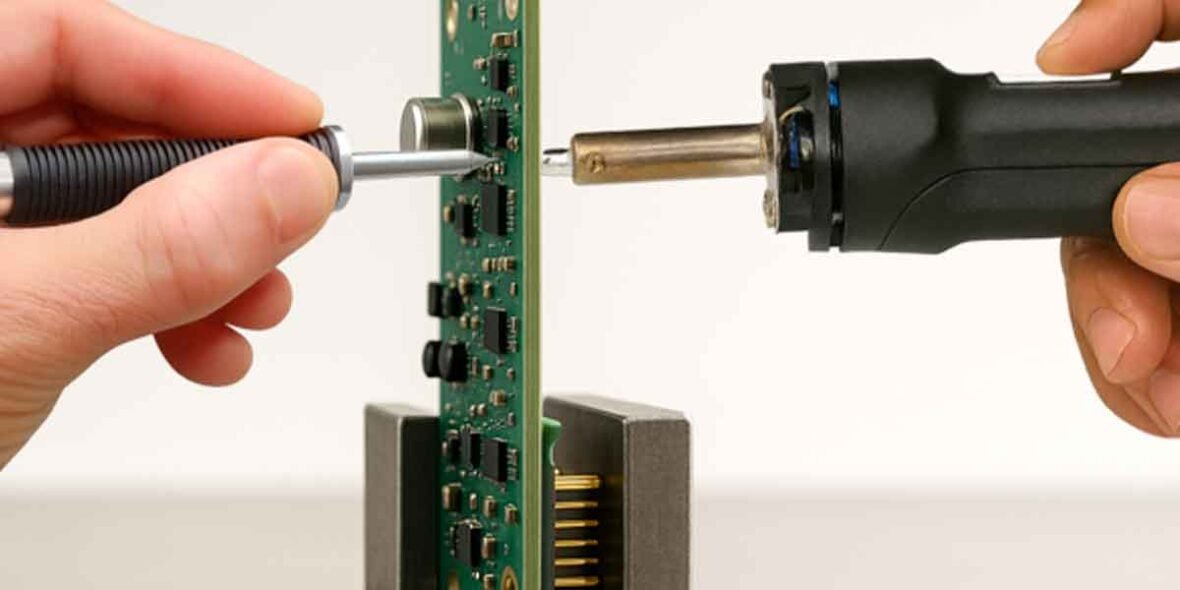
Reliable soldering is essential for durable electrical and electronic assemblies. Poor technique often leads to weak joints, intermittent faults, or heat damage that results in rework or service callbacks. By developing consistent soldering habits and understanding how joints form, technicians can improve reliability and minimise troubleshooting time. The following practices focus on preparation, heat control, and inspection—key factors that help produce stable and dependable solder connections.
Using Properly Maintained Tools and Equipment
Consistent results start with reliable equipment. Temperature-controlled soldering irons, clean tips, and suitable solder alloys allow technicians to form joints without overheating components. When tips become oxidised, or the iron temperature fluctuates, heat transfer becomes inefficient, increasing the risk of cold joints or prolonged heating.
Technicians sourcing equipment from electronics repair and assembly providers, including Mektronics supplier of test equipment and soldering solutions, often prioritise tools designed for precise temperature control and stable heat delivery. This level of control is particularly important when working with modern electronics that require accuracy and steady thermal management.
Regular tip maintenance also improves thermal conductivity between the iron and the joint. A clean tip transfers heat efficiently, helping solder melt and flow correctly while reducing the chance of weak connections.
Preparing Surfaces Before Soldering
Many soldering failures occur because surfaces were not properly prepared. Oxidation, residue, or contamination can prevent solder from bonding effectively to pads and component leads. Preparing the joint ensures the solder wets the surfaces evenly and forms a reliable electrical connection.
Technicians frequently rely on flux, a chemical agent that removes oxidation and improves solder flow. When used correctly, flux promotes proper wetting and allows solder to spread smoothly across the joint.
Cleaning pads and leads beforehand is equally important. Dust, grease, and oxidation can interfere with bonding, so wiping surfaces with isopropyl alcohol or a suitable electronics cleaner helps ensure the joint is ready for soldering.
Controlling Heat and Dwell Time
Applying the correct amount of heat for the right duration is one of the most important soldering habits. Insufficient heat can prevent solder from flowing properly, while excessive heat may damage components or lift circuit board pads.
The correct method involves heating both the pad and the component lead simultaneously so that solder melts from contact with the heated metals rather than directly from the iron. This promotes proper wetting, where molten solder spreads across the metal surfaces to create a strong bond.
Short, controlled dwell times also reduce thermal stress on sensitive components and help maintain the integrity of the circuit board.
Inspecting Joints During the Soldering Process
Inspection is an important step that prevents minor defects from becoming larger problems. Even experienced technicians benefit from reviewing each joint before finishing an installation or repair.
Visual inspection helps identify dull or grainy surfaces that may indicate cold solder joints, which can cause intermittent electrical faults.
Magnification tools or inspection microscopes make it easier to detect small defects that might otherwise go unnoticed. Identifying these issues early allows technicians to correct them quickly and avoid future callbacks.
Applying the Correct Amount of Solder
Using the correct solder volume ensures the joint remains both electrically reliable and mechanically stable. Excess solder may create bridges between pads or hide potential defects, while too little solder can result in weak or incomplete joints.
A well-formed solder joint typically appears smooth and slightly concave, with the outline of the component lead still visible. This shape indicates that solder has flowed evenly across the surfaces.
Understanding surface tension, the physical property that allows molten solder to settle into this natural shape, helps technicians judge whether the correct amount of solder has been applied.
Habits That Support Reliable Electrical Work
Reducing soldering rework largely comes down to consistent habits. Proper surface preparation, controlled heat, correct solder volume, and careful inspection all contribute to stronger and more dependable connections. When these practices become routine, technicians can improve build quality, minimise troubleshooting, and reduce the likelihood of costly callbacks.