

Over the last 10 years, the average home has become more sustainable than ever before. More people are rejecting single-use plastics, are starting compost heaps, and, most importantly, they are looking for sustainability in their home devices and builds.
Of course, when it comes to building a barn on your property, you may instinctively think of something wooden, which surely equates to it being sustainable. Or does it? Modern building practices and engineering can fly in the face of being eco-conscious, which is why Amish barns are making a comeback. If you want sustainable and timeless, here are five reasons to opt for Amish barns on your property.
- Materials
The standard barn will be erected using screws, nails, and sometimes welding. These simple tools are usually constructed overseas and are imported into countries like the USA or UK via plane or boat. The wood used to create the barns is also rarely locally sourced, which can make it less than eco-friendly to use.
Amish pole buildings and barns are constructed using locally sourced wood and often, handmade tools, which will not add to the CO2 footprint of the build and will also reduce costs.
- Longevity
Something that is sustainable lasts a long time; this applies to fridges, cables, and houses.
Thanks to the design structure and the raw materials, Amish structures have a lifespan of over 100 years, which, when compared to the average modern barn, which may stand for 20 years, equates to less barn maintenance and no rebuilds needed in your lifetime. What’s not to like about that?
- Energy Efficient
It is easy to assume that an Amish barn, or other building, will come to your property without a power source included. This is not ideal if you use your barn to grow veg using LED lights, or if the barn needs heating in the winter for animals.
However, many Amish barns now integrate electricity into the structure and, of course, they use sustainable, energy-efficient options to power the space. So, you may end up with an energy-efficient barn in your home, which is powered via solar panels attached to the roof. There may also be triple-glazed windows, if you want to add natural light to the space.
- Hand Crafted
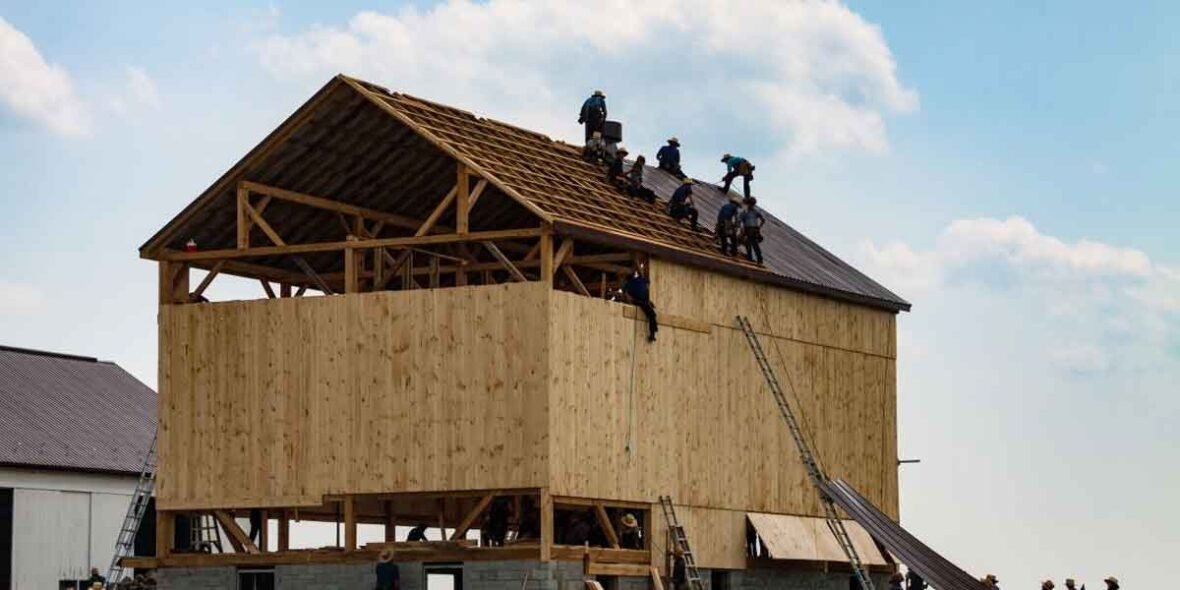
There is an immense skill set that goes into creating an Amish barn. All of the joints, the panels, and even the internal structure are usually created by hand, using hand tools, which adds to the uniqueness of the space when it is up.
This does mean that each barn is built without the use of power tools or electricity, once again adding to the sustainability of the building. Amish construction also uses locally sourced materials and tools, meaning you don’t have to worry about imports on behalf of the builders adding to the CO2 emissions of the project.
So, if you are aiming to erect a barn at your farm, or on your large property, and you want the most sustainable option, go back to traditional builds and look into Amish-designed and built barns.