

Key Takeaways
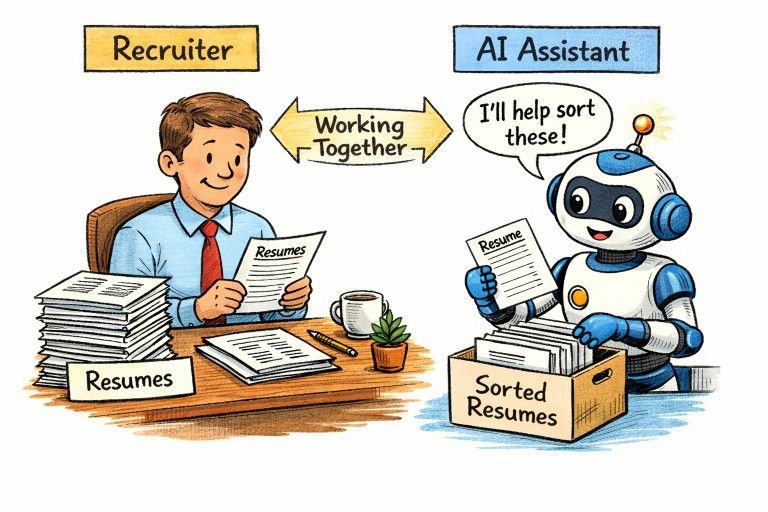
Integrating AI into recruitment processes significantly reduces manual tasks, allowing recruiters to focus on strategic decision-making.
Greenhouse’s AI-driven tools enhance candidate sourcing, resume screening, and interview scheduling, enabling faster, more effective hiring.
Implementing AI into recruitment workflows can improve the quality of hires and reduce time-to-fill.
Recruiting top talent is a complex and time-consuming process. Greenhouse, a leading hiring software company, leverages artificial intelligence (AI) to streamline recruitment workflows, improving efficiency and candidate experience. By integrating AI into its platform, Greenhouse offers innovative solutions that transform traditional hiring practices.
How Does AI Enhance Recruitment Efficiency?
AI technologies automate repetitive tasks in the recruitment process, such as parsing resumes, scheduling interviews, and communicating with candidates. By leveraging AI hiring solutions, organizations can reduce the administrative burden on recruiters, enabling them to concentrate on engaging with potential hires and making informed decisions. This automation minimizes manual interventions and supports a more streamlined, efficient hiring process.
What AI Features Does Greenhouse Offer?
Greenhouse incorporates AI to optimize various stages of the hiring process:
Resume Screening: AI algorithms analyze resumes to identify candidates whose skills and experience closely align with job requirements, ensuring a more targeted selection process.
Interview Scheduling: Automated tools coordinate candidate and interviewer availability, minimizing back-and-forth communication and expediting the hiring timeline.
Candidate Sourcing: AI helps identify and reach out to potential candidates by analyzing data across platforms, expanding the talent pool.
Additional AI-Driven Recruitment Capabilities
Modern AI tools have moved beyond basic automation, offering advanced analytics and predictive modeling. Greenhouse’s platform, for example, can analyze recruitment data to identify patterns, predict future hiring needs, and measure the effectiveness of different sourcing channels. These data-driven insights can inform workforce planning and help organizations proactively address talent gaps before they impact business performance.
Furthermore, AI solutions in Greenhouse can improve communication workflows. Automated candidate nurturing—such as customized follow-up messages and timely reminders—enhances engagement and keeps candidates connected throughout the hiring journey. This capability not only streamlines the process for recruiters but also enhances the employer’s brand perception.
What Are the Benefits of Using AI in Recruitment?
Time Savings: Automating routine tasks reduces the time spent on administrative duties, allowing recruiters to focus on strategic aspects of hiring.
Improved Candidate Matching: AI enhances the accuracy of matching candidates to job roles by analyzing vast amounts of data, leading to better hiring decisions.
Enhanced Candidate Experience: Efficient processes and timely communication, enabled by AI, contribute to a positive candidate experience.
AI and Data-Driven Diversity Initiatives
Another emerging aspect of AI-driven recruitment is its role in supporting diversity, equity, and inclusion (DEI) goals. AI-powered analytics can help organizations detect potential biases in their processes, enabling data-driven interventions to ensure fair opportunity for all applicants. Greenhouse offers structured interviewing and standardized evaluation criteria, further reinforced by AI to minimize subjectivity. This approach empowers companies to track progress toward DEI targets while confidently building more diverse teams.
Additionally, AI assists organizations in sourcing candidates from underrepresented groups by recommending broader sourcing channels and suggesting inclusive language in job descriptions. Over time, this creates a more representative talent pipeline and fosters innovation within the workplace.
How Does AI Impact the Quality of Hires?
By leveraging AI, recruiters can assess a broader range of candidates more effectively, leading to higher-quality hires. AI tools can identify transferable skills and potential that may be overlooked in traditional screening methods, ensuring a more diverse and capable workforce. AI-driven assessments can even suggest unexpected but highly suitable candidates, increasing the likelihood of long-term employee success and retention.
With detailed reporting and tracking, AI also helps hiring leaders measure the long-term impact of each hire, further refining recruitment strategies and investment focus. The result is a continuous cycle of improvement grounded in objective data.
Are There Any Challenges in Implementing AI in Recruitment?
While AI offers numerous benefits, challenges include ensuring data privacy, mitigating biases in AI algorithms, and maintaining a human touch in the recruitment process. It’s crucial to implement AI thoughtfully, with continuous monitoring and adjustments to address these concerns. Training and upskilling recruitment teams on responsible AI usage is also necessary to maximize benefits while minimizing risks.
Organizations should also be mindful of the regulatory environment regarding candidates’ data rights and transparency. Clear communication with candidates about how their data will be used builds trust and ensures compliance with employment laws.
How Can Companies Get Started with AI in Recruitment?
Organizations can begin by identifying repetitive tasks within their recruitment processes that can be automated. Partnering with platforms like Greenhouse, which offer AI-driven solutions, can facilitate a smooth transition. Training recruitment teams on AI tools and best practices is also essential for successful implementation.
For a smooth transition, it’s often helpful to start with a pilot program targeting one part of the recruitment process, such as resume screening or interview scheduling. Measuring key performance indicators (KPIs), like reduced time-to-hire or improved candidate satisfaction, enables organizations to demonstrate the ROI of AI initiatives. Over time, these success stories can be leveraged to drive broader adoption throughout the organization.
Frequently Asked Questions
Is AI in recruitment suitable for companies of all sizes?
Yes, AI tools can be scaled to fit the needs of both small businesses and large enterprises, offering flexibility and efficiency improvements across the board.
How does AI ensure fairness in the recruitment process?
AI systems can be designed to reduce unconscious bias by focusing on objective criteria. However, continuous monitoring and refinement are necessary to maintain fairness.
Can AI replace human recruiters?
No, AI is intended to augment the recruitment process by handling administrative tasks, allowing human recruiters to focus on relationship-building and strategic decision-making.
Conclusion
Integrating AI into recruitment workflows, as demonstrated by Greenhouse, offers substantial benefits in terms of efficiency, quality of hires, and candidate experience. By thoughtfully implementing AI tools, organizations can enhance their hiring processes and gain a competitive edge in talent acquisition.
In summary, AI-powered recruitment isn’t just about automation; it’s about unlocking new insights, broadening access to talent, and raising hiring standards across organizations. As Greenhouse continues to invest in advanced AI tools, companies of all sizes are poised to reap the benefits of more agile, fair, and competitive recruitment processes in a fast-changing world.