

Keeping a basement dry used to mean choosing between effective and environmentally responsible. That tradeoff has largely disappeared. Today, the most durable waterproofing materials on the market are also among the least harmful — to indoor air quality, to soil, and to the water table that surrounds your foundation. If you’re planning to address moisture in your basement, here’s what the greener options actually look like in practice.
Why Material Choice Matters Beyond the Basement
Traditional waterproofing relied heavily on solvent-based coatings and tar-based membranes that off-gassed volatile organic compounds during and long after installation. In an enclosed space like a basement, that’s a real indoor air quality concern — especially in homes where the basement connects directly to living areas through HVAC systems.
Beyond the interior, solvent-laden products that leach into surrounding soil can affect groundwater over time. For homeowners with wells, or those in areas with high water tables, this is more than an abstract environmental concern. Choosing low-VOC and water-based formulations reduces that risk without sacrificing performance.
The Materials Worth Knowing About
Dimple Membrane Sheeting
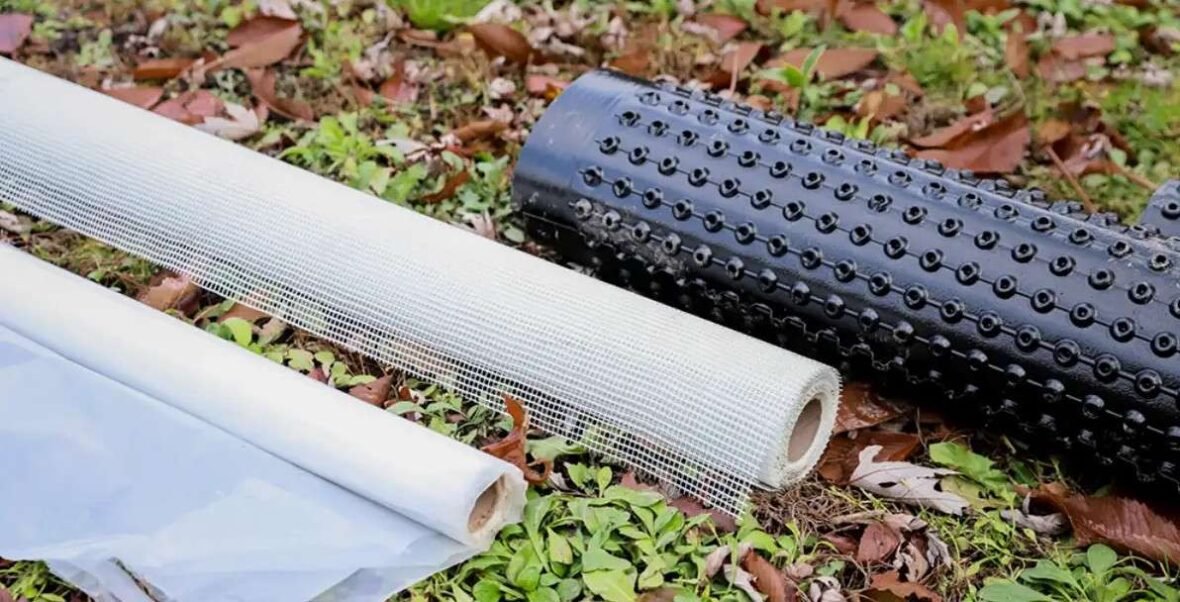
One of the most widely used and environmentally sensible options is dimple membrane — a high-density polyethylene sheet installed against the foundation wall to create an air gap that redirects water downward toward a drainage channel rather than allowing it to penetrate the wall. HDPE is inert, contains no harmful additives, and doesn’t degrade in soil contact. It’s also fully recyclable at end of life. Contractors like Aqua Tech Waterproofing in Hamilton use dimple membrane systems as part of both interior and exterior waterproofing solutions precisely because they perform well over the long term without introducing chemicals into the surrounding environment.
Water-Based Crystalline Coatings
Crystalline waterproofing is applied as a slurry or coating directly to concrete. The active chemicals react with moisture and free lime in the concrete to form insoluble crystals that fill pores and hairline cracks — blocking water passage from the inside out. Modern crystalline products are water-based, contain no solvents, and are non-toxic once cured. They’re also self-sealing: if a new crack forms within the treated zone, the crystalline reaction reactivates wherever moisture is present.
This makes them particularly well-suited to poured concrete foundations, where minor cracking over time is normal and expected.
Drainage Composites and Recycled-Content Products
Several manufacturers now produce drainage mat and panel systems using post-consumer recycled content — typically recycled HDPE or polypropylene. These function identically to virgin-material equivalents but reduce the demand for new plastic production. When specified by a knowledgeable contractor, recycled-content drainage composites can meet the same performance standards as conventional products, often at comparable cost.
What to Ask Your Contractor Before Work Begins
VOC Content and Indoor Air Safety
If your contractor is proposing any coating, sealant, or membrane, ask for the product data sheet and check the VOC content. Anything applied to interior walls will off-gas into your living space to some degree during and after application. Water-based formulations with VOC levels below 50 g/L are the standard to ask for. If the contractor can’t tell you what’s in the product, that’s a problem.
Disposal of Excavated Material
Exterior waterproofing involves excavating the soil around your foundation, which may include old drainage tile, crumbled membrane material, and contaminated backfill. Ask how excavated material will be handled and disposed of. A responsible contractor separates clean fill from contaminated material and disposes of each appropriately rather than mixing everything into a single truckload.
Longevity as Sustainability
The most sustainable waterproofing is waterproofing that lasts. A system installed correctly with quality materials — and backed by a lifetime warranty — means your basement won’t need to be re-waterproofed in ten years, generating another round of material waste, site disruption, and energy use. When comparing quotes, factor longevity and warranty terms into the environmental calculus, not just the upfront cost.
Eco-friendly waterproofing isn’t a compromise — it’s where the industry has been heading for years. The best materials for your basement are increasingly the same ones that are best for everything around it.